File:20100410_athina108.JPG · Wikimedia Commons · See Wikimedia Commons
frieze
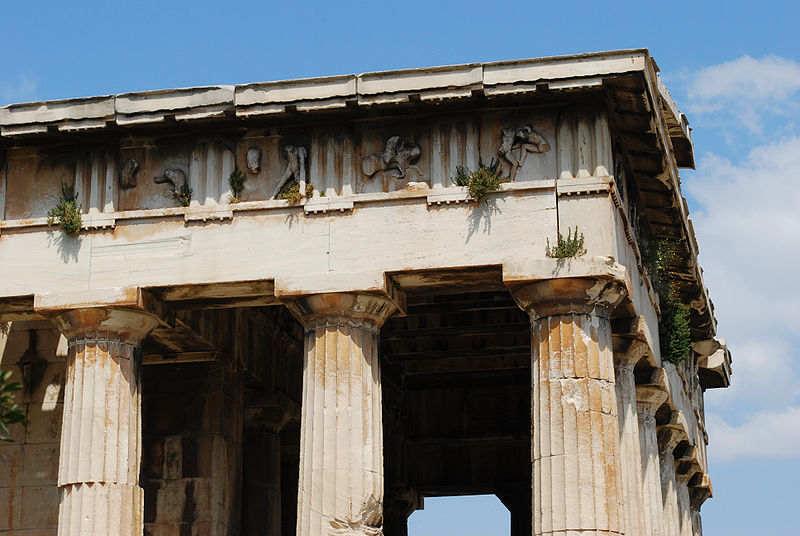
Sign in to savethumb|Doric order|Doric frieze at the [[Temple of Hephaestus, Athens (449–415 BCE).]] thumb|right|The Circus (Bath), UK. Architectural detail of the frieze showing the alternating [[triglyphs and metope. (John Wood, the Elder, architect)]] right|thumb|Frieze of animals, mythological episodes at the base of Hoysaleswara temple, [[India]] right|thumb|What is described as "frieze" on the roof of Yankee Stadium
A frieze is a decorative horizontal band or strip that runs along the upper part of a wall or building, often featuring carved or painted designs such as patterns, animals, or mythological scenes. Friezes matter because they are a fundamental architectural and artistic element used across many cultures and time periods to add visual interest, tell stories, and enhance the aesthetic appeal of structures.
AI-generated from the Wikipedia summary — may contain errors.
Wikidata facts
- Subclass of
- architectural element
- Part of
- entablature
- Image
- Decorative emblems The Circus Bath.jpg
Show 4 more facts
- native label
- frisé
- Commons category
- Friezes
- described by source
- Encyclopædia Britannica 11th edition
- different from
- Friesian horse
via Wikidata · CC0
~3 min read
Encyclopedic overview
3 sectionsContents
- Ancient examples
- References
- External links
thumb|Doric order|Doric frieze at the [[Temple of Hephaestus, Athens (449–415 BCE).]] thumb|right|The Circus (Bath), UK. Architectural detail of the frieze showing the alternating [[triglyphs and metope. (John Wood, the Elder, architect)]] right|thumb|Frieze of animals, mythological episodes at the base of Hoysaleswara temple, [[India]] right|thumb|What is described as "frieze" on the roof of Yankee Stadium
In classical architecture, the frieze is the wide central section of an entablature and may be plain in the Ionic or Corinthian orders, or decorated with bas-reliefs. Paterae are also usually used to decorate friezes. Even when neither columns nor pilasters are expressed, on an astylar wall it lies upon the architrave ("main beam") and is capped by the moldings of the cornice. A frieze can be found on many Greek and Roman buildings, the Parthenon Frieze being the most famous, and perhaps the most elaborate.
Excerpted from Wikipedia’s “frieze” article, available under the CC BY-SA 4.0 licence.