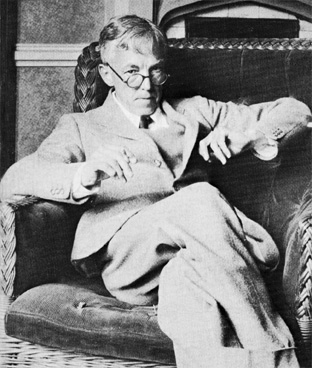
File:[email protected] · Wikimedia Commons · See Wikimedia Commons
G.H. Hardy
Sign in to saveAlso known as G. H. Hardy, Godfrey Harold Hardy, Godfrey·Harold·Hardy, Godfrey Harold
British mathematician (1877–1947)
G.H. Hardy was a British mathematician who lived from 1877 to 1947 and made significant contributions to pure mathematics during his lifetime. He is remembered as an influential figure in mathematical research and education, though specific details about his particular achievements would require additional sources to describe accurately.
AI-generated from the Wikipedia summary — may contain errors.
Wikidata facts
- Instance of
- human
- Family name
- Hardy
- Gender
- male
- Citizenship
- United Kingdom
- Place of birth
- Cranleigh
- Occupation
- university teacher
- Position held
- chairperson
- Educated at
- University of Cambridge
- Employer
- University of Cambridge
- Languages spoken
- English language
- Award
- Smith's Prize
- Notable work
- A Mathematician's Apology
- Academic degree
- doctorate
- Doctoral advisor
- E. T. Whittaker
- Student of
- E. T. Whittaker
- Field of work
- pure mathematics
- Image
- Godfrey Harold Hardy 1.jpg
- Work location
- England
Show 13 more facts
- member of
- Russian Academy of Sciences
- Commons gallery
- G. H. Hardy
- date of birth
- 1877-02-07
- name in native language
- Godfrey Harold Hardy
- date of death
- 1947-12-01
- Erdős number
- 2
- Commons category
- G. H. Hardy
- student
- Raymond Paley
- influenced by
- Camille Jordan
- on focus list of Wikimedia project
- Wikipedia:Vital articles/Level/4
- maintained by WikiProject
- WikiProject Mathematics
- P8168
- Ronin
- partner in business or sport
- John Edensor Littlewood
Sources (11)
via Wikidata · CC0
~17 min read
Encyclopedic overview
Godfrey Harold Hardy (7 February 1877 – 1 December 1947) was an English mathematician, known for his achievements in number theory and mathematical analysis. In biology, he is known for the Hardy–Weinberg principle, a basic principle of population genetics.
Hardy is famed for his 1940 essay A Mathematician's Apology, often considered one of the best insights into the mind of a working mathematician written for the layperson. The novelist Graham Greene ranked it with the notebooks of Henry James as "the best account of what it was like to be a creative artist."
Excerpted from Wikipedia’s “G.H. Hardy” article, available under the CC BY-SA 4.0 licence.
Gallery (2)
Available in 67 languages
- Español
- Français
- Deutsch
- 中文
- 日本語
- Русский
- Português
- Italiano
- العربية
- हिन्दी
- Armenian
- Asturian
- azb
- Azerbaijani
- Bahasa Indonesia
- Bangla
- Basque
- Belarusian
Show 48 more
- Bulgarian
- Catalan
- Central Kurdish
- Czech
- Danish
- Egyptian Arabic
- Esperanto
- Filipino
- Finnish
- Galician
- Georgian
- Greek
- Gujarati
- Haitian Creole
- Hebrew
- Hungarian
- Icelandic
- Irish
- Kannada
- Latvian
- Malagasy
- Malayalam
- Marathi
- Mirandese
- Nederlands
- Norwegian
- Norwegian Nynorsk
- Piedmontese
- Polski
- Punjabi
- Serbian
- Sicilian
- simple
- Slovak
- Slovenian
- Svenska
- Tamil
- Tiếng Việt
- Türkçe
- Ukrainian
- Waray
- Western Frisian
- Western Panjabi
- Wu Chinese
- zh_yue
- فارسی
- ไทย
- 한국어
via Wikidata sitelinks · CC0