
File:Leopardi,_Giacomo_(1798-1837)_-_ritr._A_Ferrazzi,_Recanati,_casa_Leopardi.jpg · Wikimedia Commons · See Wikimedia Commons
Giacomo Leopardi
Sign in to saveAlso known as Giacomo, conte Leopardi, Cosimo Papareschi, Giacomo Taldegardo Francesco di Sales Saverio Pietro Leopardi, Giàcomo Leopardi
Italian noble, poet, philosopher, and writer (1798-1837)
Giacomo Leopardi was an Italian poet, philosopher, and writer from the late 1700s and early 1800s who is considered one of the most important figures in Italian literature. His works, which often explored themes of human suffering and the limits of human happiness, had a major influence on European thought and continue to be studied and celebrated today.
AI-generated from the Wikipedia summary — may contain errors.
In the Vinony graph
Within Vinony's link graph, Giacomo Leopardi is referenced by 787 other articles, and connects out to Romanticism, Dante Alighieri and Arthur Schopenhauer.
It sits within the topics 1798 births, 1837 deaths and 19th-century Italian male writers.
Its subject is documented across 72 Wikipedia language editions.
Wikidata facts
- Instance of
- human
- Given name
- Giacomo
- Gender
- male
- Citizenship
- Papal States
- Place of birth
- Recanati
- Place of death
- Naples
- Father
- Monaldo Leopardi
- Occupation
- literary critic
- Languages spoken
- French
- Religion
- atheism
- Noble title
- count
- Official website
- www.leopardi.it
- Image
- Leopardi, Giacomo (1798-1837) - ritr. A Ferrazzi, Recanati, casa Leopardi.jpg
- Work location
- Bologna
Show 15 more facts
- writing language
- Italian
- topic's main category
- Category:Giacomo Leopardi
- Commons category
- Giacomo Leopardi
- date of birth
- 1798-06-29
- date of death
- 1837-06-14
- cause of death
- cholera
- birth name
- Giacomo Taldegardo Francesco di Sales Saverio Pietro Leopardi
- Commons Creator page
- Giacomo Leopardi
- manner of death
- natural causes
- Commons gallery
- Giacomo Leopardi
- ethnic group
- Italians
- pseudonym
- Cosimo Papareschi
- member of
- Accademia della Crusca
- web feed URL
- centrostudileopardiani.it/feed
via Wikidata · CC0
Works in European collections
18 objects attributed to Giacomo Leopardi, held across European museums, libraries & archives · via Europeana
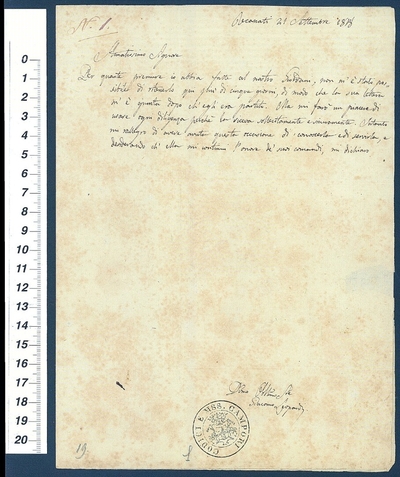
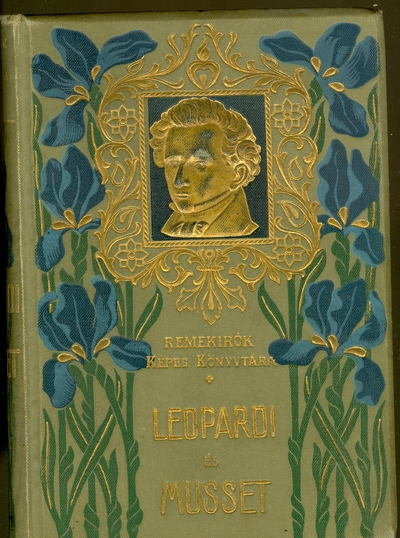
~40 min read
Encyclopedic overview
Count Giacomo Taldegardo Francesco di Sales Saverio Pietro Leopardi (29 June 1798 – 14 June 1837) was an Italian poet, philosopher, essayist, and philologist. Considered the greatest Italian poet of the 19th century and one of the greatest authors of his time worldwide, as well as one of the principals of literary Romanticism, his constant reflection on existence and on the human condition—of sensuous and materialist inspiration—has also earned him a reputation as a deep philosopher. He is widely seen as one of the most radical and challenging thinkers of the 19th century, and one of the crowns of Italian Romanticism together with Alessandro Manzoni, even if he expressed different and sometimes opposing positions compared to the latter. Although he lived in a secluded town in the conservative Papal States, he came into contact with the main ideas of the Enlightenment, and, through his own literary evolution, created a remarkable and renowned poetic work, related to the Romantic era. The strongly lyrical quality of his poetry made him a central figure on the European and international literary and cultural landscape.
Biography
Excerpted from Wikipedia’s “Giacomo Leopardi” article, available under the CC BY-SA 4.0 licence.
Gallery (12)
Available in 72 languages
- Español
- Français
- Deutsch
- 中文
- 日本語
- Русский
- Português
- Italiano
- العربية
- Albanian
- Aragonese
- Armenian
- Azerbaijani
- Bahasa Indonesia
- Basque
- be_x_old
- Belarusian
- Bosnian
Show 53 more
- Bulgarian
- Catalan
- Croatian
- Czech
- Danish
- Egyptian Arabic
- eml
- Esperanto
- Estonian
- Extremaduran
- Finnish
- Galician
- Georgian
- Greek
- Haitian Creole
- Hebrew
- Hungarian
- Ido
- Kazakh
- Latin
- Latvian
- Ligurian
- Lithuanian
- Lombard
- Macedonian
- Malayalam
- Mingrelian
- Neapolitan
- Nederlands
- Norwegian
- Norwegian Nynorsk
- Occitan
- Piedmontese
- Polski
- Romanian
- Sardinian
- Serbian
- Serbian (Latin)
- Sicilian
- simple
- Slovak
- Slovenian
- Svenska
- Tiếng Việt
- Türkçe
- Ukrainian
- Venetian
- Welsh
- Wu Chinese
- zh_yue
- فارسی
- ไทย
- 한국어
via Wikidata sitelinks · CC0