
File:Bargello_-_Kapelle_Fresko_2a.jpg · Wikimedia Commons · See Wikimedia Commons
Dante Alighieri
Sign in to saveAlso known as Dante, Durante degli Alighieri, Durante di Alighiero degli Alighieri
Florentine poet, writer, and philosopher (c. 1265–1321)
OverviewAI-generated
Dante Alighieri was an Italian writer and human born in Florence in 1265. He was a member of the Dolce Stil Novo movement and wrote in Italian and Latin. His notable works include The Divine Comedy, Convivio, De Monarchia, and De vulgari eloquentia. He was influenced by Aristotle, Virgil, Ovid, and Boethius.
He was the son of Alighiero di Bellincione and the husband of Gemma Donati. They had three children: Jacopo Alighieri, Pietro Alighieri, and Antonia Alighieri. Dante studied under Remigio dei Girolami, Brunetto Latini, and Cecco d'Ascoli. He participated in the Battle of Campaldino and resided in Florence, Rome, Ravenna, and Bologna. He died in Ravenna in 1321.
Synthesized by Vinony from 27 facts across 3 sources: Wikidata, TMDb, Europeana Sparql. Generated from structured data (not the Wikipedia text) and checked against those facts — may still contain errors.
Film & TV
Florence, Tuscany, Italy
Dante Alighieri, most likely baptized Durante di Alighiero degli Alighieri and often referred to as Dante, was an Italian poet, writer and philosopher. His Divine Comedy, originally called Comedìa and later christened Divina by Giovanni Boccaccio, is widely considered one of the most important poems of the Middle Ages and the greatest literary work in the Italian language. Dante is known for…
via TMDB
Wikidata facts
- Instance of
- human
- Given name
- Dante
- Gender
- male
- Citizenship
- Republic of Florence
- Place of birth
- Florence
- Place of death
- Ravenna
- Spouse
- Gemma Donati
- Child
- Pietro Alighieri
- Father
- Alighiero di Bellincione
- Occupation
- linguist
- Languages spoken
- Latin
- Native language
- Italian
- Religion
- Catholicism
- Student of
- Cecco d'Ascoli
- Field of work
- political philosophy
- Movement
- Dolce Stil Novo
- Conflict
- Battle of Campaldino
- Image
- Portrait de Dante.jpg
- Work location
- Florence
- Residence
- Genoa
Show 24 more facts
- Commons category
- Dante Alighieri
- topic's main category
- Category:Dante Alighieri
- Commons gallery
- Dante Alighieri
- Commons Creator page
- Dante Alighieri
- birth name
- Dante da Alaghiero degli Alaghieri
- influenced by
- Thomas Aquinas
- name in native language
- Dante Alighieri
- on focus list of Wikimedia project
- Wikipedia:Vital articles/Level/4
- ethnic group
- Italians
- has works in the collection
- National Gallery of Art
- start of work period
- 1292-00-00
- writing language
- Latin
- manner of death
- natural causes
- cause of death
- malaria
- date of death
- 1321-00-00
- date of birth
- 1265-00-00
- significant person
- Francesco de Sanctis
- maintained by WikiProject
- WikiProject Mathematics
- medical condition
- epilepsy
- P12674
- Tavo
- P12749
- Raron
- end of work period
- 1321-00-00
- P13311
- San Gabriel
- related category
- Category:Translators of Dante Alighieri
Sources (12)
via Wikidata · CC0
Works in European collections
36 objects attributed to Dante Alighieri, held across European museums, libraries & archives · via Europeana

Cantica prima che contiene l'inferno

Cantica seconda che contiene il purgatorio

Cantica terza che contiene il paradiso

La Commedia: col comento di N. Tommaseo

La divina commedia di Dante Alighieri : col Comento di Paolo Costa notabilmente accresciuto da Brunone Bianchi
Obra selecta [Manuscrito]
The Divine Comedy

Das neue Leben. Die vita nuova des Dante Alighieri. Uebersetzt und herausgegeben von Friedrich von Oeynhausen

Danthe alighieri Fiorentino historiado
Ms. lat. qu. 57 (Ausst. 33) - Comedia [Divina Commedia]

Laudi alla Vergine Maria: “Vergine madre, figlia del tuo Figlio”; for four-part female choir a capella; (four spiritual pieces No. 3)/Verdi. (Dante)
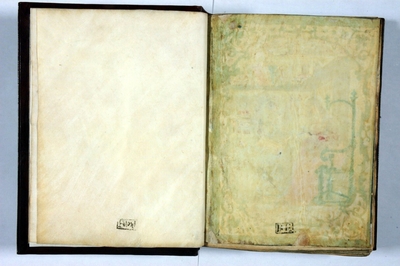
Comedy
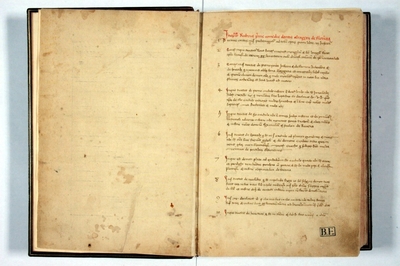
La Commedia con il commento di Pietro di Dante
New life. Muratori's autograph from ed. Florence 1576 (s.d.)
New life. Muratori's autograph from ed. Florence 1576 (s.d.)

LA COMEDIA DI DANTE ALIGIERI /
![Il Canto V. Dell'Inferno Esposto Con Note Istoriche, Estetiche, Filologiche Ecc. [per Matteo Jocevich]](https://api.europeana.eu/thumbnail/v2/url.json?uri=http%3A%2F%2Fdigital.onb.ac.at%2Fcds%2FABO_%252BZ167576107%2Fthumbnail%2Fthumbnail.jpg%3Fw%3D600%26q%3D80&type=IMAGE)
Il Canto V. Dell'Inferno Esposto Con Note Istoriche, Estetiche, Filologiche Ecc. [per Matteo Jocevich]
La divina commedia
La divina commedia di Dante Alighieri con varie annotazioni, e copiosi rami adornata ... : tomo primo
La divina commedia di Dante Alighieri con varie annotazioni, e copiosi rami adornata ... : tomo terzo
Prose, and unpublished lyrical rhymes

Rime

Teoría del traductor. Introducción a la "Divina Comedia"

Comença la comedia de Dant Allighieri de Florença ...

El convivio
Dante Alighieri tomo primo
Dante Alighieri second
Oeuvres de Dante Alighieri acompagné de notes et commentaires et d' une étude sur la Divine Comédie
Lux obnubilata, suapte natura refulgens. Vera de Lapide philosophico theorica, metro italico descripta et ab auctore innominato commenti gratia ampliata pars prima

Untitled
Untitled
Untitled
Untitled
Untitled
Untitled
Untitled
~32 min read
Encyclopedic overview
Dante Alighieri ( Italian: [ˈdante aliˈɡjɛːri]; most likely baptized Durante di Alighiero degli Alighieri; c. May 1265 – September 14, 1321), widely known mononymously as Dante, was an Italian poet, writer, and philosopher. His Divine Comedy, originally called Comedìa (modern Italian: Commedia) and later christened Divina by Giovanni Boccaccio, is widely considered one of the most important poems of the Middle Ages and the greatest literary work in the Italian language.
At a time when Latin was still the dominant language for scholarly and literary writing—and when many Italian poets drew inspiration from French or Provençal traditions—Dante broke with both by writing in the vernacular, specifically his native Tuscan dialect. His De vulgari eloquentia (On Eloquence in the Vernacular) was one of the first scholarly defenses of the vernacular. His use of the Florentine dialect for works such as The New Life (1295) and Divine Comedy helped establish the modern-day standardized Italian language. His work set a precedent that important Italian writers such as Petrarch and Boccaccio would later follow.
Excerpted from Wikipedia’s “Dante Alighieri” article, available under the CC BY-SA 4.0 licence.
Gallery (10)
Available in 199 languages
- Español
- Français
- Deutsch
- 中文
- 日本語
- Русский
- Português
- Italiano
- العربية
- हिन्दी
- Abkhazian
- abstract
- Afrikaans
- Albanian
- Albanian
- Amharic
- Angika
- Aragonese
Show 180 more
- Armenian
- Assamese
- Asturian
- Avaric
- Awadhi
- Aymara
- azb
- Azerbaijani
- Bahasa Indonesia
- Bangla
- Bashkir
- Basque
- bat_smg
- Bavarian
- be_x_old
- Belarusian
- Bhojpuri
- Bikol
- Bislama
- Bosnian
- Breton
- btm
- Bulgarian
- Buriat
- Catalan
- cbk_zam
- cdo
- Cebuano
- Central Kurdish
- Chechen
- Chuvash
- Cornish
- Corsican
- Crimean Tatar
- Croatian
- Czech
- Danish
- Egyptian Arabic
- eml
- Erzya
- Esperanto
- Estonian
- Extremaduran
- Faroese
- Fiji Hindi
- Filipino
- Finnish
- fiu_vro
- Galician
- Gan Chinese
- gcr
- Georgian
- Greek
- Guarani
- Haitian Creole
- Hakka Chinese
- Hausa
- Hebrew
- Hungarian
- hyw
- Icelandic
- Ido
- Iloko
- Interlingua
- Interlingue
- Irish
- Jamaican Creole English
- Javanese
- Jju
- Kabardian
- Kabyle
- Kanuri
- Kara-Kalpak
- Kashmiri
- Kazakh
- kbp
- Khmer
- Kurdish
- Kyrgyz
- Ladino
- Latin
- Latvian
- Ligurian
- Limburgish
- Lingua Franca Nova
- Lithuanian
- lld
- Lombard
- Low German
- Luxembourgish
- Macedonian
- Madurese
- Maithili
- Malagasy
- Malay
- Malayalam
- Maltese
- Manx
- Marathi
- Mari
- Mazanderani
- Minangkabau
- Mingrelian
- Mirandese
- Mongolian
- nah
- Neapolitan
- Nederlands
- Nepali
- Newari
- Northern Frisian
- Norwegian
- Norwegian Nynorsk
- Novial
- nrm
- Occitan
- olo
- Ossetic
- Pampanga
- Pangasinan
- Pashto
- Picard
- Piedmontese
- Polski
- Punjabi
- Quechua
- roa_rup
- roa_tara
- Romanian
- Romansh
- Rusyn
- Santali
- Sardinian
- Saterland Frisian
- Scots
- Scottish Gaelic
- Serbian
- Serbian (Latin)
- Sicilian
- simple
- Sindhi
- Slovak
- Slovenian
- Svenska
- Swahili
- Tajik
- Talysh
- Tamil
- Tatar
- Tibetan
- Tiếng Việt
- Toki Pona
- Tumbuka
- Türkçe
- Tuvinian
- Udmurt
- Ukrainian
- Urdu
- Uzbek
- Venetian
- Veps
- Volapük
- Waray
- Welsh
- West Flemish
- Western Frisian
- Western Mari
- Western Panjabi
- Wu Chinese
- Yakut
- Yiddish
- Yoruba
- Zaza
- Zeelandic
- zh_min_nan
- zh_yue
- Zhuang
- فارسی
- ไทย
- 한국어
via Wikidata sitelinks · CC0