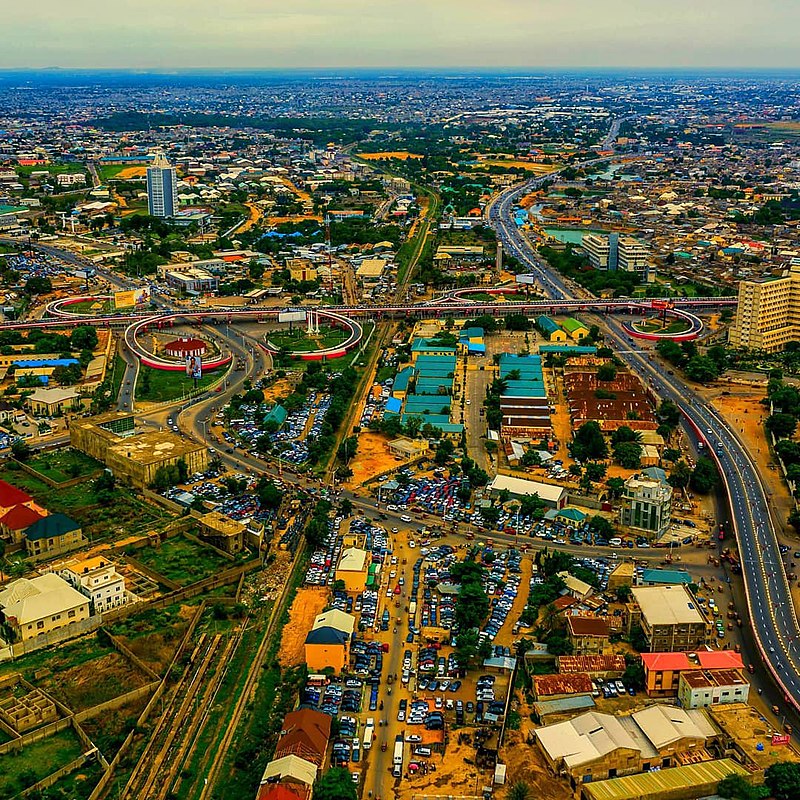
File:Kano_City_Aerial.jpg · Wikimedia Commons · See Wikimedia Commons
Kano State is a state located in northern Nigeria with a significant population and economic importance to the country. It matters because it serves as a major commercial and cultural hub in Nigeria's north, playing an important role in the nation's trade and economy.
AI-generated from the Wikipedia summary — may contain errors.
Wikidata facts
- Instance of
- state of Nigeria
- Country
- Nigeria
- Located in
- Nigeria
- Contains
- Doguwa
- Continent
- Africa
- Capital
- Kano (city)
- Official language
- English language
- Population
- 16076892
- Area
- 20131.0
- Time zone
- UTC+01:00
- Head of government
- Abdullahi Umar Ganduje
- Shares border with
- Katsina State
- Official website
- www.kanostate.net
- Image
- ISS024-E-5282 - View of Nigeria.jpg
Show 7 more facts
- inception
- 1967-05-27
- topic's main category
- Category:Kano State
- Commons category
- Kano State
- replaces
- Northern Region
- category of associated people
- Category:People from Kano State
- language used
- Arabic
- described by source
- New International Encyclopedia
Sources (9)
via Wikidata · CC0
~13 min read
Encyclopedic overview
Kano State Listen (Hausa: Jihar Kano جِهَرْ كَنُوَ) is one of the 36 states of Nigeria, located in the northern region of the country. According to the 2006 national census, Kano State was the most populous state in Nigeria. As of November 2025, its population is rivalled only by Lagos State, which does not have clear reporting due to the rate of growth of Lagos, its largest city. Created in 1967 out of the former Northern Region, Kano State borders Katsina State to the northwest for about 210 km (130 miles), Jigawa State to the northeast for 355 km (221 miles), Bauchi State to the southeast for 131 km (82 miles), and Kaduna State to the southwest for 255 km (158 miles). The state's capital and largest city is Kano, the second most populous city in Nigeria after Lagos. The incumbent governor of the state is Abba Kabir Yusuf. He was sworn in on 29 May 2023.
The Hausa and Fulani make up the majority of Kano State's population. The Hausa language is the dominant language in the state, as it is in most of Northern Nigeria. Challenges faced by Kano State in the 21st century include attacks by the Islamist terrorist group Boko Haram, inter-religious violence, and extreme poverty. A Muslim-majority state, Kano State is one of the twelve states in Nigeria to operate under Sharia law within the legal framework of the Nigerian Constitution. Photo of Kano city in December 1930
Excerpted from Wikipedia’s “Kano State” article, available under the CC BY-SA 4.0 licence.