
knacker
Sign in to saveAlso known as Knackered, Knackers, Nightsoil man
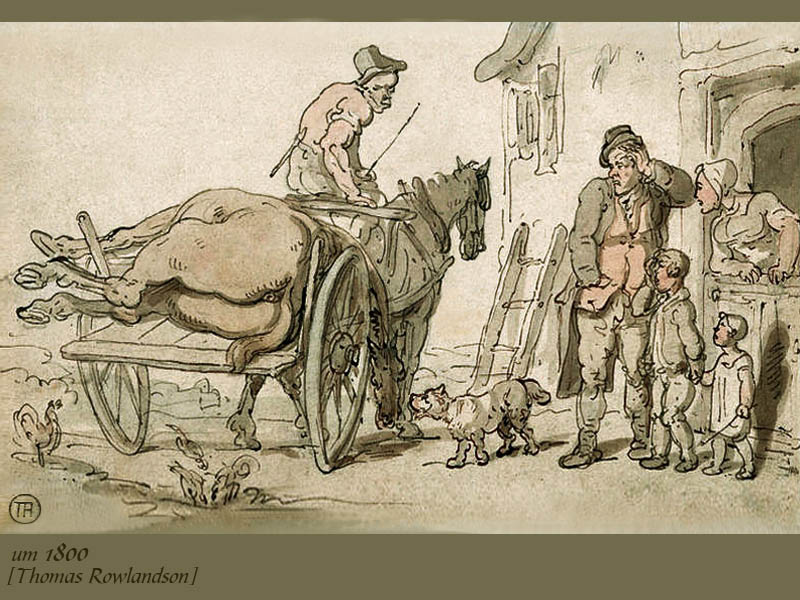
thumb|upright=1.4|"A Dead Horse on a Knacker's Cart", drawing by Thomas Rowlandson (1757–1827). thumb|A group of dead pigs awaiting pickup by a local knackery, dumped at the edge of a farm site in [[Scotland; pig farmers in particular prefer the knackery truck not to come close to where live pigs are kept as this is a way that disease can be spread.]] thumb|Smoke discharging from incinerators at Douglasbrae Knackery, Scotland. The business deals with the disposal of animal carcasses from all over the north-east of Scotland.
Described at
Die Abdecker - Berufe und Tätigkeiten dieser Welt
Zur Sauberhaltung von Städten beseitigten Abdecker anfallenden Tierkadaver, sicherten, was noch verwertbar war, und vergruben den Rest auf dem Schind-Anger.
berufe-dieser-welt.de →Link to a page describing this subject · 17,377 chars · not written by Vinony
Wikidata facts
Show 4 more facts
- different from
- hanged, drawn, quartered and decapitated
- described at URL
- berufe-dieser-welt.de/die-abdecker
- female form of label
- konjederka
- male form of label
- konjederec
Sources (2)
via Wikidata · CC0
~4 min read
Encyclopedic overview
4 sectionsContents
- Etymology
- Legal definition
- Slang use
- References
thumb|upright=1.4|"A Dead Horse on a Knacker's Cart", drawing by Thomas Rowlandson (1757–1827). thumb|A group of dead pigs awaiting pickup by a local knackery, dumped at the edge of a farm site in [[Scotland; pig farmers in particular prefer the knackery truck not to come close to where live pigs are kept as this is a way that disease can be spread.]] thumb|Smoke discharging from incinerators at Douglasbrae Knackery, Scotland. The business deals with the disposal of animal carcasses from all over the north-east of Scotland.
A knacker (), knackerman or knacker man is a person who removes and clears animal carcasses (dead, dying, injured) from private farms or public highways and renders the collected carcasses into by-products such as fats, tallow (yellow grease), glue, gelatin, bone meal, bone char, sal ammoniac, soap, bleach and animal feed. A knacker's yard or a knackery is different from a slaughterhouse or abattoir, where animals are slaughtered for human consumption. Since the Middle Ages, the occupation of "knacker man" was frequently considered a disreputable occupation. Knackers were often also commissioned by the courts as public executioners.
Excerpted from Wikipedia’s “knacker” article, available under the CC BY-SA 4.0 licence.