OverviewAI-generated
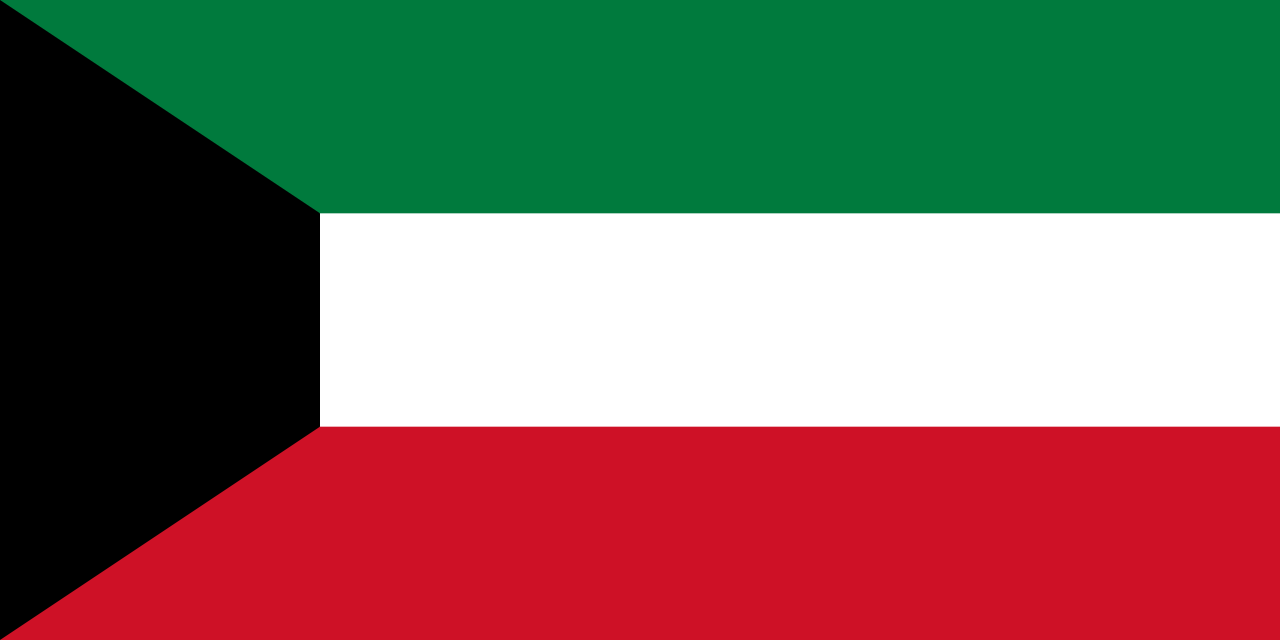
Kuwait, officially the State of Kuwait, is a country in Western Asia. Its capital is Kuwait City. The nation has a population of 4,897,263. It covers an area of 17,818 square kilometers. The official language is Arabic. The currency used is the Kuwaiti dinar, and the Gulf rupee is also listed. The country's flag is represented by the emoji 🇰🇼.
The legislative body is the National Assembly of Kuwait. The head of state includes Sabah Al-Ahmad Al-Jaber Al-Sabah, Nawaf Al-Ahmad Al-Jaber Al-Sabah, and Mishal Al-Ahmad Al-Jaber Al-Sabah. Kuwait maintains diplomatic relations with Australia, Saudi Arabia, Serbia, and the United Kingdom. It replaced the Republic of Kuwait and a British protectorate. The country's inception date is recorded as 1991-02-26.
Kuwait has 100 percent urban population and internet users. The life expectancy is 84.58 years. The unemployment rate is 2.181 percent. The GDP is 160,227,273,053.334 USD. Renewable energy accounts for 0.1 percent of the total. Forest area makes up 0.350729517396184 percent of the land. The emergency phone number is 112.
Synthesized by Vinony from 71 facts across 10 sources: Wikidata, REST Countries, Openweathermap, Open Meteo, World Bank, OpenStreetMap, Firecrawl, PubMed, Vinony graph, Geo. Generated from structured data (not the Wikipedia text) and checked against those facts — may still contain errors.
Weather now
cached 10h ago7-day forecast
via Open-Meteo
Country

- Capital
- Kuwait City
- Population
- 4,881,254
- Region
- Asia · Western Asia
- Demonym
- Kuwaiti
- Currencies
- KWD (د.ك)
- Languages
- Arabic
- Calling code
- +965
- Drives on
- Right
- FIFA code
- KUW
- TLD
- .kw
- Timezones
- UTC+03:00
- Borders
- IRQ, SAU
via REST Countries
Indicators · World Bank
- GDP
- $160.2B(2024)
- Population
- 4,897,263(2024)
- Life expectancy
- 84.6 yrs(2024)
- Unemployment
- 2.2 %(2025)
- Urban population
- 100 %(2024)
- Internet users
- 100 %(2025)
- Forest area
- 0.4 %(2023)
- Renewable energy
- 0.1 %(2021)
via World Bank Open Data · CC BY 4.0
Wikipedia views (30d)
115,451 totalvia Wikimedia Pageviews API
Key facts
- Country.conventional_long_name
- State of Kuwait
- Country.common_name
- Kuwait
- Country.image_flag
- Flag of Kuwait.svg
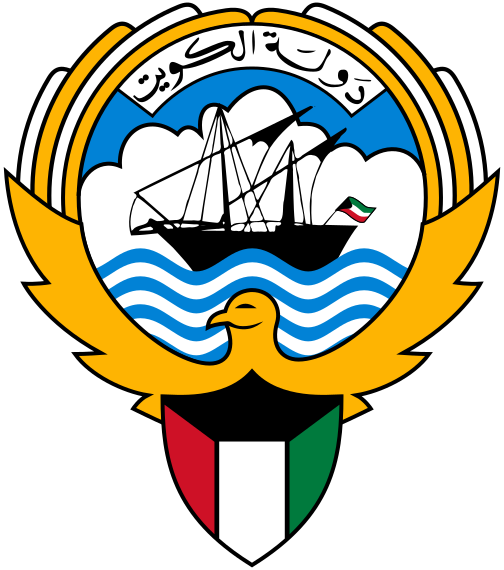
- Country.image_coat
- Emblem of the State of Kuwait.svg
- Country.symbol_type
- Emblem
- Country.national_anthem
- "National Anthem of Kuwait"
- Country.motto
- الله، الوطن، الأمير "God, Nation, Emir"
- Country.map_width
- 250px
- Country.capital
- Kuwait City
- Country.largest_city
- capital
- Country.official_languages
- Arabic
- Country.ethnic_groups_year
- 2018
- Country.ethnic_groups
- 57.8% Arab 40.3% South Asian 1.0% African 0.9% other
- Country.demonym
- Kuwaiti
- Country.government_type
- Unitary semi-constitutional monarchy
- Country.leader_title1
- Emir
- Country.leader_name1
- Mishal Al-Ahmad Al-Jaber Al-Sabah
- Country.leader_title2
- Crown Prince
via Wikipedia infobox
Research
19,722 papers- Kuwait bone marrow transplantation activities.ReviewHematology/oncology and stem cell therapy · 2017Al Shemmari SH, Ameen RDOI: 10.1016/j.hemonc.2017.05.020
- Kuwait's marine biodiversity: Qualitative assessment of indicator habitats and species.ReviewMarine pollution bulletin · 2021Edmonds NJ, Al-Zaidan AS, Al-Sabah AA et al.DOI: 10.1016/j.marpolbul.2020.111915
- Kuwait.Department of State publication. Background notes series · 1988United States. Department of State. Bureau of Public Affairs
- Global Dialysis Perspective: Kuwait.Kidney360 · 2021AlSahow A, AlYousef ADOI: 10.34067/KID.0000392021
- Epidemiology of snakebites in Kuwait.Transactions of the Royal Society of Tropical Medicine and Hygiene · 2021Al-Sayegh MT, Hani RB, Warrell DA et al.DOI: 10.1093/trstmh/trab077
- [Kuwait].Jeune Afrique (Paris, France : 1980) · 1996
- On the implementation of the circular economy route for E-waste management: A critical review and an analysis for the case of the state of Kuwait.ReviewJournal of environmental management · 2022Al-Salem SM, Leeke GA, El-Eskandarany MS et al.DOI: 10.1016/j.jenvman.2022.116181
- Transforming pharmacy practice in Kuwait.The International journal of health planning and management · 2023Al-Haqan A, Moreau P, Alghanem S et al.DOI: 10.1002/hpm.3631
via PubMed
Official website
البوابة الالكترونية الرسمية لدولة الكويت HomePage
e.gov.kw →Link to the official site · 22,584 chars · not written by Vinony
Wikidata facts
- Instance of
- sovereign state
- Official name
- دَولَةُ الكُوَيت
- Demonym
- Cuátach
- Country
- Kuwait
- Contains
- Mubarak Al-Kabeer Governorate
- Continent
- Asia
- Capital
- Kuwait City
- Official language
- Arabic
- Currency
- Gulf rupee
- Population
- 2088000
- Area
- 17818
- Head of government
- Sabah Al-Khalid Al-Sabah
- Head of state
- Mishal Al-Ahmad Al-Jaber Al-Sabah
- Form of government
- constitutional monarchy
- Legislature
- National Assembly of Kuwait
- Shares border with
- Iran
- Highest point
- Mutla Ridge
- Official website
- www.e.gov.kw
- Life expectancy
- 80
- Nominal GDP
- 184558274289
- Unemployment rate
- 3
- Calling code
- +965
- Licence plate code
- KWT
Show 55 more facts
- Electrical plug type
- BS 1363
- Mains voltage
- 240
- Flag
- flag of Kuwait
- Coat of arms
- Emblem of Kuwait
- topic's main Wikimedia portal
- Portal:Kuwait
- Unicode character
- 🇰🇼
- category of associated people
- Category:Kuwaiti people
- emergency phone number
- 112
- geography of topic
- Geography of Kuwait
- number of out-of-school children
- 52903
- diplomatic relation
- Kosovo
- Commons gallery
- الكويت / Kuwait
- inception
- 1991-02-26
- history of topic
- history of Kuwait
- replaces
- British protectorate
- marriageable age
- 15
- mobile country code
- 419
- total fertility rate
- 2.105
- maritime identification digits
- 447
- topic's main category
- Category:Kuwait
- category for films shot at this location
- Category:Films shot in Kuwait
- executive body
- Government of Kuwait
- Commons category
- Kuwait
- top-level Internet domain
- .kw
- category for people born here
- Category:Births in Kuwait
- driving side
- right
- lowest point
- Persian Gulf
- median income
- 40854
- central bank
- Central Bank of Kuwait
- language used
- Gulf Arabic
- GS1 country code
- 627
- culture
- culture of Kuwait
- P6413
- Kuwait
- BTI Status Index
- 5.79
- BTI Governance Index
- 4.86
- economy of topic
- economy of Kuwait
- demographics of topic
- demographics of Kuwait
- different from
- Koweït
- madhhab
- Malikism
- Democracy Index
- 3.91
- Human Development Index
- 0.831
- P11012
- Israel
- hashtag
- Kuwait
- on focus list of Wikimedia project
- Wikipedia:Vital articles/Level/4
- Happy Planet Index score
- 33.3
- native label
- الكويت
- P12749
- Maya people
- birth rate
- 9.727
- male population
- 2595948
- death rate
- 2.606
- rural population
- 0
- female population
- 1672926
- urban population
- 4268873
- P8168
- Géza Kalocsay
Sources (15)
via Wikidata · CC0
Travel guide
Understand
Kuwait has a population of 3,806,616 (Jun 2012), including about 2 million non-Kuwaitis, with ethnic groups consisting of 45% Kuwaiti, 35% other Arabs, among whom Egyptians predominate, 9% South Asian, 4% Iranian, and 7% others. Kuwait ranks among the most liberal Gulf nations in terms of religion. While Islam is the official religion with fully 85% of the population practicing the Muslim faith (divided into 70% Sunni and 30% Shia), others including Christians, Hindus and Zoroastrians make up 15% of the population.
The country is divided into governorates, which are divided into areas, which are divided into blocks. Knowing the area and block is necessary, as the street numbers may be repeated across different blocks of the same areas. Area names are not repeated across the country, so it would be unusual if you mention the governorate after the area. See the Get around section.
Electrical current is 220 Volts a/c, plugs are either standard British, Europlugs (2 prong diamond-shaped) or German Schuko variety—adapters are readily available.
Get in
thumb|375px|A map showing the visa requirements of Kuwait, with countries in green having visa-free access; and countries in yellow having visa on arrival or eVisa
Get around
thumb|Kuwait City skyline during daytime With an area of , Kuwait is among the smallest countries in the world and you can easily cover the country in less than 2-3 days. A journey from the capital city to Umm Qasr in Iraq will take you roughly 60-80 minutes depending on traffic conditions.
See
thumb|Ruins on Failaka Island See Kuwait City for listings of attractions in the city. Kuwait is not the ideal vacation spot in the region, but if on a business trip, there are some sites worth seeing:
Do
thumb|Avenues shopping mall. Like other Gulf states, Kuwait is known for its malls. See Kuwait City for more activities in the city.
Eat
thumb|Kiwi kebab, anyone? thumb|...or dates from the market? There is a huge array of restaurants in Kuwait. Because nightlife is virtually non-existent, most people go out to restaurants and malls. A wide variety of international cuisines is available in high-end restaurants, although some heavily pork-based cuisines (German, e.g.) are conspicuously absent. Kuwait is known for its culinary specialties and catering services. Restaurants can be found in food courts in malls, and alternatively many international restaurants are grouped together in certain areas in Kuwait, namely: Behind the Roman Catholic Church in Kuwait City Outside the Mövenpick Resort in Al-Bida'a, near Rumaithiya and Salmiya In the Marina Crescent
Just ask any local where the "Restaurants Road" is and they will guide you to a road in Salmiya packed end-to-end with local restaurants serving a wide array of specialty sandwiches, juices and snacks. Alternatively, head to any of the major shopping malls which are also crowded with restaurants ranging from fast to gourmet food. Every conceivable U.S. chain is represented in Kuwait.
While rare, there are still some restaurants that serve traditional Kuwaiti food. Al-Marsa restaurant in Le Meridien Hotel (Bneid Al Gar location) has some traditional Kuwaiti seafood but with a relatively high price tag. A cheaper option is the quaint Shati Alwatia restaurant at the Behbehani Villa compound in the Qibla area of Kuwait City (behind the Mosques) and another Kuwaiti …
Drink
Alcohol is banned outright in Kuwait. It may not be imported, manufactured, or possessed, even for personal use. Newspapers regularly report busts of illegal distilleries.
Sleep
Hotels in Kuwait are expensive, but major Western chains are well represented (see Kuwait City for hotel listings). Light sleepers should bring ear plugs as public announced prayers are broadcast before twilight and several times during the day.
Chalets and other weekend accommodation can be rented in many places along the southern part of the coast.
Stay safe
Kuwait, by and large, is a very safe country to visit.
Emergency telephone number (police, fire, ambulance) is 112.
Stay healthy
Public health is entirely supported by the government at local clinics and hospitals, with a KD 5 fee paid by foreigners visiting Kuwait and KD 1 for expats with a resident visa, or a visitor's visa. Private non-governmental clinics are available as well, but charge much more at KD 30 and upwards. You will be entitled to free treatment in case of an accident or an emergency. In case of an emergency, call 112.
Tap water is drinkable, although most of it is desalinated and not particularly tasty, and in summertime, you may have a hard time telling apart the hot and cold taps. Bottled water is available everywhere for a few hundred fils.
Travel guide from Wikivoyage (CC BY-SA 4.0)
Article · Português
Kuwait, oficialmente Estado do Kuwait (em árabe: دولة الكويت, Dawlat al-Kuwayt), é um emirado árabe soberano situado no nordeste da península Arábica na Ásia Ocidental. Faz fronteira com a Arábia Saudita ao sul e ao norte com o Iraque. Encontra-se na costa noroeste do Golfo Pérsico. O nome Kuwait é derivada do árabe "akwat", o plural de "Kout", que significa "fortaleza construída perto da água". O emirado tem uma área de 17 820 km² e tem uma população de cerca de 2,7 milhões de habitantes. Historicamente, a região era conhecida como Caracena, um grande porto parta para o comércio entre a Índia e a Mesopotâmia. A tribo foram os primeiros colonos árabes permanentes na região e estabeleceram as bases modernas do emirado. No século XIX, o Kuwait estava sob a influência do Império Otomano e depois da Primeira Guerra Mundial, ele emergiu como um independente sob a proteção do Império Britânico. Grandes campos de petróleo no Kuwait foram descobertos na década de 1930. Após Kuwait ter conquistado a independência do Reino Unido em 1961, a indústria de petróleo do país registou um crescimento econômico sem precedentes. Em 1990, o Kuwait foi invadido e anexado pelo vizinho Iraque. Os sete meses de ocupação iraquiana chegaram ao fim depois de uma intervenção militar direta por parte das forças liderada pelos Estados Unidos. Cerca de 773 poços de petróleo do Kuwait foram incendiados por parte do exército iraquiano, resultando em uma grande catástrofe ambiental e econômica para o país. A infraestrutura do Kuwait foi danificada durante a guerra e teve de ser reconstruída. O Kuwait é uma monarquia constitucional com um sistema parlamentar de governo, com a Cidade do Kuwait servindo como capital política e econômica do país. O país tem a quinta maior reserva de petróleo do mundo e os derivados de petróleo representam agora cerca de 95% das receitas de exportação e 80% da renda do governo do país. Kuwait tem o décimo primeiro maior PIB per capita do planeta e tem o maior índice de desenvolvimento humano (IDH) do mundo árabe. O Kuwait é classificado como uma economia de alta renda pelo Banco Mundial e é designado como um grande aliado não membro da OTAN dos Estados Unidos.
Abstract from DBpedia / Wikipedia · CC BY-SA
Gallery (39)
On the map
2 mapped locations
Available in 252 languages
- Español
- Français
- Deutsch
- 中文
- 日本語
- Русский
- Português
- Italiano
- العربية
- हिन्दी
- Abkhazian
- Achinese
- Adyghe
- Afrikaans
- Albanian
- Albanian
- Amharic
- ami
Show 233 more
- Angika
- Aragonese
- Aramaic
- Armenian
- Arpitan
- Assamese
- Asturian
- Avaric
- Awadhi
- azb
- Azerbaijani
- Bahasa Indonesia
- Balinese
- Bangla
- Bashkir
- Basque
- bat_smg
- Bavarian
- be_x_old
- Belarusian
- Betawi
- Bhojpuri
- Bikol
- Bishnupriya
- Bislama
- Bosnian
- Breton
- Buginese
- Bulgarian
- Buriat
- Burmese
- Catalan
- cbk_zam
- cdo
- Cebuano
- Central Dusun
- Central Kurdish
- Chechen
- Chuvash
- Cornish
- Crimean Tatar
- Croatian
- Czech
- dag
- Danish
- Divehi
- dty
- Dzongkha
- Egyptian Arabic
- Esperanto
- Estonian
- Extremaduran
- Faroese
- Fiji Hindi
- Filipino
- Finnish
- fiu_vro
- Fula
- Gagauz
- Galician
- gcr
- Georgian
- Gilaki
- Goan Konkani
- Gorontalo
- Greek
- Guarani
- Gujarati
- Haitian Creole
- Hakka Chinese
- Hausa
- Hawaiian
- Hebrew
- Hungarian
- hyw
- Iban
- Icelandic
- Ido
- Iloko
- Inari Sami
- Interlingua
- Interlingue
- Irish
- Jamaican Creole English
- Javanese
- Kabardian
- Kabyle
- Kannada
- Kanuri
- Kara-Kalpak
- Karachay-Balkar
- Kashmiri
- Kashubian
- Kazakh
- kbp
- kge
- Khmer
- Kikuyu
- Kinyarwanda
- Komi
- Kongo
- Kurdish
- Kyrgyz
- Ladino
- Lao
- Latin
- Latvian
- Lezghian
- Ligurian
- Limburgish
- Lingala
- Lingua Franca Nova
- Lithuanian
- lld
- Lojban
- Lombard
- Low German
- Lower Sorbian
- Luxembourgish
- Macedonian
- Madurese
- Maithili
- Malagasy
- Malay
- Malayalam
- Maltese
- Manipuri
- Manx
- Māori
- Marathi
- Mari
- Mazanderani
- Minangkabau
- Mingrelian
- Moksha
- Mongolian
- Moroccan Arabic
- nah
- Navajo
- Nederlands
- Nepali
- Newari
- Northern Frisian
- Northern Sami
- Norwegian
- Norwegian Nynorsk
- Novial
- Obolo
- Occitan
- Odia
- Old English
- olo
- Oromo
- Ossetic
- Pampanga
- Papiamento
- Pashto
- Piedmontese
- Polski
- Punjabi
- Quechua
- rki
- Romanian
- Rusyn
- Sanskrit
- Santali
- Sardinian
- Scots
- Scottish Gaelic
- Serbian
- Serbian (Latin)
- Shan
- Shona
- Sicilian
- Silesian
- simple
- Sindhi
- Sinhala
- skr
- Slovak
- Slovenian
- Somali
- Sundanese
- Svenska
- Swahili
- Swati
- syl
- szy
- Tajik
- Talysh
- Tamil
- Taroko
- Tatar
- tay
- Telugu
- Tetum
- Tibetan
- Tiếng Việt
- Tok Pisin
- Toki Pona
- Tongan
- Tulu
- Tumbuka
- Türkçe
- Turkmen
- Udmurt
- Ukrainian
- Upper Sorbian
- Urdu
- Uyghur
- Uzbek
- Venetian
- Veps
- Volapük
- Waray
- Welsh
- West Flemish
- Western Frisian
- Western Panjabi
- Wolof
- Wu Chinese
- Yakut
- Yiddish
- Yoruba
- Zaza
- Zeelandic
- zh_classical
- zh_min_nan
- zh_yue
- Zhuang
- فارسی
- ไทย
- 한국어
via Wikidata sitelinks · CC0