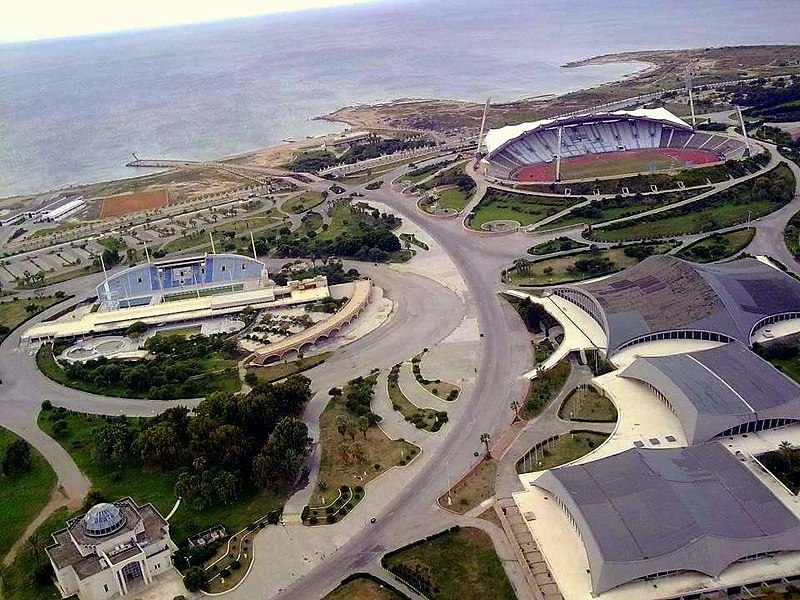
File:Latakia_Sports_City_aerial_view_in_1991.jpg · Wikimedia Commons · See Wikimedia Commons
Latakia
Sign in to saveAlso known as Latakiyah, Lattaki
Latakia (; ; Syrian pronunciation: ), officially Lattakia, is the principal port city of Syria and capital city of the Latakia Governorate located on the Mediterranean coast. Historically, it has also been known as Laodicea in Syria or Laodicea ad Mare. In addition to serving as a port, the city is a significant manufacturing center for surrounding agricultural towns and villages. According to a 2023 estimate, the population of the city is 709,000, its population greatly increased as a result of the Syrian Revolution, which led to an influx of internally displaced persons from rebel held areas
OverviewAI-generated
Latakia is a big city in Syria, located in the Lattakia Subdistrict. It serves as the capital of Latakia Governorate and Latakia District. The city covers an area of 58 square kilometers and has a population of 709000. Its elevation is recorded at 0 meters above sea level, though other sources list it at 26 or 29 meters. The local dialing code is 041.
Latakia is twinned with Sousse, Mersin, Constanța, and Rimini. It replaces the historical entity Laodicea and is distinct from Laodicea on the Lycus. The city is described by sources including The Nuttall Encyclopædia, the Jewish Encyclopedia of Brockhaus and Efron, and the Encyclopædia Britannica 11th edition. A significant event in its history is the Siege of Latakia. Its official name is اللاذقية.
Synthesized by Vinony from 51 facts across 7 sources: Wikidata, Open Meteo, Openweathermap, OpenStreetMap, GeoNames, Vinony graph, Geo. Generated from structured data (not the Wikipedia text) and checked against those facts — may still contain errors.
Weather now
7-day forecast
via Open-Meteo
Place details
- Locality
- الدباغة
- Region
- محافظة اللاذقية
- Country
- سوريا
- Population
- 709,000
- Timezone
- Asia/Damascus
via OpenStreetMap · GeoNames
Key facts
- Settlement.name
- Latakia
- Settlement.official_name
- Lattakia
- Settlement.named_for
- Laodice of Macedonia
- Settlement.nickname
- "Bride of the Mediterranean"
- Settlement.settlement_type
- City
- Settlement.image_shield
- Coat of Arms of Latakia.svg
- Settlement.mapframe
- yes
- Settlement.mapframe zoom
- 11
- Settlement.mapframe wikidata
- yes
- Settlement.pushpin_map
- Syria#Mediterranean east#Asia
- Settlement.pushpin_relief
- yes
- Settlement.pushpin_map_caption
- Location of Latakia within Syria
- Settlement.subdivision_type
- Country
- Settlement.subdivision_type1
- Governorate
- Settlement.subdivision_name1
- Latakia Governorate
- Settlement.subdivision_type2
- District
- Settlement.subdivision_name2
- Latakia District
- Settlement.subdivision_type3
- Subdistrict
via Wikipedia infobox
Wikidata facts
- Official name
- اللاذقية
- Country
- Syria
- Located in
- Lattakia Subdistrict
- Population
- 709000
- Area
- 58
- Elevation
- 0
- Capital of
- Latakia District
- Official website
- www.elatakia.sy
- Image
- Latakia Collage.jpg
- Dialing code
- 041
- Significant event
- Siege of Latakia
Show 10 more facts
- Commons category
- Latakia
- topic's main category
- Category:Latakia
- category for people born here
- Category:Births in Latakia
- category for people who died here
- Category:Deaths in Latakia
- category of associated people
- Category:People from Latakia
- described by source
- Encyclopædia Britannica 11th edition
- native label
- اللاذقية
- different from
- Laodicea on the Lycus
- replaces
- Laodicea
- P12749
- June 10
Sources (8)
via Wikidata · CC0
Travel guide
Understand
thumb|Welcome sign on the Latakia Train Station The city consists largely of white stucco highrises and streets lined with palm trees, and the most popular beaches are along the coast to the north of the city. Latakia is home to one of Syria's largest universities, Latakia University, and the city tends to be relatively socially progressive and liberal (by Syrian standards), with a mixed population of Christian, Alawi, and Sunni inhabitants.
Get around
Much of Latakia is accessible by taxi.
One can walk along the corniche, although it is otherwise not a very walkable city, due to distances between points in the city (beach, downtown, resort hotels, Ugarit, etc.).
See
thumbnail|Saladin's castle
The Latakia region is known for its diversity of landscapes, from the green mountains to the sandy beaches, with many important archeological sites, such as the Saladin Castle (a UNESCO World Heritage Site since 2006) and the ruins of Ugarit, close enough to see on a day trip from Latakia.
Do
thumb|View of the beach from Al Siwar Restaurant In the city center, the American street attracts the young and fashionable at night.
Also the Zira'a quarter and around the university are hip upcoming parts of the city.
Travel guide from Wikivoyage (CC BY-SA 4.0)
~32 min read
Encyclopedic overview
33 sectionsContents
- Etymology
- History
- Ancient settlement and founding
- Roman rule
- Early Islamic era
- Crusader, Ayyubid, and Mamluk rule
- Ottoman rule
- French Mandate period
- Modern era
- Syrian Civil War
- Geography
- Climate
- Demographics
- Economy
- Port
- Agriculture
- Tourism
- Culture
- Festivals
- Museums
- Sport
- Latakia tobacco
- Education
- Main sights
- Local infrastructure
- Healthcare
- Transportation
- Notable people
- Twin towns – sister cities
- See also
- References
- Bibliography
- External links
Latakia (; ; Syrian pronunciation: ), officially Lattakia, is the principal port city of Syria and capital city of the Latakia Governorate located on the Mediterranean coast. Historically, it has also been known as Laodicea in Syria or Laodicea ad Mare. In addition to serving as a port, the city is a significant manufacturing center for surrounding agricultural towns and villages. According to a 2023 estimate, the population of the city is 709,000, its population greatly increased as a result of the Syrian Revolution, which led to an influx of internally displaced persons from rebel held areas. It is the 5th-largest city in Syria after Aleppo, Damascus, Homs and Hama. Cape Apostolos Andreas, the north-eastern tip of Cyprus, is about away.
Although the site of the city has been inhabited since the 2nd millennium BC, the city was founded as a Greek city in the 4th century BC under the rule of the Greek Seleucid Empire. Latakia was subsequently ruled by the Romans and Byzantines, followed by the Rashiduns, Umayyads and Abbasids during the 7th–10th centuries AD. Byzantine ruling groups frequently attacked the city, periodically recapturing it before losing it again to Arab powers, particularly the Fatimids. Afterward, Latakia was ruled successively by the Seljuk Turks, Crusaders, Ayyubids, Mamluks, and the Ottomans. Following World War I, Latakia was assigned to the French mandate of Syria, in which it served as the capital of the autonomous territory of the Alawites. This autonomous territory became the Alawite State in 1922, proclaiming its independence a number of times until reintegrating into Syria in 1944.
Excerpted from Wikipedia’s “Latakia” article, available under the CC BY-SA 4.0 licence.
Gallery (52)
On the map
3 mapped locations
Available in 82 languages
- Español
- Français
- Deutsch
- 中文
- 日本語
- Русский
- Português
- Italiano
- العربية
- हिन्दी
- Afrikaans
- Albanian
- Armenian
- azb
- Azerbaijani
- Bahasa Indonesia
- Bangla
- Basque
Show 63 more
- Belarusian
- Bosnian
- Bulgarian
- Catalan
- Cebuano
- Central Kurdish
- Croatian
- Czech
- Danish
- Egyptian Arabic
- Esperanto
- Estonian
- Finnish
- Galician
- Georgian
- Greek
- Hebrew
- Hungarian
- hyw
- Icelandic
- Ido
- Interlingue
- Kabyle
- Kyrgyz
- Latin
- Latvian
- Lithuanian
- Malagasy
- Malay
- Mazanderani
- Mingrelian
- Moksha
- Mongolian
- Nederlands
- Norwegian
- Norwegian Nynorsk
- Ossetic
- Piedmontese
- Polski
- Romanian
- Scots
- Serbian
- Serbian (Latin)
- Silesian
- simple
- Slovenian
- Svenska
- Tajik
- Talysh
- Tatar
- Türkçe
- Ukrainian
- Urdu
- Uyghur
- Uzbek
- Waray
- Welsh
- Western Panjabi
- Wu Chinese
- zh_yue
- فارسی
- ไทย
- 한국어
via Wikidata sitelinks · CC0