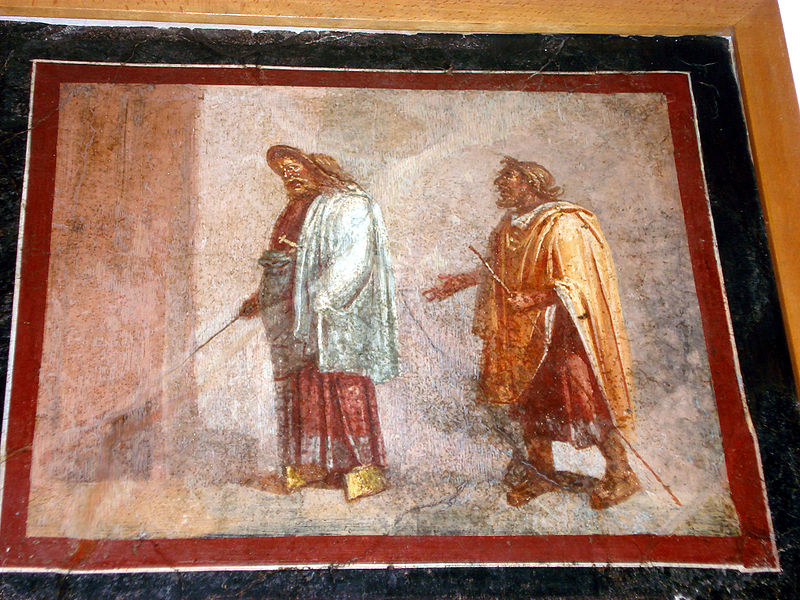
File:DSC00367_-_Affresco_con_scena_teatrale_(epoca_romana)_-_Foto_G._Dall'Orto.jpg · Wikimedia Commons · See Wikimedia Commons
Livius Andronicus
Sign in to saveAlso known as Lucius Livius Andronicus
3rd-century BC Greco-Roman dramatist and epic poet
OverviewAI-generated
Lucius Livius Andronicus was a male poet, translator, writer, and playwright born in Taras in 280 BCE. He was a citizen of Ancient Rome and wrote in Latin. His notable work includes the Odyssey. He died in Rome in 200 BCE.
He was a member of the Livia gens and lived during the Roman Republic. His works include Livii Andronici dramatum reliquiae, Livii Andronici Odyssiae reliquiae, L. Livii Andronici Fragmenta collecta et inlustrata, Odissea, and Livi Andronici et Cn. Naevi fabularum reliquiae. He is described by sources such as the Brockhaus and Efron Encyclopedic Dictionary, The Nuttall Encyclopædia, Encyclopædia Britannica 11th edition, and Pauly–Wissowa.
Synthesized by Vinony from 18 facts across 2 sources: Wikidata, Open Library. Generated from structured data (not the Wikipedia text) and checked against those facts — may still contain errors.
Person · Open Library
- Works
- 5
Top works
- Livii Andronici dramatum reliquiae
- Livii Andronici Odyssiae reliquiae
- L. Livii Andronici Fragmenta collecta et inlustrata
- Odissea
- Livi Andronici et Cn. Naevi fabularum reliquiae
via Open Library + Wikidata
Wikidata facts
- Instance of
- human
- Gender
- male
- Citizenship
- Ancient Rome
- Place of birth
- Taras
- Place of death
- Rome
- Occupation
- playwright
- Languages spoken
- Latin
- Notable work
- Odyssey
- Image
- Livius Andronicus.jpg
Show 7 more facts
- date of birth
- 0280-01-01
- date of death
- 0200-01-01
- birth name
- Lucius Livius Andronicus
- described by source
- Encyclopædia Britannica 11th edition
- time period
- Roman Republic
- gens
- Livia gens
- writing language
- Latin
via Wikidata · CC0
~11 min read
Encyclopedic overview
Lucius Livius Andronicus (/ˈlɪviəs/; Greek: Λούκιος Λίβιος Ανδρόνικος; c. 284 – c. 204 BC) was a Greco-Roman dramatist, actor, and epic poet of the Old Latin period during the Roman Republic. He began as an educator in the service of a noble family, producing Latin translations of Greek works, including Homer's Odyssey. The translations were meant, at first, as educational devices for the school which he founded. He also wrote works for the stage—both tragedies and comedies—which are regarded as the first dramatic works written in the Latin language. His comedies were based on Greek New Comedy and featured characters in Greek costume. Thus, the Romans referred to this new genre by the term comoedia palliata or fabula palliata, meaning "cloaked comedy," the pallium being a Greek-style cloak. The Roman biographer Suetonius later coined the term "half-Greek" of Livius and Ennius (referring to their genre, not their ethnic backgrounds). The genre was imitated by later generations of playwrights, and Andronicus is accordingly regarded as the father of Roman drama and of Latin literature in general; that is, he was the first man of letters to write in Latin. Varro, Cicero, and Horace, all men of letters during the subsequent Classical Latin period, considered Livius Andronicus to have been the originator of Latin literature. He is the earliest Roman poet whose name is known.
Biography
Excerpted from Wikipedia’s “Livius Andronicus” article, available under the CC BY-SA 4.0 licence.