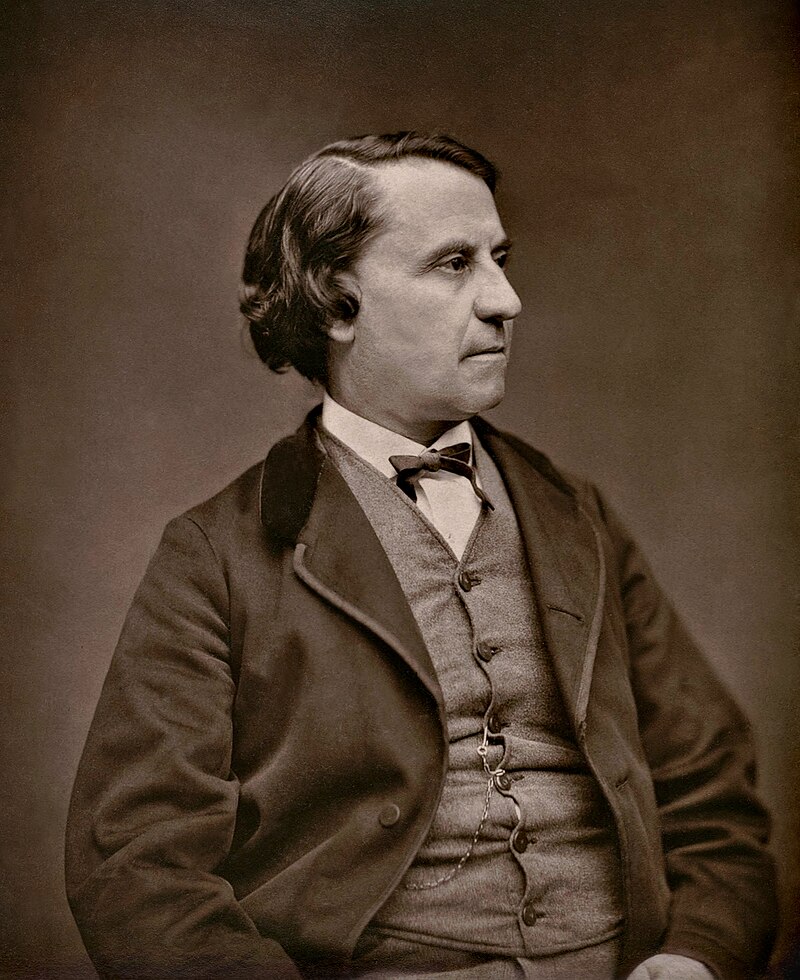
File:Louis_Blanc_by_Carjat_1848.jpg · Wikimedia Commons · See Wikimedia Commons
Louis Blanc
Sign in to saveAlso known as Jean Joseph Louis Blanc
French politician and historian (1811-1882)
Key facts
- Born
- ( 1811-10-29 ) 29 October 1811, Madrid , Bonapartist Spain
- Died
- 6 December 1882 (1882-12-06) (aged 71), Cannes , France
- Resting place
- Père Lachaise Cemetery , Paris
- Era
- 19th-century philosophy
- Region
- Western philosophy
- School
- Socialism
- Main interests
- Politics , history , economy
- Notable ideas
- Right to work , national workshops
- Party
- The Mountain (1849–1852), Republican Union (1871–1882)
via Wikipedia infobox
Wikidata facts
- Instance of
- human
- Given name
- Charles
- Family name
- Blanc
- Gender
- male
- Citizenship
- France
- Place of birth
- Madrid
- Place of death
- Cannes
- Sibling
- Charles Blanc
- Occupation
- editor-in-chief
- Position held
- member of the French National Assembly
- Languages spoken
- Spanish
- Native language
- French
- Notable work
- National Workshops
- Image
- Louis Blanc by Carjat 1848.jpg
- Work location
- Paris
Show 12 more facts
- Commons category
- Louis Blanc
- date of birth
- 1811-10-29
- date of death
- 1882-12-06
- Commons Creator page
- Louis Blanc
- described by source
- Pax Leksikon
- birth name
- Louis Jean Joseph Charles Blanc
- name in native language
- Louis Blanc
- archives at
- International Institute of Social History
- writing language
- French
- member of
- Freemasonry
- P12749
- Antonov An-26
- P8168
- sheer
Sources (3)
via Wikidata · CC0
~11 min read
Encyclopedic overview
Louis Jean Joseph Charles Blanc (/blɑːn/ BLAHN; French: [blɑ̃]; 29 October 1811 – 6 December 1882) was a French socialist politician, journalist and historian. He called for the creation of cooperatives in order to guarantee employment for the urban poor. Although Blanc's ideas of the workers' cooperatives were never realized, his political and social ideas greatly contributed to the development of socialism in France. He wanted the government to encourage cooperatives and replace capitalist enterprises. These cooperatives were to be associations of people who produced together and divided the profit accordingly.
Following the Revolution of 1848, Blanc became a member of the provisional government and began advocating for cooperatives which would be initially aided by the government but ultimately controlled by the workers themselves. Blanc's advocacy failed; caught between radical worker tendencies and the National Guard, he was forced into exile. Blanc returned to France in 1870, shortly before the conclusion of the Franco-Prussian War, and served as a member of the National Assembly for Seine. He did not support the Paris Commune but later he successfully proposed amnesty to the Communards.
Excerpted from Wikipedia’s “Louis Blanc” article, available under the CC BY-SA 4.0 licence.