
Mali
Also known as Republic of Mali, ml
stato dell'Africa occidentale
AI overview
Mali is a large, landlocked country in West Africa that is notable for its significant size—it's the eighth-largest country on the African continent. The country has historical importance as a center of West African civilization and continues to be strategically significant in the region, though it has faced considerable challenges including political instability and security concerns in recent years.
AI-generated from the Wikipedia summary — may contain errors.
Weather now
cached 10h ago32°clear sky
38% 6.5 m/s OpenWeatherMap
7-day forecast
via Open-Meteo
Country
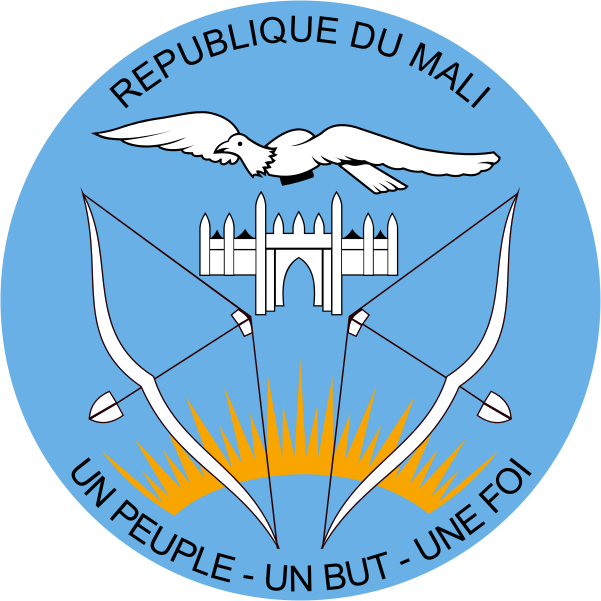
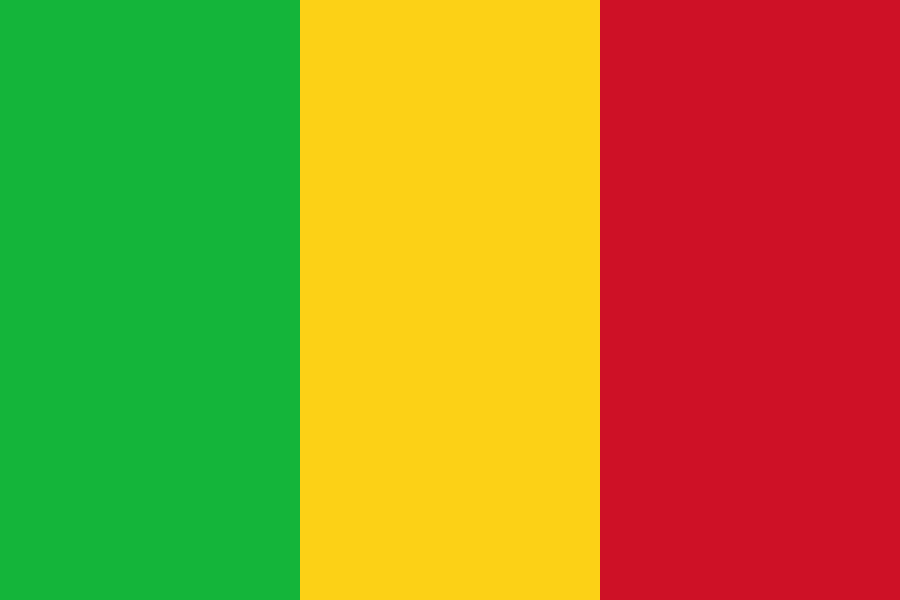
- Capital
- Bamako
- Population
- 22,395,489
- Region
Travel guide
Understand
The Sudanese Republic and Senegal became independent of France on 22 Sept 1960 as the Mali Federation. Senegal withdrew after only a few months, and the Sudanese Republic was renamed Mali. The country was then governed by dictatorships until 1991. In 1992 the country's first democratic presidential elections were held.
Just under half the population is less than 15 years old. The great majority of Malians are Muslim, some also practice indigenous beliefs, and a tiny number are Christian. Around 10% of the population is nomadic. Most Malians work in agriculture and fishing.
See
The Great Mosque of Djenné, built in 1907, is made completely of mud, and it has five stories and three towers. Every spring the people replaster the Mosque. Regrettably, entrance to non-Muslims is not allowed. Apparently this prohibition is a consequence of a fashion photo-shoot held by Vogue inside the mosque in 1996, which was regarded by the locals as "pornographic".
Sites and cultural landscapes making up the Mali Empire can be seen in different parts of the country.
Do
Cruise the Niger River on a traditional pirogue.
Eat
thumb|Street food in [[Mopti]] The most universal Malian dish is rice with sauce, often peanut "tiga diga na," tomato/onion/oil or leaf/okra based which is usually served some fish or meat if purchased or prepared for guests. "To", a gelatinous corn or millet food served with sauce, is another Malian classic, though more a village food than something most tourists would encounter. In the north, couscous is also quite common.
In the largest cities, decent "western" restaurants can be found, charging near western prices. Bamako even has good Chinese, Vietnamese, Italian, Lebanese and more. In smaller places, the standard Malian restaurant serves chicken or beef with fries and/or salad - usually edible and affordable, but boring and not particularly Malian. The better places in the more touristy areas may also have some local specialities. "Street food" is a lot more fun and cheaper: breakfast will be omelet sandwiches, lunch is usually rice with a couple of sauces to choose from, and dinner presents many options including beans, spaghetti cooked in oil and a little tomato, potatoes, fried rice, chicken, meatballs, beef kebabs, fish and salad. You can find little tables along the roadsides and near transport centers.
Article · Italiano
Il Mali, ufficialmente Repubblica del Mali (in francese République du Mali, in bambara ߡߊߟߌ ߞߊ ߝߊߛߏߖߊߡߊߣߊ, Mali ka Fasojamana, in fula 𞤈𞤫𞤲𞥆𞤣𞤢𞥄𞤲𞤣𞤭 𞤃𞤢𞥄𞤤𞤭, Renndaandi Maali, in arabo جمهورية مالي), è uno Stato situato nell'interno dell'Africa occidentale e senza sbocco sul mare. È l'ottavo stato più esteso dell'Africa, con un'area di oltre 1.240.000 km²; la popolazione ammonta a 19,1 milioni di persone, il 67% dei quali veniva stimato essere al di sotto dei 25 anni nel 2017. A nord confina con l'Algeria, a est con il Niger, a sud con il Burkina Faso e la Costa d'Avorio, a sud-ovest con la Guinea e a ovest con il Senegal e la Mauritania; la capitale è Bamako, che è anche la maggiore città del Paese. Lo stato consiste di otto regioni, ed il suo confine settentrionale raggiunge le profondità del deserto del Sahara, mentre la parte meridionale del Paese è compresa nella Savana sudanese, attraverso la quale scorrono sia il fiume Niger che il fiume Senegal, e dove vive la maggior parte degli abitanti. L'economia nazionale è centrata sull'agricoltura e l'estrazione mineraria: una delle principali risorse naturali del Mali è l'oro, di cui è il terzo produttore nel continente africano; esporta anche il sale. L'attuale Mali era un tempo parte di tre imperi africani occidentali che controllavano le vie commerciali trans-sahariane: l'Impero del Ghana (da cui prende il nome il Ghana), l'Impero del Mali (da cui prende il nome il Mali) e l'Impero Songhai. Al suo picco, nel 1300, l'impero del Mali copriva un'area circa doppia rispetto all'attuale Francia, e si estendeva fino alla costa occidentale dell'Africa. Alla fine del XIX secolo, durante la spartizione dell'Africa, la Francia prese il controllo del Mali, rendendolo parte del Sudan francese (allora conosciuto come Repubblica sudanese), che nel 1959 fu unito al Senegal, e raggiunse poi l'indipendenza nel 1960 come Federazione del Mali. Poco dopo, a seguito del ritiro del Senegal dalla federazione, la Repubblica sudanese si dichiarò indipendente con il nome di Repubblica del Mali. Dopo un lungo periodo di dominio monopartitico, un colpo di Stato nel 1991 portò ad una nuova costituzione e l'istituzione di uno stato democratico e multipartitico. Nel gennaio 2012 scoppiò un conflitto armato nel Mali settentrionale, in cui i Tuareg ribelli presero il controllo di un territorio del nord, e nell'aprile dichiararono la secessione di un nuovo stato, Azawad. Il conflitto fu complicato ulteriormente dal colpo di Stato del marzo 2012 e dalle lotte successive tra Tuareg e altre fazioni ribelli. In risposta alle conquiste territoriali, l'esercito francese lanciò l'Operazione Serval nel gennaio 2013. Un mese dopo, le forze maliane e francesi riconquistarono quasi tutto il nord; le elezioni presidenziali si tennero il 28 luglio 2013, con il secondo turno l'11 agosto, e le elezioni parlamentari si tennero il 24 novembre e 25 dicembre dello stesso anno. Nel 2020 e nel 2021 si sono verificati nel Mali due colpi di stato da parte di Assimi Goïta.
Gallery (59)
On the map
6 mapped locations
Connections
Categories
1960 establishments in AfricaCountries and territories where Arabic is an official languageCountries in AfricaCountries in West AfricaFormer French coloniesLandlocked countriesLeast developed countriesMaliMember states of the African UnionMember states of the Organisation internationale de la FrancophonieMember states of the Organisation of Islamic Cooperation