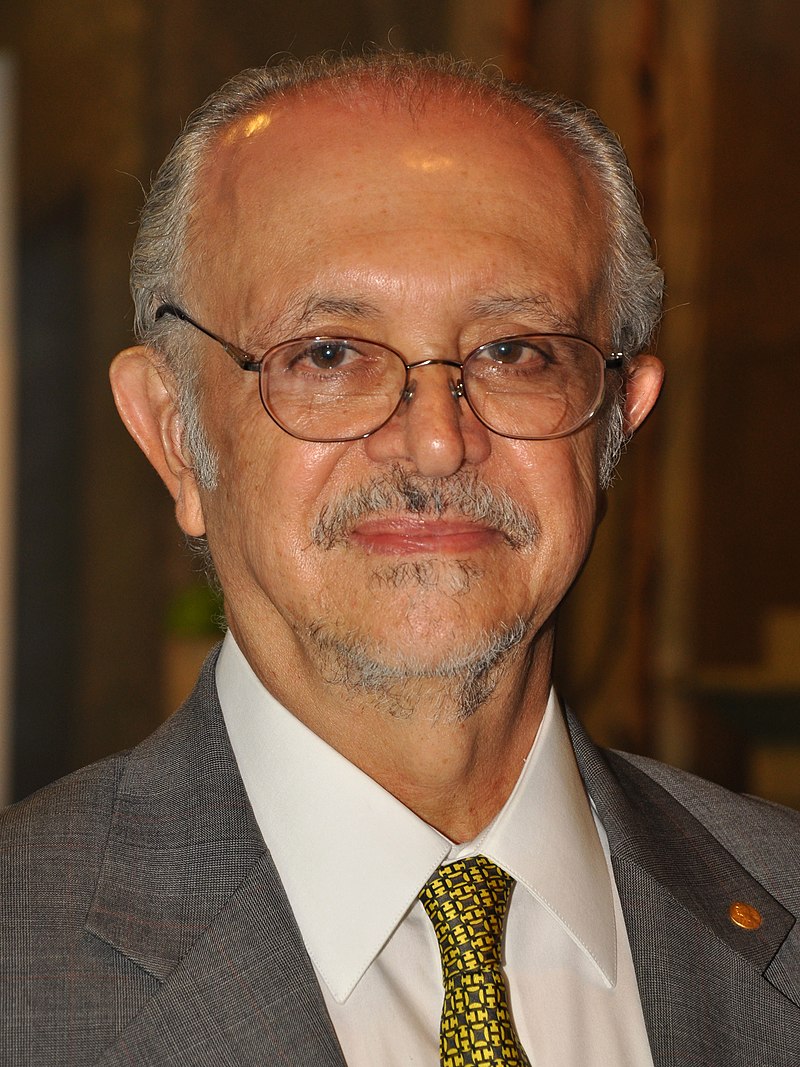
File:Mario_Molina_1c389_8387.jpg · Wikimedia Commons · See Wikimedia Commons
Mario Molina
Sign in to saveAlso known as Mario J Molina, Mario José Molina, Mario J. Molina
Mexican chemical engineer (1943–2020)
OverviewAI-generated
Mario J. Molina was a scientist born on March 19, 1943, and died on October 7, 2020. He received one Nobel Prize. His work is recognized in the Nobel Laureates collection, the Nobel Chemistry collection, and the Presidential Medal Of Freedom collection.
Molina is affiliated with the Centro Mario Molina.
Synthesized by Vinony from 8 facts across 3 sources: Wikidata, Nobel Prize, Vinony collections. Generated from structured data (not the Wikipedia text) and checked against those facts — may still contain errors.
Nobel Prize
- The Nobel Prize in Chemistry1995
“for their work in atmospheric chemistry, particularly concerning the formation and decomposition of ozone”
Shared · 1/3 portion
Wikidata facts
- Instance of
- human
- Given name
- Mario
- Gender
- male
- Citizenship
- United States
- Place of birth
- Mexico City
- Place of death
- Mexico City
- Occupation
- university teacher
- Educated at
- University of Freiburg
- Languages spoken
- English language
- Native language
- Spanish
- Academic degree
- doctorate
- Doctoral advisor
- George C. Pimentel
- Field of work
- chemistry
- Image
- Mario Molina 1c389 8387.jpg
Show 12 more facts
- Commons category
- Mario J. Molina
- date of birth
- 1943-03-19
- member of
- American Philosophical Society
- name in native language
- Mario Molina
- birth name
- Mario José Molina Henríquez
- second family name in Spanish name
- Henriquez
- date of death
- 2020-10-07
- cause of death
- myocardial infarction
- affiliation string
- Centro Mario Molina
- on focus list of Wikimedia project
- WikiProject Climate change
- manner of death
- natural causes
- interested in
- chemistry
Sources (7)
via Wikidata · CC0
~17 min read
Encyclopedic overview
Mario José Molina-Pasquel Henríquez (19 March 1943 – 7 October 2020) was a Mexican physical chemist. He played a pivotal role in the discovery of the Antarctic ozone hole, and was a co-recipient of the 1995 Nobel Prize in Chemistry for his role in discovering the threat to the Earth's ozone layer from chlorofluorocarbon (CFC) gases. He was the first Mexican-born scientist to receive a Nobel Prize in Chemistry and the third Mexican-born person to receive a Nobel prize.
In his career, Molina held research and teaching positions at University of California, Irvine, California Institute of Technology, Massachusetts Institute of Technology, University of California, San Diego, and the Center for Atmospheric Sciences at the Scripps Institution of Oceanography. Molina was also Director of the Mario Molina Center for Energy and Environment in Mexico City. Molina was a climate policy advisor to the President of Mexico, Enrique Peña Nieto.
Excerpted from Wikipedia’s “Mario Molina” article, available under the CC BY-SA 4.0 licence.
Gallery (4)
Available in 67 languages
- Español
- Français
- Deutsch
- 中文
- 日本語
- Русский
- Português
- Italiano
- العربية
- हिन्दी
- Armenian
- azb
- Azerbaijani
- Bahasa Indonesia
- Bangla
- Basque
- Belarusian
- Bulgarian
Show 48 more
- Catalan
- Croatian
- Czech
- Danish
- Egyptian Arabic
- Finnish
- Galician
- Georgian
- Greek
- Hakka Chinese
- Hebrew
- Hungarian
- Ido
- Irish
- Latin
- Low German
- Malagasy
- Malay
- Malayalam
- Marathi
- Mazanderani
- Mingrelian
- Nederlands
- Norwegian
- Occitan
- Polski
- Quechua
- Romanian
- Scottish Gaelic
- Serbian
- simple
- Slovak
- Slovenian
- Svenska
- Swahili
- Tamil
- Tatar
- Tiếng Việt
- Türkçe
- Ukrainian
- Urdu
- Uzbek
- Waray
- Western Panjabi
- Wu Chinese
- Yoruba
- فارسی
- 한국어
via Wikidata sitelinks · CC0