Profile via TMDB · Courtesy of TMDB
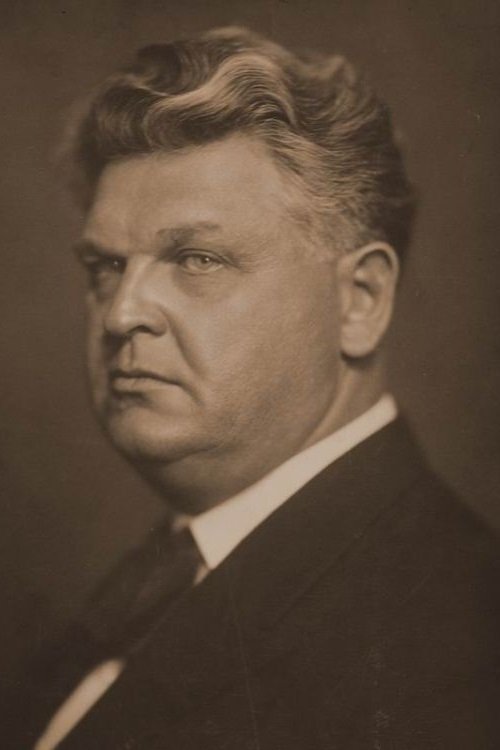
Mihail Sadoveanu
Sign in to saveAlso known as Mihai din Pașcani, M. S. Cobuz
Romanian writer, journalist and politician (1880–1961)
Film & TV
Pașcani, Iași, România
Known for
- The Country of Motzi — Narrator (voice)1938
via TMDB
Key facts
- Born
- ( 1880-11-05 ) 5 November 1880, Pașcani , Iași County , Kingdom of Romania
- Died
- 19 October 1961 (1961-10-19) (aged 80), Vânători-Neamț , Neamț County , Romanian People's Republic
- Resting place
- Bellu Cemetery , Bucharest , Romania
- Pen name
- Mihai din Pașcani, M. S. Cobuz
- Occupation
- novelist, short story writer, journalist, essayist, translator, poet, civil servant, activist, politician
- Language
- Romanian
- Nationality
- Romanian
- Genre
- historical novel , adventure novel , biographical novel , political novel , psychological novel , crime fiction , memoir , travel literature , nature writing , fantasy , reportage , biography , sketch story , children's literature , lyric poetry
- Literary movement
- Realism , Social realism , Naturalism , Sămănătorul , Poporanism , Socialist realism
- Years active
- 1892 – 1952
- Spouses
- Ecaterina Bâlu; Valeria Mitru
- Children
- Profira Paul-Mihu
- Preceded by
- Petru Groza
- Succeeded by
- Ion Gheorghe Maurer
- Party
- Romanian Communist Party (1944–1961)
- Other political affiliations
- National Renaissance Front , Agrarian Union Party , National Agrarian Party , National Liberal Party–Brătianu , People's Party
- Awards
- Lenin Peace Prize
via Wikipedia infobox
Wikidata facts
- Instance of
- human
- Given name
- Mikhail
- Gender
- male
- Citizenship
- Romania
- Place of birth
- Pașcani
- Place of death
- Bucharest
- Occupation
- translator
- Languages spoken
- Romanian
- Religion
- Eastern Orthodox Church
- Notable work
- Baltagul
- Image
- Mihail Sadoveanu.jpg
Show 12 more facts
- cause of death
- stroke
- pseudonym
- M. S. Cobuz
- place of burial
- Bellu Cemetery
- Commons category
- Mihail Sadoveanu
- date of birth
- 1880-11-05
- date of death
- 1961-10-19
- member of
- Romanian Academy
- manner of death
- natural causes
- influenced by
- Émile Zola
- start of work period
- 1900-00-00
- name in native language
- Mihail Sadoveanu
- Commons Creator page
- Mihail Sadoveanu
via Wikidata · CC0
~40 min read
Encyclopedic overview
Mihail Sadoveanu (occasionally referred to as Mihai Sadoveanu; 5 November 1880 – 19 October 1961) was a Romanian novelist, short story writer, journalist and political figure, who twice served as acting head of state for the Socialist Republic of Romania (1947–1948 and 1958). One of the most prolific Romanian-language writers, he is remembered mostly for his historical and adventure novels, as well as for his nature writing. An author whose career spanned five decades, Sadoveanu was an early associate of the traditionalist magazine Sămănătorul, before becoming known as a Realist writer and an adherent to the Poporanist current represented by Viața Românească journal. His books, critically acclaimed for their vision of age-old solitude and natural abundance, are generally set in the historical region of Moldavia, building on themes from Romania's medieval and early modern history. Among them are Neamul Șoimăreștilor ("The Șoimărești Family"), Frații Jderi ("The Jderi Brothers") and Zodia Cancerului ("Under the Sign of the Crab"). With Venea o moară pe Siret... ("A Mill Was Floating down the Siret..."), Baltagul ("The Hatchet") and some other works of fiction, Sadoveanu extends his fresco to contemporary history and adapts his style to the psychological novel, Naturalism and Social realism.
A traditionalist figure whose perspective on life was a combination of nationalism and Humanism, Sadoveanu moved between right- and left-wing political forces throughout the interwar period, while serving terms in Parliament. Rallying with People's Party, the National Agrarian Party, and the National Liberal Party-Brătianu, he was editor of the leftist newspapers Adevărul and Dimineața, and was the target of a violent far right press campaign. After World War II, Sadoveanu became a political associate of the Romanian Communist Party. He wrote in favor of the Soviet Union and Stalinism, joined the Society for Friendship with the Soviet Union and adopted Socialist realism. Many of his texts and speeches, including the political novel Mitrea Cocor and the famous slogan Lumina vine de la Răsărit ("The Light Arises in the East"), are also viewed as propaganda in favor of communization.
Excerpted from Wikipedia’s “Mihail Sadoveanu” article, available under the CC BY-SA 4.0 licence.