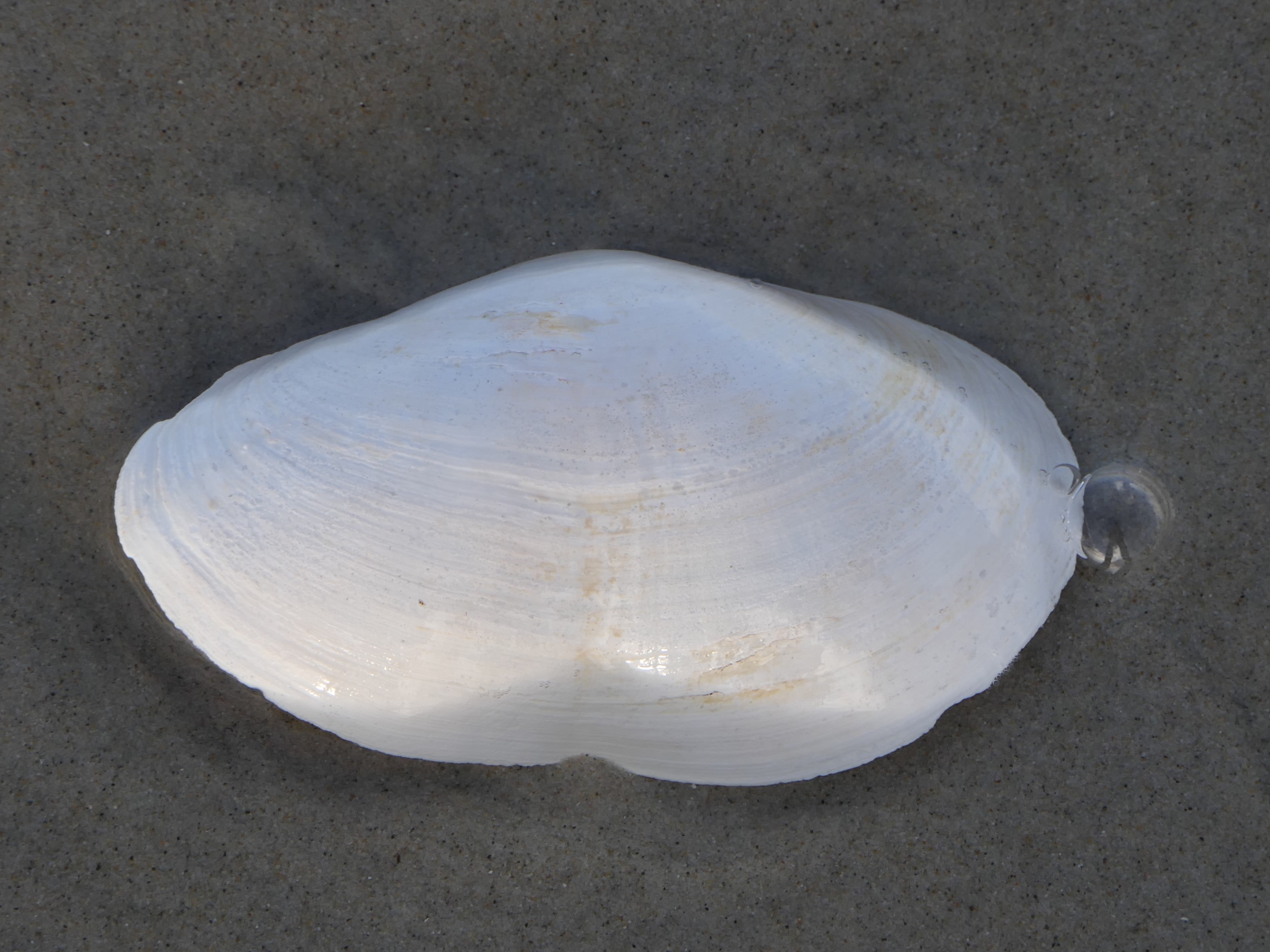
Image from GBIF · CC BY
Mya arenaria
Sign in to saveAlso known as Ipswich clam, Softshell clam, Piss clam, Piss-clam, Steamer clam, Soft clam, soft-shell clam
species of mollusc
Species
large-neck clam
SPECIES
- KingdomAnimalia
- PhylumMollusca
- ClassBivalvia
- OrderMyida
- FamilyMyidae
Biology/Natural History: This clam has been introduced from the Atlantic, being first seen in San Francisco Bay in 1874. It slowly spread north, and reached Alaska in the 1950's. By the 1920's it seems to have largely displaced the native clams in San Francisco Bay. This clam has long siphons, and can be 20-35 cm below the surface. It can live anaerobically for several days, and dissolves the shell to buffer acidity in these conditions. In San Francisco Bay its optimal intertidal depth is 30 cm above zero tide line. The siphons appear as slits at the surface of the mud, and emit a spurt of water as they contract if one steps near them. This clam burrows only slowly, without using the foot much. Burrowing is by closing the valves and forcefully ejecting water. Predators include skates, rays, and sharks. Predators in Europe include oystercatchers and curlews, from which the clams have a refuge in depth if over 15 cm deep. May contain pea crab symbionts. Mature at about 2-4.5 cm, and spawn in spring or summer. This species is highly esteemed for food.
via GBIF
Museum specimens
- Specimen records
- 4,826
- With media
- 149
- Family
- Myidae
- Collections
- RBINS-SCIENTIFIC HERITAGE, LACM, PRI
- Recorded in
- Netherlands, Belgium, United States, France
Wikidata facts
Show 8 more facts
Sources (1)
via Wikidata · CC0