Category
page 1Animal taxa named by Carl Linnaeus
.png)
dog
The dog (Canis familiaris or Canis lupus familiaris) is a domesticated descendant of wolves. Also called the domestic dog, it was selectively bred during the Late Pleistocene by hunter-gatherers. Dogs and the modern gray wolf share a common ancestor. Dogs were the first species to be domesticated over 14,000 years ago, before the development of agriculture, though genetic studies suggest the domestication process may have begun over 25,000 years ago. Due to their long association with humans, dogs have gained the ability to thrive on a starch-rich diet that would be inadequate for other canids

Cat
bird
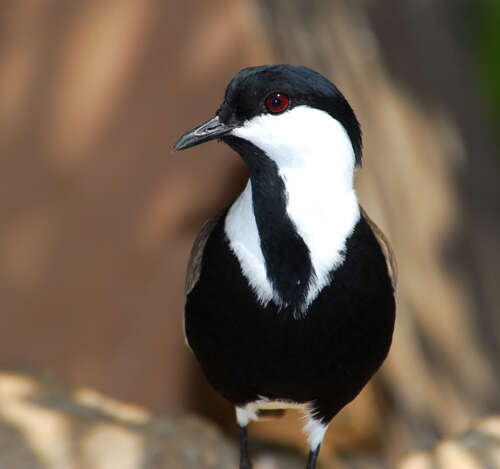
Birds are a group of warm-blooded theropod dinosaurs constituting the class Aves, characterised by feathers, toothless beaked jaws, the laying of hard-shelled eggs, a high metabolic rate, a four-chambered heart, and a strong yet lightweight skeleton. Birds live worldwide and range in size from the bee hummingbird to the common ostrich. There are over 11,000 living species and they are split into 44 orders. More than half are passerine or "perching" birds. Birds have wings whose development varies according to species; the only known groups without wings are the extinct moa and elephant birds.

horse
thumb|External anatomy of a horse|upright=1.5|alt=Diagram of a horse with some parts labeled.

human
Humans (Homo sapiens, meaning "thinking man" or "wise man") are the most common and widespread species of primate, and the only extant species of the genus Homo. They are great apes characterized by hairlessness, obligate bipedality, manual dexterity with opposable thumbs, precision grip, and high intelligence. Humans have large brains compared to body size (a high encephalization quotient), enabling more advanced cognitive skills that facilitate successful adaptation to varied environments, development of sophisticated tools, and formation of complex social structures and civilizations. Human

lion
The lion (Panthera leo) is a large cat of the genus Panthera, currently ranging only in Sub-Saharan Africa and India. It has a muscular, broad-chested body; a short, rounded head; round ears; and a dark, hairy tuft at the tip of its tail. It is sexually dimorphic; adult male lions are larger than females and have a prominent mane that which extends from the head to the shoulders and chest.
chicken
The chicken (Gallus gallus domesticus) is a domesticated form of the red junglefowl (Gallus gallus), originally native to Southeast Asia. It was first domesticated around 8,000 years ago and is one of the most common and widespread domesticated animals in the world. Chickens are primarily kept for their meat and eggs, though they are also kept as pets.

snake
Snakes are elongated limbless reptiles of the suborder Serpentes. Cladistically squamates, snakes are ectothermic, amniote vertebrates covered in overlapping scales much like other members of the group. Many species of snakes have skulls with several more joints than their lizard ancestors and relatives, enabling them to swallow prey much larger than their heads (cranial kinesis). To accommodate their narrow bodies, snakes' paired organs (such as kidneys) appear one in front of the other instead of side by side, and most only have one functional lung. Some species retain a pelvic girdle with a
tiger
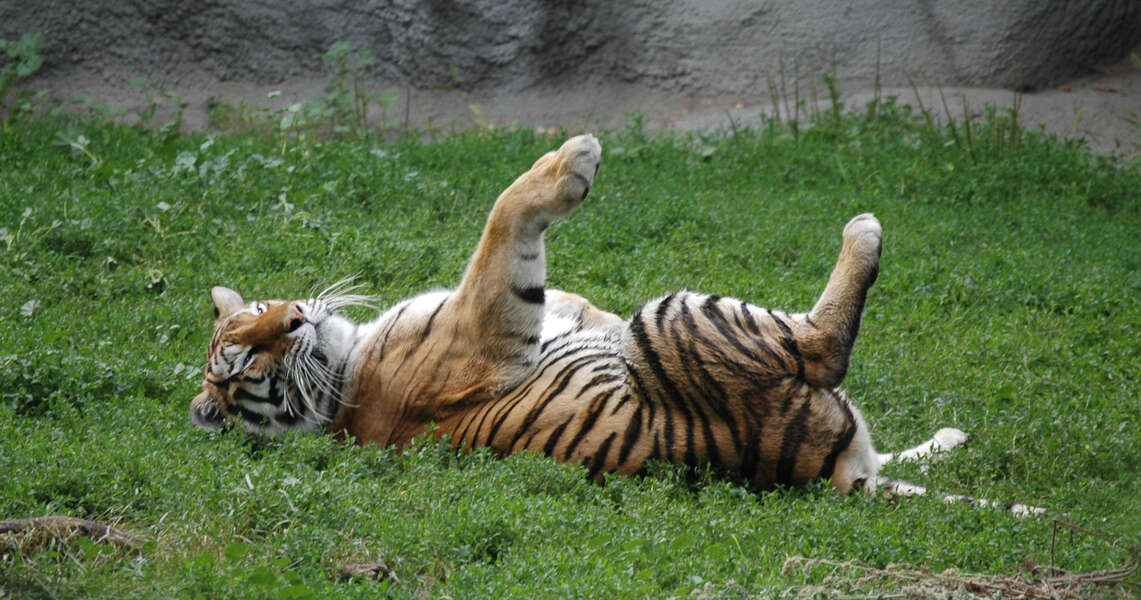
The tiger (Panthera tigris) is a large cat and a member of the genus Panthera native to Asia. It has a powerful, muscular body with a large head and paws, a long tail and orange fur with black, mostly vertical stripes. It is traditionally classified into nine recent subspecies, though some recognise only two subspecies, mainland Asian tigers and the island tigers of the Sunda Islands.

mammal
A mammal () is a vertebrate animal of the class Mammalia (). Mammals are characterised by the presence of milk-producing mammary glands for feeding their young, a broad neocortex region of the brain, fur or hair, and three middle ear bones. These characteristics distinguish them from reptiles and birds, from which their ancestors diverged in the Carboniferous period over 300 million years ago. Around 6,640 extant species of mammals have been described and divided into 27 orders. The study of mammals is called mammalogy.
Canis lupus
The wolf (Canis lupus; : wolves), also known as the grey wolf or gray wolf, is a canine native to Eurasia and North America. More than thirty subspecies of Canis lupus have been recognized, including the dog and dingo, though grey wolves, as popularly understood, include only naturally occurring wild subspecies. The wolf is the largest wild extant member of the family Canidae, and is further distinguished from other Canis species by its less pointed ears and muzzle, as well as a shorter torso and a longer tail. The wolf is nonetheless related closely enough to smaller Canis species, such as th

Camelus
A camel (from and () from Ancient Semitic: gāmāl) is an even-toed ungulate in the genus Camelus that bears distinctive fatty deposits known as "humps" on its back. Camels have long been domesticated and, as livestock, they provide food (camel milk and meat) and textiles (fiber and felt from camel hair). Camels are working animals especially suited to their desert habitat and are a vital means of transport for passengers and cargo. There are three surviving species of camel. The one-humped dromedary makes up 94% of the world's camel population, and the two-humped Bactrian camel makes up 6%. The

Panthera pardus
The leopard (Panthera pardus) is one of the five extant cat species in the genus Panthera. It has a pale yellowish to dark golden fur with dark spots grouped in rosettes. Its body is slender and muscular, reaching a length of with a long tail and a shoulder height of . Males typically weigh , and females .

donkey
The donkey or ass is a domesticated equine. It derives from the African wild ass, Equus africanus, and may be classified either as a subspecies thereof, Equus africanus asinus, or as a separate species, Equus asinus. It was domesticated in Africa some years ago, and has been used mainly as a working animal since that time.
Sus scrofa
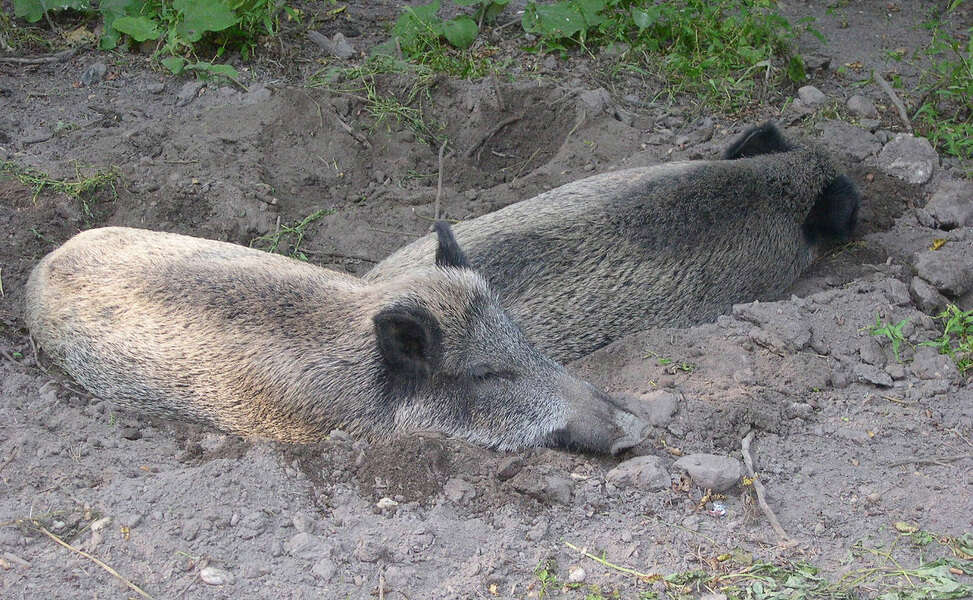
omnivore species of mammal
.jpg)
primate
Primates is an order of mammals, which is further divided into the strepsirrhines, which include lemurs, galagos, and lorisids; and the haplorhines, which include tarsiers and simians (monkeys and apes). Primates arose 74–63 million years ago first from small terrestrial mammals, which adapted for life in tropical forests: many primate characteristics represent adaptations to the challenging environment among tree tops, including large brain sizes, binocular vision, color vision, vocalizations, shoulder girdles allowing a large degree of movement in the upper limbs, and opposable thumbs (

Common Ostrich
species of large flightless bird
Nile hippopotamus
The hippopotamus (Hippopotamus amphibius; ; : hippopotamuses), often shortened to hippo (: hippos), further qualified as the common hippopotamus, Nile hippopotamus and river hippopotamus, is a large semiaquatic mammal native to sub-Saharan Africa. It is one of only two extant species in the family Hippopotamidae, the other being the pygmy hippopotamus (Choeropsis liberiensis or Hexaprotodon liberiensis). Its name comes from the Ancient Greek for "river horse" ().

House Sparrow
species of bird

hare
Hares are mammals belonging to the genus Lepus. They are herbivores and live solitarily or in pairs. They nest in depressions in the ground called forms, and their young are able to fend for themselves shortly after birth. The genus includes the largest lagomorphs. Most are fast runners with long, powerful hind legs, and large ears that dissipate body heat. Hare species are native to Africa, Eurasia and North America. A hare less than one year old is called a leveret. A group of hares may be called either a husk or a down.

Ursus arctos
species of mammal

Northern Raven
species of bird

Eurasian Magpie
species of bird
mallard
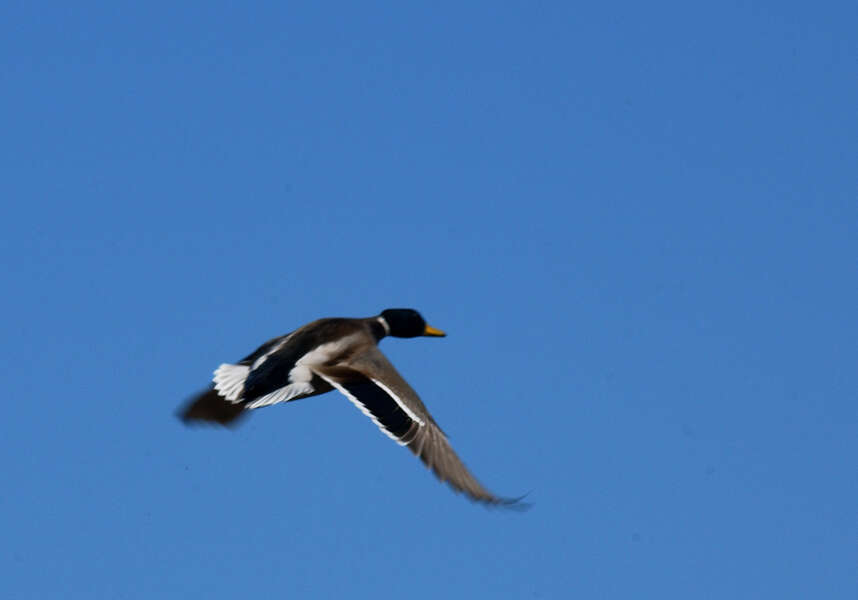
The mallard () or wild duck (Anas platyrhynchos) is a dabbling duck that breeds throughout the temperate and subtropical Americas, Eurasia, and North Africa. It has been introduced to New Zealand, Australia, Peru, Brazil, Uruguay, Argentina, Chile, Colombia, the Falkland Islands, and South Africa. Belonging to the subfamily Anatinae of the waterfowl family Anatidae, mallards live in wetlands, eat water plants and small animals, and are social animals preferring to congregate in groups or flocks of varying sizes.

Eurasian Hoopoe
species of bird

Lepidoptera
Lepidoptera ( ) or lepidopterans are an order of winged insects which include butterflies and moths. About 180,000 species of the Lepidoptera have been described, representing 10% of the total described species of living organisms, making it the second largest insect order (behind Coleoptera) with 126 families and 46 superfamilies, and one of the most widespread and widely recognizable insect orders in the world.

water buffalo
species of large bovid originating in South Asia

Meleagris
North American genus of large birds

Alces alces
The moose (: moose; used in North America) or elk (: elk or elks; used in Eurasia) (Alces alces) is the world's tallest, largest and heaviest extant species of deer and the only extant species in the genus Alces. It is also the tallest, and the second-largest, land animal in North America, falling short only to the American bison in body mass. Most adult male moose have broad, palmate ("open-hand shaped") antlers; other members of the deer family have pointed antlers with a dendritic ("twig-like") configuration. Moose inhabit the circumpolar boreal forests or temperate broadleaf and mixed fore

jaguar
The jaguar (Panthera onca) is a large cat species and the only living member of the genus Panthera that is native to the Americas. Its distinctively marked coat features pale yellow to tan colored fur covered by spots that transition to rosettes on the sides, although a melanistic black coat appears in some individuals. With a body length of up to and a weight of up to , it is the biggest cat species in the Americas and the third largest in the world. The jaguar's powerful bite allows it to pierce the carapaces of turtles and tortoises, and to employ an unusual killing method: it bites directl
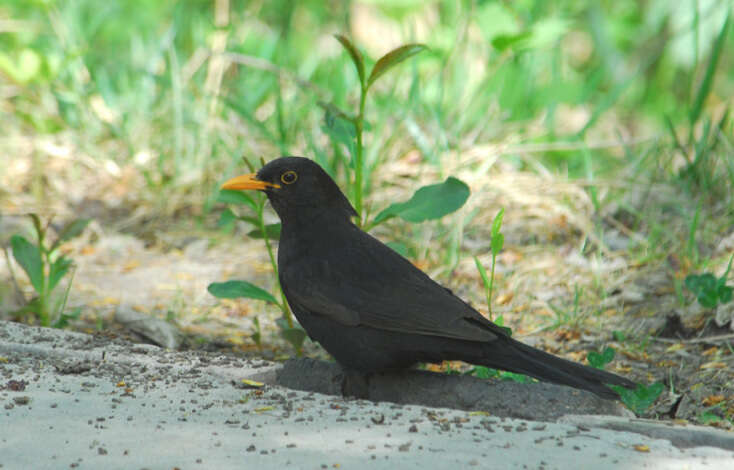
Common Blackbird
species of thrush

cougar
The cougar (Puma concolor) (, KOO-gər), also called puma, mountain lion, catamount, and panther, is a large small cat native to the Americas. It inhabits North, Central and South America, making it the most widely distributed wild, terrestrial mammal in the Western Hemisphere, and one of the most widespread in the world. Its range spans Yukon, British Columbia and Alberta in Canada, the Rocky Mountains and areas in the western United States. Further south, its range extends through Mexico to the Amazon rainforest and the southern Andes Mountains in Patagonia. It is an adaptable generalist spec

passerines
A passerine () is any bird of the order Passeriformes (; from Latin 'sparrow' and '-shaped'), which includes more than half of all bird species. Sometimes known as perching birds, passerines generally have an anisodactyl arrangement of their toes (three pointing forward and one back), which facilitates perching.

Diptera
thumb|266px|An Anthomyiidae|Anthomyiid species showing characteristic dipteran features: large [[eyes, small antennae, sucking mouthparts, single pair of flying wings, hindwings reduced to clublike halteres]]

Eurasian badger
species of mammal

Rangifer tarandus
The reindeer or caribou (Rangifer tarandus) is a species of deer with circumpolar distribution, native to Arctic, subarctic, tundra, boreal, and mountainous regions of Northern Europe, Siberia, and North America. It is the only representative of the genus Rangifer. More recent studies suggest the splitting of reindeer and caribou (North American terminology). "All caribou and reindeer throughout the world are considered to be the same species, but there are 7 subspecies."

Eurasian otter
species of otter
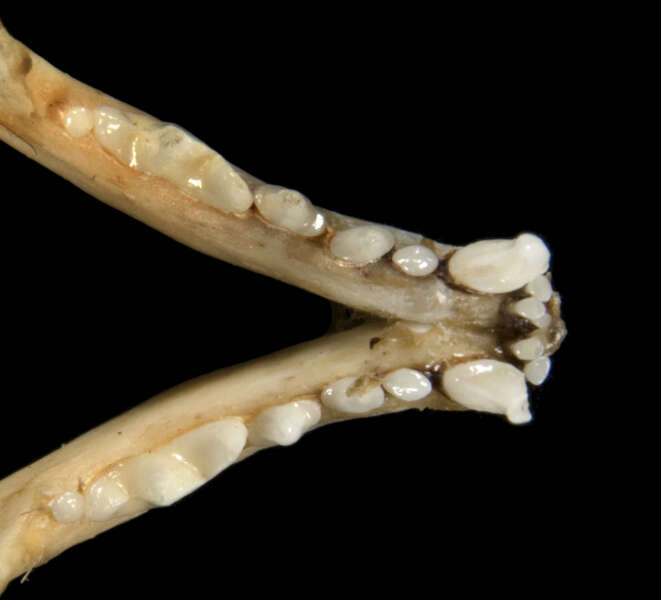
Mustela nivalis
species of mammal

European Robin
species of bird
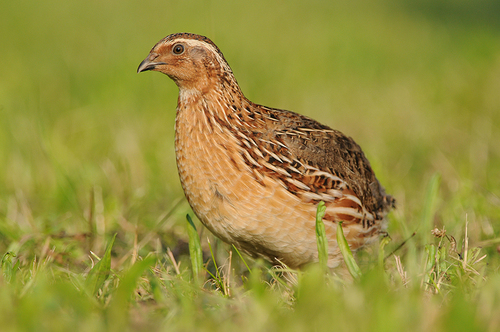
Common Quail
species of bird

house mouse
species of mammal

walrus
The walrus (Odobenus rosmarus; plural walrus or walruses) is a large pinniped marine mammal with discontinuous distribution about the North Pole in the Arctic Ocean and subarctic seas of the Northern Hemisphere. It is the only extant species in the family Odobenidae and genus Odobenus. This species is subdivided into two subspecies: the Atlantic walrus (O. r. rosmarus), which lives in the Atlantic Ocean, and the Pacific walrus (O. r. divergens), which lives in the Pacific Ocean.
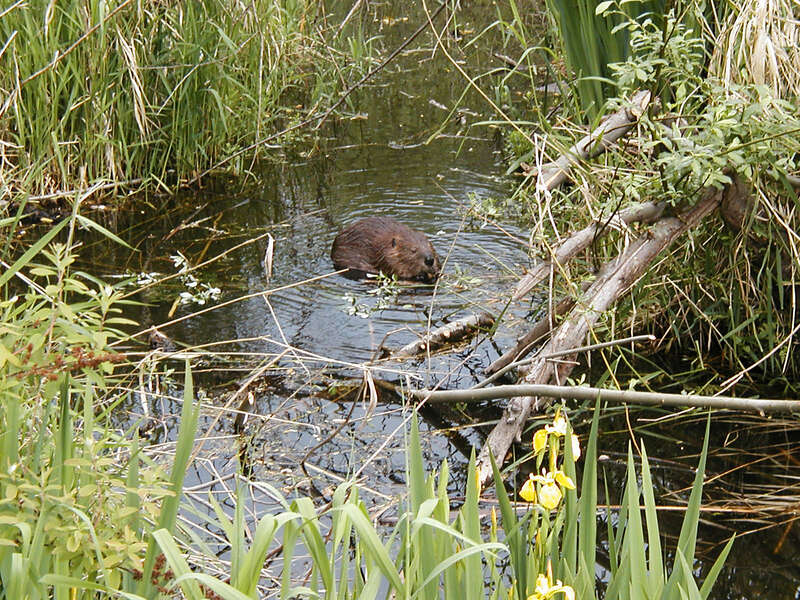
beaver
Beavers (genus Castor) are large semiaquatic rodents of the Northern Hemisphere. There are two extant species: the North American beaver (Castor canadensis) and the Eurasian beaver (C. fiber). Beavers are the second-largest living rodents, after capybaras, weighing up to . They have stout bodies with large heads, long chisel-like incisors, brown or gray fur, hand-like front feet, webbed back feet, and tails that are flat and scaly. The two species differ in skull and tail shape and fur color. Beavers can be found in a number of freshwater habitats, such as rivers, streams, lakes and ponds. The

pelican
Pelicans (genus Pelecanus) are a genus of large water birds that make up the family Pelecanidae. They are characterized by a long beak and a large throat pouch used for catching prey and draining water from the scooped-up contents before swallowing. They have predominantly pale plumage, except for the brown and Peruvian pelicans. The bills, pouches, and bare facial skin of all pelicans become brightly coloured before the breeding season.

Dodo
The dodo (Raphus cucullatus) is an extinct flightless bird that was endemic to Mauritius, an island east of Madagascar in the Indian Ocean. The dodo's closest relative was the also-extinct and flightless Rodrigues solitaire. The two formed the subtribe Raphina, a clade of extinct flightless birds that are a part of the group that includes pigeons and doves (the family Columbidae). The closest living relative of the dodo is the Nicobar pigeon. A white dodo was once thought to have existed on the nearby island of Réunion, but it is now believed that this assumption was merely confusion based on

Common Cuckoo
species of bird

Eurasian Golden Oriole
species of bird
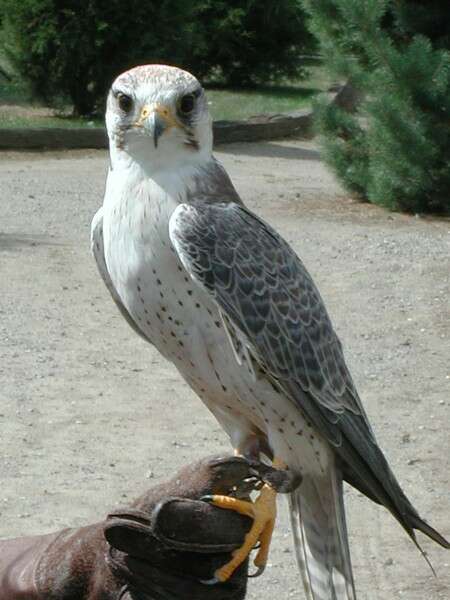
falcon
Falcons () are birds of prey in the genus Falco, which includes about 40 species. Some small species of falcons with long, narrow wings are called hobbies, and some that hover while hunting are called kestrels. Falcons are widely distributed on all continents of the world except Antarctica, though closely related raptors did occur there in the Eocene.

Orcinus orca
The orca (Orcinus orca), or killer whale, is a toothed whale and the largest member of the oceanic dolphin family. The only extant species in the genus Orcinus, it is recognizable by its distinct pigmentation; being mostly black on top, white on the bottom and having recognizable white eye patches. A cosmopolitan species, it inhabits a wide range of marine environments, from Arctic to Antarctic regions to tropical seas, but is more commonly documented in temperate or cooler coastal waters. Scientists have proposed dividing the global population into races, subspecies, or possibly even species.
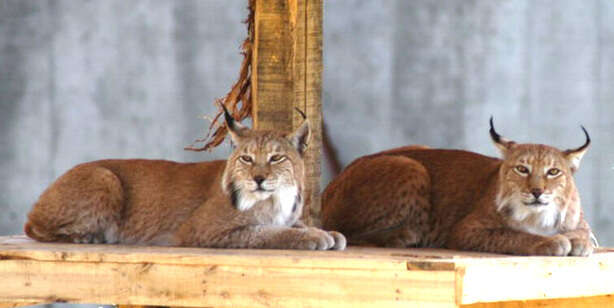
Eurasian lynx
species of mammal

Eurasian Jay
species of bird

Grey Heron
species of bird
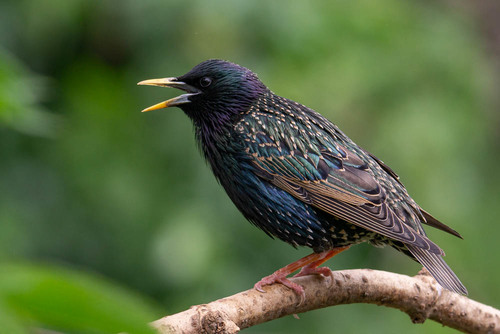
Common Starling
species of bird

Great Tit
species of bird

Barn Swallow
species of bird

Motacilla alba
species of bird

Balaenoptera musculus
species of marine mammal, largest living animal in the world

Golden Eagle
species of bird of prey

red deer
species of mammal

Eurasian Red Squirrel
species of tree squirrel common throughout Eurasia