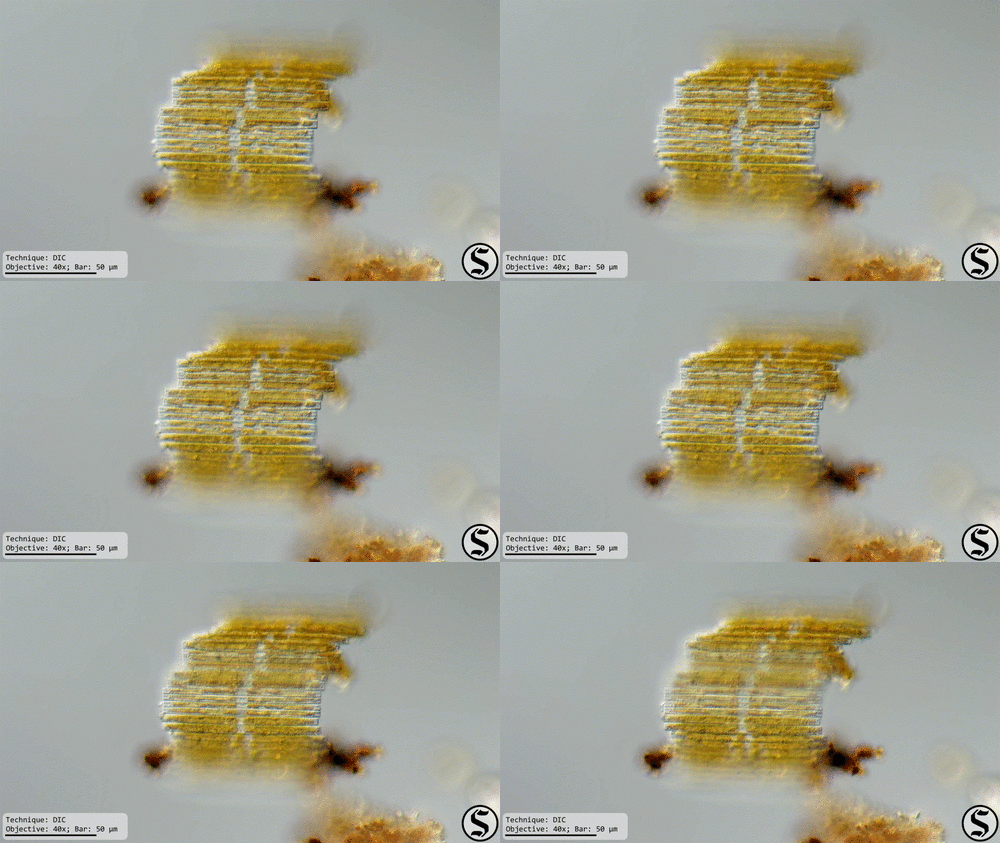
(c) Shane, some rights reserved (CC BY-NC), uploaded by Shane · cc-by-nc
Nitzschia
Sign in to saveNitzschia is a common pennate marine and freshwater diatom. In the scientific literature, this genus, named after Christian Ludwig Nitzsch, is sometimes referred to incorrectly as Nitzchia, and it has many species described, which all have a similar morphology. In its current circumscription, Nitzschia is paraphyletic.
In the Vinony graph
Within Vinony's link graph, Nitzschia is referenced by 26 other articles, and connects out to Bacillariaceae, Botswana and Arctic.
Vinony files it under Bacillariales, Diatom genera and Taxa named by Arthur Hill Hassall.
Its subject is documented across 7 Wikipedia language editions.
Species
ササノハケイソウ/ニッチア属
Genus
- PhylumHeterokontophyta
- ClassBacillariophyceae
- OrderBacillariales
- FamilyBacillariaceae
via
Museum specimens
- Specimen records
- 723
- With media
- 94
- Family
- Bacillariaceae
- Collections
- CIB-UAEM, CCBA-FMVZ-UADY, USNM, UCMP, MHN-UABCS, CMN
- Recorded in
- Mexico, United States, Canada
Wikidata facts
- Instance of
- taxon
- Parent taxon
- Bacillariaceae
- Image
- Nitzschia sp.jpeg
Show 4 more facts
- Commons category
- Nitzschia
- taxon rank
- genus
- taxon name
- Nitzschia
Sources (3)
via Wikidata · CC0
~2 min read
Encyclopedic overview
4 sectionsContents
- Occurrence
- Species
- References
- External links
Nitzschia is a common pennate marine and freshwater diatom. In the scientific literature, this genus, named after Christian Ludwig Nitzsch, is sometimes referred to incorrectly as Nitzchia, and it has many species described, which all have a similar morphology. In its current circumscription, Nitzschia is paraphyletic.
==Occurrence== Nitzschia is found mostly in colder waters, and is associated with both Arctic and Antarctic polar sea ice, where it is often found to be the dominant diatom. Nitzschia includes several species of diatoms known to produce the neurotoxin known as domoic acid, a toxin responsible for the human illness called amnesic shellfish poisoning. The species N. frigida is found to grow exponentially even at temperatures between −4 and −6 °C. Some Nitzschia species are also extremophiles by dint of tolerance to high salinity; for example, some halophilic species of Nitzschia are found in the Makgadikgadi Pans in Botswana.
Excerpted from Wikipedia’s “Nitzschia” article, available under the CC BY-SA 4.0 licence.
Gallery (2)
Available in 7 languages
via Wikidata sitelinks · CC0