File:Status_iucn3.1_LC.svg · Wikimedia Commons · See Wikimedia Commons
OverviewAI-generated
Nymphaea alba, commonly known as the white water-lily, is a species of plant in the family Nymphaeaceae. It belongs to the genus Nymphaea and is classified within the order Nymphaeales, class Magnoliopsida, and phylum Tracheophyta. The species is accepted under the authority L. and serves as the nomenclatural type for the genus. It produces a capsule as its fruit type and inhabits freshwater environments.
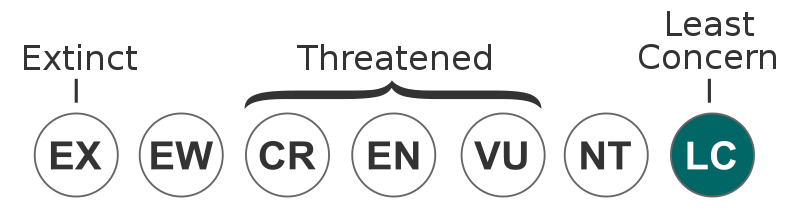
The taxon range includes China, Fujian, and the Tibet Autonomous Region. Its IUCN conservation status is listed as Least Concern, a designation recorded in 2014. Other common names for this species include Weiße Seerose, Ağ suzanbağı, and Гарлачык белы.
Synthesized by Vinony from 45 facts across 9 sources: Wikidata, GBIF, IUCN Red List, Gbif Occ, Encyclopedia of Life, Plants of the World, WoRMS, iDigBio, Vinony graph. Generated from structured data (not the Wikipedia text) and checked against those facts — may still contain errors.
Species
Least ConcernNymphaea alba
SPECIES
- KingdomPlantae
- PhylumTracheophyta
- ClassMagnoliopsida
- OrderNymphaeales
- FamilyNymphaeaceae
Chile Central
via GBIF · IUCN · Kew POWO
Museum specimens
- Specimen records
- 2,460
- With media
- 1,330
- Family
- Nymphaeaceae
- Collections
- VT, CAS, OBI, CMN, HSC, MEL
- Recorded in
- United States, Canada, United Kingdom, China, Hong Kong, Romania, Czechia, Germany
Wikidata facts
Show 12 more facts
- taxon name
- Nymphaea alba
- Commons category
- Nymphaea alba
- taxon rank
- species
- Commons gallery
- Nymphaea alba
- IUCN conservation status
- Least Concern
- taxon common name
- beli lokvanj
- has fruit type
- capsule
- taxon range
- Tibet Autonomous Region
- short name
- N. alba
- taxon author citation
- L.
- nomenclatural type of
- Nymphaea
Sources (8)
via Wikidata · CC0
~5 min read
Encyclopedic overview
Nymphaea alba – commonly called the white water lily, European white water lily, or white nenuphar (/ˈnɛnjʊfɑːr/ NEN-yuu-far) – is an aquatic flowering plant in the family Nymphaeaceae. It is native to North Africa, temperate Asia, Europe, and tropical Asia (Jammu and Kashmir).
Since Nymphaea alba is an aquatic plant, its specialized trichomes are hydropotes, formed at an abaxial surface of the young leaf and packed tightly in the rosette at the rhizome's flattened apex. The rhizomes contain high amounts of carbohydrate and protein.
Excerpted from Wikipedia’s “Nymphaea alba” article, available under the CC BY-SA 4.0 licence.
Gallery (10)
Available in 62 languages
- Español
- Français
- Deutsch
- 中文
- 日本語
- Русский
- Português
- Italiano
- العربية
- Armenian
- Atikamekw
- Azerbaijani
- Basque
- be_x_old
- Belarusian
- Bosnian
- Bulgarian
- Burmese
Show 43 more
- Catalan
- Cebuano
- Czech
- Danish
- Egyptian Arabic
- Esperanto
- Estonian
- Filipino
- Finnish
- Galician
- Hebrew
- Hungarian
- Kashubian
- Kazakh
- Lithuanian
- Lower Sorbian
- Macedonian
- mnw
- Nederlands
- Northern Frisian
- Norwegian
- Norwegian Nynorsk
- Ossetic
- Polski
- roa_tara
- Romanian
- Scots
- Serbian
- Serbian (Latin)
- Slovak
- Svenska
- Telugu
- Tiếng Việt
- Türkçe
- Ukrainian
- Upper Sorbian
- Uzbek
- Waray
- Western Frisian
- Western Panjabi
- zh_yue
- فارسی
- ไทย
via Wikidata sitelinks · CC0