Category
page 1Medicinal plants

Rosa
A rose is either a woody perennial flowering plant of the genus Rosa (), in the family Rosaceae (), or the flower it bears. There are over three hundred species and tens of thousands of cultivars. They form a group of plants that can be erect shrubs, climbing, or trailing, with stems that are often armed with sharp prickles. Their flowers vary in size and shape and are usually large and showy, in colours ranging from white through pinks, reds, oranges and yellows. Most species are native to Asia, with smaller numbers native to Europe, North America, and Northwest Africa. Species, cultivars and

ginger
Ginger (Zingiber officinale) is a flowering plant whose rhizome, ginger root or ginger, is widely used as a spice and a folk medicine. It is an herbaceous perennial that grows annual pseudostems (false stems made of the rolled bases of leaves) about one meter tall, bearing narrow leaf blades. The inflorescences bear flowers having pale yellow petals with purple edges, and arise directly from the rhizome on separate shoots.

Cocos nucifera
The coconut (Cocos nucifera) is a member of the palm family (Arecaceae) and the only living species of the genus Cocos. The term "coconut" (or the archaic "cocoanut") can denote the whole coconut palm tree or the large hard fruit. Originally native to Central Indo-Pacific, they are ubiquitous in coastal tropical regions.

Ananas comosus
The pineapple (Ananas comosus) is a tropical plant with an edible fruit; it is the most economically significant plant in the family Bromeliaceae.

Avena sativa
The oat (Avena sativa), sometimes called the common oat, is a species of cereal grass (Avena) grown for fodder and for its seed, which is known by the same name (usually in the plural). Oats appear to have been domesticated as a secondary crop, as their seeds resembled those of other cereals closely enough for them to be included by early cultivators. Oats tolerate cold winters less well than cereals such as wheat, barley, and rye, but need less summer heat and more rain, making them important in areas such as Northwest Europe that have cool, wet summers. They can tolerate low-nutrient and aci

Salix
Willows, also called sallows and osiers, of the genus Salix, comprise around 350 species (plus numerous hybrids) of typically deciduous trees and shrubs. They are primarily found on moist soils in cold and temperate regions.

mango
thumb|upright=1.35|Mango fruits – single and halved

Olea europaea
The olive (botanical name Olea europaea, "European olive") is a species of subtropical evergreen tree in the family Oleaceae. Originating in Asia Minor, it is abundant throughout the Mediterranean Basin, with wild subspecies in Africa and western Asia; modern cultivars are traced primarily to the Near East, Aegean Sea, and Strait of Gibraltar. The olive is the type species for its genus, Olea, and lends its name to the Oleaceae plant family, which includes lilac, jasmine, forsythia, and ash. The olive fruit is classed botanically as a drupe, similar in structure and function to the cherry or p

Coriandrum sativum
Coriander (), or Coriandrum sativum, is an annual herb in the family Apiaceae. The leaves are known as cilantro () in the United States (but not in the United Kingdom). Most people perceive the leaves as having a fresh, slightly citrus taste. Due to variations in the gene OR6A2, some people perceive its flavor to be more soaplike or rotten.

Cannabis
Cannabis () is a genus of flowering plants in the family Cannabaceae that is widely accepted as being indigenous to and originating from the continent of Asia. However, the number of species is disputed, with as many as three species being recognized: Cannabis sativa, C. indica, and C. ruderalis. Alternatively, C. ruderalis may be included within C. sativa, or all three may be treated as subspecies of C. sativa, or C. sativa may be accepted as a single undivided species.

Sesamum indicum
Sesame (; Sesamum indicum) is a plant in the genus Sesamum, also called benne. Numerous wild relatives occur in Africa and a smaller number in India. It is widely naturalized in tropical regions around the world and is cultivated for its edible seeds, which grow in pods. World production in 2018 was , with Sudan, Myanmar, and India as the largest producers.

Mentha
Mentha, also known as mint (from Greek , Linear B mi-ta), is a genus of flowering plants in the mint family, Lamiaceae. It is estimated that 18 to 24 species exist, but the exact distinction between species is unclear. Hybridization occurs naturally where some species' ranges overlap. Many hybrids and cultivars are known.

cinnamon
thumb|Dried bark strips, bark powder and flowers of the small tree Cinnamomum verum

parsley
Parsley, or garden parsley (Petroselinum crispum), is a species of flowering plant in the family Apiaceae that is native to the Balkans. It has been introduced and naturalized in Europe and elsewhere in the world with suitable climates, and is widely cultivated as a herb and a vegetable.

Tamarindus indica
Tamarind (Tamarindus indica) is a leguminous tree bearing edible fruit that is indigenous to tropical Africa and naturalized in Asia. The genus Tamarindus is monotypic, meaning that it contains only this species. It belongs to the family Fabaceae.

Morus
genus of plants

Cydonia oblonga
The quince (; Cydonia oblonga) is the sole member of the genus Cydonia in the Malinae subtribe (which contains apples, pears, and other fruits) of the Rosaceae family. It is a deciduous tree that bears hard, aromatic bright golden-yellow pome fruit, similar in appearance to a pear. Ripe quince fruits are hard, tart, and astringent. They are eaten raw or processed into jam, quince cheese, or alcoholic drinks.

Salvia rosmarinus
Salvia rosmarinus, synonym Rosmarinus officinalis, commonly known as rosemary, is a shrub with fragrant, evergreen, needle-like leaves and purple or sometimes white, pink, or blue flowers. It is a member of the mint family, Lamiaceae.

cannabis
psychoactive herb from the Cannabis plant used for medical or recreational purposes

Anethum graveolens
Dill (Anethum graveolens) is an annual herb in the celery family Apiaceae. Native to North Africa and West Asia, dill is grown widely in Eurasia, where its leaves and seeds are used as a herb or spice for flavouring food.

Colocasia esculenta
Taro (; Colocasia esculenta) is a root vegetable. It is the most widely cultivated species of several plants in the family Araceae that are used as vegetables for their corms, leaves, stems and petioles. Taro corms are a food staple in African, Caribbean, Oceanian, East Asian, Southeast Asian and South Asian cultures (similar to yams).

Chrysanthemum
Chrysanthemums ( ), sometimes abbreviated to mums or chrysanths, are perennial herbaceous flowering plants in the family Asteraceae that bloom in the autumn. They are native to East Asia and northeastern Europe. Most species originate from East Asia, and the center of diversity is in China. Many thousands of horticultural varieties and cultivars exist.

liquorice
Liquorice (Commonwealth English) or licorice (American English; see spelling differences; ) is the common name of Glycyrrhiza glabra, a flowering plant of the bean family Fabaceae, from the root of which a sweet, aromatic flavouring is extracted.

opium
Opium (also known as poppy tears, or Lachryma papaveris) is the dried latex obtained from the seed capsules of the opium poppy Papaver somniferum. Approximately 12 percent of opium is made up of the analgesic alkaloid morphine, which is processed chemically to produce heroin and other synthetic opioids for medicinal use and for the illegal drug trade. Opium's main psychoactive alkaloids, primarily morphine, act on μ-opioid receptors, causing analgesia, with long-term use leading to tolerance and dependence. The latex also contains the closely related opiates codeine and thebaine, and non-analg

broad bean
species of plant, vegetable

Viola
genus of plants; violets

Origanum vulgare
Oregano (, ; Origanum vulgare) is a species of flowering plant in the mint family, Lamiaceae. It was native to the Mediterranean region, but widely naturalised elsewhere in the temperate Northern Hemisphere.
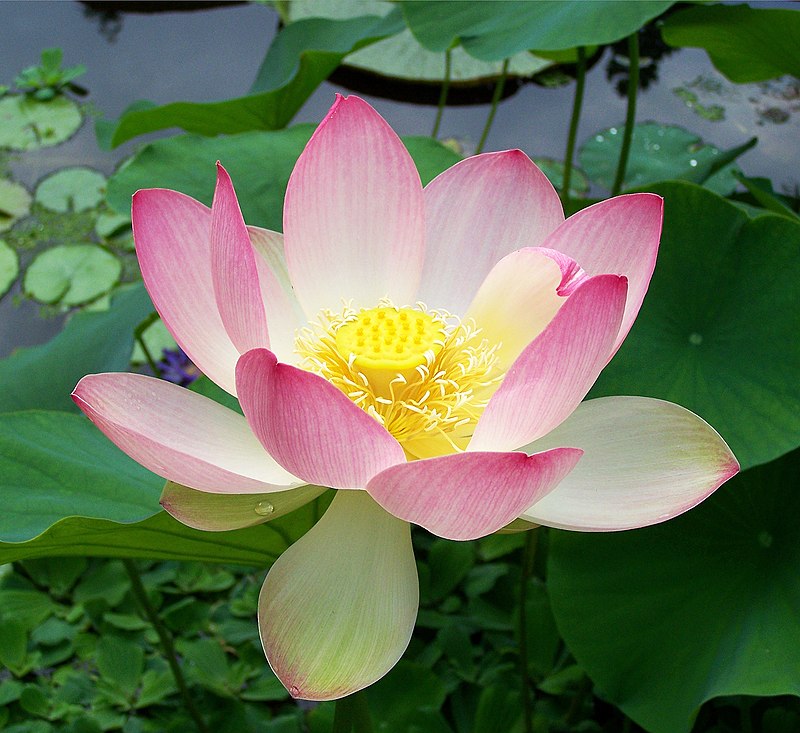
Nelumbo nucifera
species of plant

Fraxinus
Fraxinus (), commonly called ash, is a genus of plants in the olive and lilac family, Oleaceae, and comprises 45–65 species of usually medium-to-large trees, most of which are deciduous (dropping their leaves in autumn), although some subtropical species are evergreen. The genus is widespread throughout much of Europe, Asia, and North America.

Tilia
Tilia is a genus of about 30 species of trees or bushes, native throughout most of the temperate Northern Hemisphere. The species are known as linden or lime for the European and Asian species, and linden or basswood for North American species and more generally in American literature. The greatest species diversity is found in Asia, but the genus also occurs widely in Europe and eastern North America. Under the Cronquist classification system, this genus was placed in the family Tiliaceae, but genetic research summarised by the Angiosperm Phylogeny Group has resulted in the incorporation of t

Taraxacum
thumb|Dandelion bilobed stigma bearing pollen

Narcissus
genus of plants in family Amaryllidaceae

Crataegus

Nerium oleander
Nerium oleander ( ), commonly known as oleander, rose laurel, be-still tree or rosebay, is a shrub or small tree cultivated worldwide in temperate and subtropical areas as an ornamental and landscaping plant. It is the only species currently classified in the genus Nerium, belonging to subfamily Apocynoideae of the dogbane family Apocynaceae. It is so widely cultivated that no precise region of origin has been identified, though it is usually associated with the Mediterranean Basin.

Vaccinium myrtillus
species of plant

Convallaria majalis
species of plant

Papaver somniferum
species of plant

Ulmus
Elms are deciduous and semi-deciduous trees comprising the genus Ulmus in the family Ulmaceae. They are distributed over most of the Northern Hemisphere, inhabiting the temperate and tropical-montane regions of North America and Eurasia, ranging southward in Western Asia to Iran, in Africa to Libya, and in Southeast Asia into Indonesia.

Cichorium intybus
thumb|Botanical illustration (1885)
.jpg)
Brassica napus
Rapeseed ('''Brassica napus subsp. napus), also known as rape and oilseed rape and canola''', is a yellow-flowered member of the Brassicaceae family.

Camellia sinensis
species of plant

Magnolia
Magnolia is a large genus of about 210 to 340 flowering plant species in the subfamily Magnolioideae of the family Magnoliaceae. The natural range of Magnolia species is disjunct, with a main center in east, south and southeast Asia and a secondary center in South America, Central America, the West Indies, and some species in eastern North America.

marjoram
thumb|Growing tip with flower buds
thumb|Dried marjoram herb for flavoring
Marjoram (, Origanum majorana) is a cold-sensitive perennial herb or undershrub with sweet pine and citrus flavours. In some Middle Eastern countries, marjoram is synonymous with oregano, and there the names sweet marjoram and knotted marjoram are used to distinguish it from other plants of the genus Origanum. It is also called pot marjoram, although this name is also used for other cultivated species of Origanum.

Portulaca oleracea
species of flowering plant

Prunus spinosa
species of plant

Hibiscus
Hibiscus is a genus of flowering plants in the mallow family, Malvaceae. The genus is quite large, comprising several hundred species that are native to warm temperate, subtropical and tropical regions throughout the world. Member species are renowned for their large, showy flowers and those species are commonly known simply as "hibiscus", or less widely known as rose mallow. The genus includes both annual and perennial herbaceous plants, as well as woody shrubs and small trees.

Solanum nigrum
species of plant

Sambucus
Sambucus is a genus of between 20 and 30 species of flowering plants in the family Adoxaceae. The various species are commonly referred to as elder, with the flowers as elderflower, and the fruit as elderberry.

Agave
Agave (; ; ) is a genus of monocots native to the arid regions of the Americas. The genus is primarily known for its succulent and xerophytic species that typically form large rosettes of strong, fleshy leaves.

Artemisia
genus of plants in the family Asteraceae

Papaver rhoeas
species of plant

Nephelium lappaceum
Rambutan ( ; ;Nephelium lappaceum) is a medium-sized tropical tree in the family Sapindaceae. The name also refers to the edible fruit produced by this tree. The rambutan is native to Southeast Asia. It is closely related to several other edible tropical fruits, including the lychee, longan, pulasan, and quenepa.
.JPG)
nutmeg
Nutmeg is the seed, or the ground spice derived from the seed, of several tree species of the genus Myristica; fragrant nutmeg or true nutmeg (M. fragrans) is a dark-leaved evergreen tree cultivated for two spices derived from its fruit: nutmeg, from its seed, and mace, from the seed covering. It is also a commercial source of nutmeg essential oil and nutmeg butter. The Banda Islands, in Maluku, Indonesia, are the main producer of nutmeg and mace, and the true nutmeg tree is native to the islands.

Urtica dioica
species of plant

plum
thumb|African Rose plums (Japanese or Chinese plum)
A plum is a fruit of some species in Prunus subg. Prunus. Dried plums are usually called prunes.
thumb|Plum flowers
thumb|180px|Plum unripe fruits

Rosa canina
species of plant

Tussilago farfara
Tussilago farfara, commonly known as coltsfoot, is a plant in the tribe Senecioneae in the family Asteraceae, native to Europe and parts of western and central Asia. The name "tussilago" is derived from the Latin tussis, meaning cough, and ago, meaning to cast or to act on. It has had uses in traditional medicine, but the discovery of toxic pyrrolizidine alkaloids in the plant has resulted in liver health concerns.

Citrus × aurantium
species of plant, the bitter orange

Pastinaca sativa
thumb|Pastinaca sativa fruits and seeds
thumb|right|Flowering parsnip, second year
.jpg)
Rumex acetosa
Sorrel (Rumex acetosa) is a perennial herbaceous plant in the family Polygonaceae. It is also called common sorrel, garden sorrel, spinach dock and narrow-leaved dock ("dock" often used for the genus).