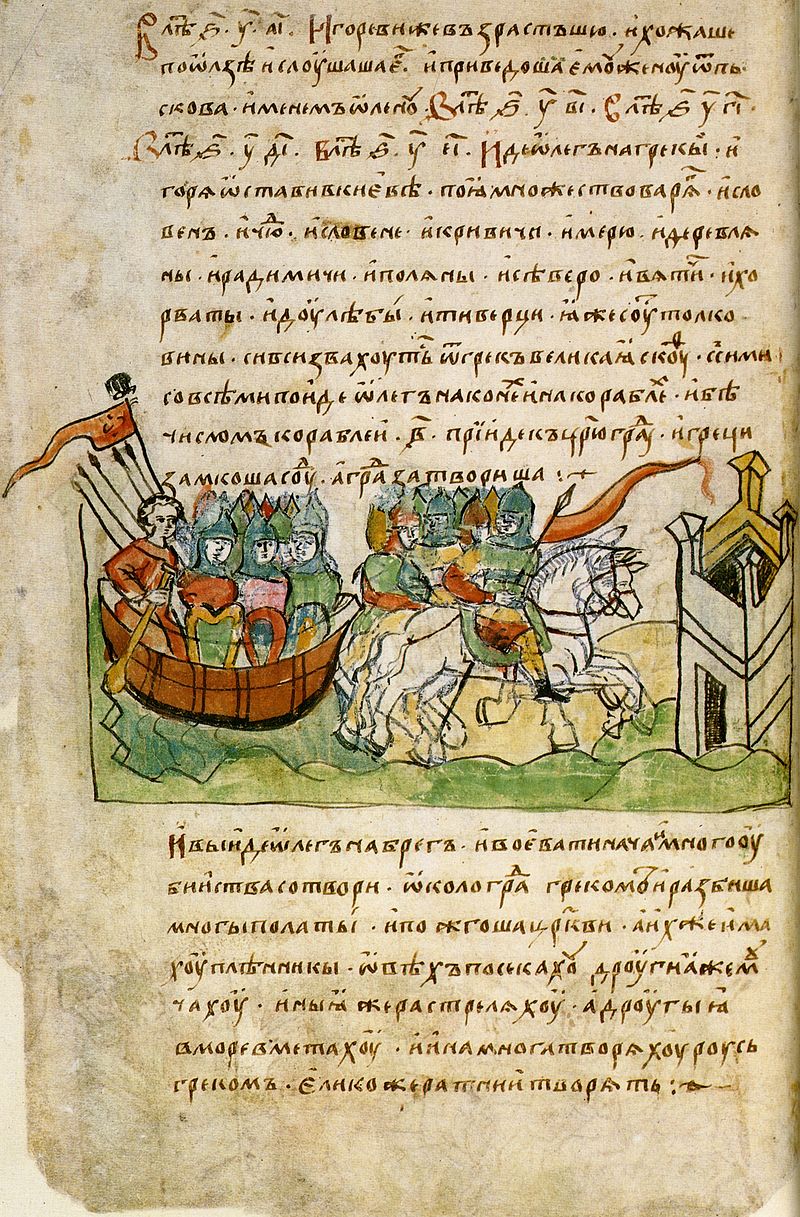
File:14_2_List_of_Radzivill_Chron.jpg · Wikimedia Commons · See Wikimedia Commons
Old East Slavic
Sign in to saveAlso known as Old Russian, Common Russian, OES, Common Eastern Slavic, Old East Slavic language, Old Russian language
language (or a group of dialects) used by the East Slavs from the 7th or 8th century to the 13th or 14th century
Old East Slavic was the language spoken by East Slavic peoples from roughly the 7th or 8th century through the 13th or 14th century. It matters because it is the ancestor of modern Russian, Ukrainian, and Belarusian, and studying it helps us understand how these languages developed and how East Slavic peoples communicated during the medieval period.
AI-generated from the Wikipedia summary — may contain errors.
Wikidata facts
- Instance of
- language
- Subclass of
- East Slavic
- Located in
- Eastern Europe
- Image
- OstromirGospel.jpg
Show 6 more facts
- writing system
- Glagolitic
- number of speakers, writers, or signers
- 0
- linguistic typology
- fusional language
- topic has template
- Template:Lang-orv
- Commons category
- Old East Slavic
- topic's main category
- Category:Old East Slavic
via Wikidata · CC0
~16 min read
Encyclopedic overview
Old East Slavic (traditionally also Old Russian) was a language (or a group of dialects) used by the East Slavs from the 7th or 8th century to the 13th or 14th century, until it diverged into the Russian and Ruthenian languages. Ruthenian eventually evolved into the Belarusian, Rusyn, and Ukrainian languages.
Terminology
Excerpted from Wikipedia’s “Old East Slavic” article, available under the CC BY-SA 4.0 licence.
Gallery (8)
Available in 56 languages
- Español
- Français
- Deutsch
- 中文
- 日本語
- Русский
- Português
- Italiano
- العربية
- Afrikaans
- Asturian
- Azerbaijani
- Bahasa Indonesia
- Bashkir
- Basque
- be_x_old
- Belarusian
- Bosnian
Show 37 more
- Bulgarian
- Catalan
- Church Slavic
- Chuvash
- Croatian
- Czech
- Danish
- Estonian
- Finnish
- Latin
- Latvian
- Lithuanian
- Macedonian
- Nederlands
- Northern Frisian
- Norwegian
- Norwegian Nynorsk
- Occitan
- Polski
- Romanian
- Serbian
- Serbian (Latin)
- Silesian
- simple
- Slovak
- Slovenian
- Svenska
- Tatar
- Tiếng Việt
- Türkçe
- Ukrainian
- Upper Sorbian
- Urdu
- Western Panjabi
- Yakut
- فارسی
- 한국어
via Wikidata sitelinks · CC0