
OverviewAI-generated
Oman, officially the Sultanate of Oman, is a sovereign state and sultanate located in Western Asia. Its capital is Muscat, and the official language is Arabic. The country is a member of the United Nations, the League of Arab States, the World Trade Organization, and the Organisation of Islamic Cooperation. It shares borders with Saudi Arabia, Yemen, the United Arab Emirates, and Iran.
The head of state and head of government is Haitham bin Tarik Al Said. The currency is the Omani rial, with the Gulf rupee also listed. The top-level Internet domain is .om, and the telephone country code is +968. The highest point is Jebel Shams. The population is recorded as 5,343,630 or 5,281,538, with an area of 309,500. Oman is located in the UTC+04:00 time zone.
Synthesized by Vinony from 67 facts across 9 sources: Wikidata, REST Countries, Openweathermap, Open Meteo, World Bank, OpenStreetMap, PubMed, Vinony graph, Geo. Generated from structured data (not the Wikipedia text) and checked against those facts — may still contain errors.
Weather now
7-day forecast
via Open-Meteo
Country

- Capital
- Muscat
- Population
- 5,343,630
- Region
- Asia · Western Asia
- Demonym
- Omani
- Currencies
- OMR (ر.ع.)
- Languages
- Arabic
- Calling code
- +968
- Drives on
- Right
- FIFA code
- OMA
- TLD
- .om
- Timezones
- UTC+04:00
- Borders
- SAU, ARE, YEM
via REST Countries
Indicators · World Bank
- GDP
- $107.1B(2024)
- Population
- 5,281,538(2024)
- Life expectancy
- 80.2 yrs(2024)
- Unemployment
- 3.3 %(2025)
- Urban population
- 79.4 %(2024)
- Internet users
- 95.3 %(2024)
- Forest area
- 0 %(2023)
- Renewable energy
- 0.1 %(2021)
via World Bank Open Data · CC BY 4.0
Place details
- Region
- محافظة الوسطى
- Country
- عمان
- Population
- 4,829,483
- Timezone
- Asia/Muscat
via OpenStreetMap · GeoNames
Wikipedia views (30d)
165,194 totalvia Wikimedia Pageviews API
Key facts
- Country.conventional_long_name
- Sultanate of Oman
- Country.common_name
- Oman
- Country.native_name
- Salṭanat ʿUmān
- Country.image_flag
- Flag of Oman.svg
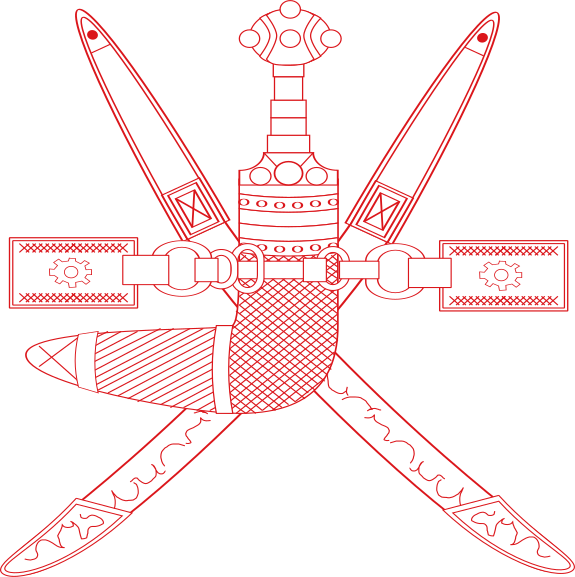
- Country.image_coat
- National emblem of Oman.svgclass=skin-invert
- Country.symbol_type
- Emblem
- Country.national_motto
- "God, Nation, Sultan"
- Country.national_anthem
- Taḥīyah al-Sulṭān"Salute to the Sultan"
- Country.capital
- Muscat
- Country.largest_city
- capital
- Country.official_languages
- Arabic
- Country.religion
- 95% Islam (official) 1.67% Christianity 1.67% Hinduism 1.66% others
- Country.religion_year
- 2023
- Country.demonym
- Omani
- Country.government_type
- Unitary Islamic absolute monarchy
- Country.leader_title1
- Sultan
- Country.leader_name1
- Haitham bin Tariq
- Country.leader_title2
- Crown Prince
via Wikipedia infobox
Research
20,120 papersvia PubMed
Wikidata facts
- Instance of
- sultanate
- Official name
- سلطنة عُمان
- Demonym
- Ómanach
- Religion
- Islam
- Country
- Oman
- Contains
- Al Batinah South Governorate
- Continent
- Asia
- Capital
- Muscat
- Official language
- Arabic
- Currency
- Gulf rupee
- Population
- 4829480
- Area
- 309500
- Head of government
- Haitham bin Tarik Al Said
- Head of state
- Haitham bin Tarik Al Said
- Form of government
- absolute monarchy
- Legislature
- Council of Oman
- Shares border with
- Iran
- Highest point
- Jebel Shams
- Official website
- www.oman.om
- Image
- Nakhal Fort Sultanate of Oman 001.jpg
- Life expectancy
- 74
- Nominal GDP
- 114667360208
- Unemployment rate
- 16
Show 60 more facts
- Calling code
- +968
- Electrical plug type
- BS 1363
- Mains voltage
- 240
- Motto
- Mae gan Brydferthwch Gyfeiriad
- Flag
- flag of Oman
- Coat of arms
- Coat of arms of Oman
- category for people born here
- Q8066832
- top-level Internet domain
- .om
- Commons category
- Oman
- topic's main category
- Category:Oman
- category for people who died here
- Category:Deaths in Oman
- category for films shot at this location
- Category:Films shot in Oman
- category of associated people
- Category:Omani people
- lowest point
- Majlis al Jinn
- mobile country code
- 422
- driving side
- right
- geography of topic
- Geography of Oman
- diplomatic relation
- China
- emergency phone number
- 112
- described by source
- Encyclopædia Britannica 11th edition
- age of majority
- 18
- marriageable age
- 18
- topic's main Wikimedia portal
- Portal:Oman
- executive body
- Cabinet of Oman
- history of topic
- history of Oman
- number of out-of-school children
- 135891
- total fertility rate
- 2.774
- maritime identification digits
- 461
- Commons gallery
- عمان (سلطنة)
- central bank
- Central Bank of Oman
- Unicode character
- 🇴🇲
- replaces
- Oman proper
- located in/on physical feature
- Arabian Peninsula
- native label
- سلطنة عُمان
- language used
- Kumzari
- inception
- 1970-07-23
- culture
- culture of Oman
- different from
- Muscat and Oman
- BTI Status Index
- 4.3
- BTI Governance Index
- 3.78
- economy of topic
- economy of Oman
- demographics of topic
- demographics of Oman
- official religion
- Islam
- Democracy Index
- 3
- topic has template
- Template:Subdivisions of Oman
- Human Development Index
- 0.816
- P11012
- Thuringian Forest
- hashtag
- oman
- on focus list of Wikimedia project
- Wikipedia:Vital articles/Level/4
- Inequality-adjusted Human Development Index
- 0.708
- suicide rate
- 4.5
- P12749
- Aosta Valley
- birth rate
- 17.706
- male population
- 2785494
- death rate
- 3.279
- rural population
- 560597
- female population
- 1790804
- urban population
- 4015701
- P8168
- Chakma
Sources (15)
via Wikidata · CC0
Travel guide
Understand
Until Sultan Qaboos bin Said exiled his father, the previous Sultan, in 1970, Oman was an under-developed nation, almost completely closed to visitors and badly manipulated by the British, although never annexed. After the accession of Qaboos, education, public works and tourism took off throughout Oman.
Omanis are friendly people and very helpful to visitors. In turn, tourists should respect the ways and traditions of the Omani people.
Omanis are proud of their country's rapid progress and of their heritage as one of the great seafaring nations. Excellent schools and hospitals, good governance, and on-going infrastructure improvements are all important characteristics of this once introverted and closed nation.
Get around
300px|thumb|right|The Corniche at Mutrah
See
thumb|right|300px|A fort at Sur Oman is famous for its historic forts, which are the country's most striking cultural landmarks. There are over 500 forts and towers which were the traditional defence and lookout points to deter potential invaders. Some of the best examples are in the capital, Muscat. Jalali and Mirani forts stand at the entrance to Muscat Bay and date from the early 16th century.
Bahla Fort at the base of the Djebel Akhdar highlands is a UNESCO World Heritage Site and has 7 miles of walls. It was built in the 13th and 14th centuries when Bahla was a thriving oasis town.
Oman's rugged mountains offer some stunning scenery and probably the best opportunities for driving in dry wadis anywhere in the world. Many of the wadis have made roads (often unsurfaced but decent enough) while others require serious off-roading. You can easily get well off the beaten path into remote areas.
Huge desert dunes roll for as far as the eye can see at Wahiba Sands.
Oman's beaches are major breeding locations for various species of sea turtle. Masirah Island is the perhaps best bet where four species breed, including the largest number of leatherbacks anywhere in the world.
The country has vast expanses of desert, hundreds of kilometres of uninhabited coastline, and mountains of over .
Do
Drive off-road to explore Oman's most outstanding sights. Go scuba diving off the coast of Oman in places like Masirah. Visit tribal Bedouin villages in the Musandam Exclave. Take a cruise on a dhow, an Omani/Emirati traditional fishing boat.
Eat
Omani food tends to be simple but rewarding and filling. Rice is the main staple and so is bread. The national dish is called " Qabuli", consisting of; spiced rice, lamb or chicken, split peas and caramelized onions. It can be found in many restaurants across the country. Another popular dish is "shuwa" which consists of a whole roasted lamb wrapped around banana or palm leaves and marinated in a plethora of different spices, before being buried underground and cooked for an overnight. Shuwa is often served with plain rice but in some upscale restaurants it can be served as a sandwich with fries and ketchup. You have to try harees whenever possible, which is a porridge-like dish of cracked wheat, ghee, chicken or beef and some spices. With a long coastline, Oman has a rich seafood culture and freshly caught fish served with a salad and rice is not unheard of for lunch.
Street food is now becoming a trend. Make sure to try shawarma- strips of chicken or lamb grilled on a rotating spit, shaved and served in a wrap with an abundance of pickles, vegetables, tahini sauce (if lamb) or garlic sauce (if chicken) and French fries or deep fried chickpeas and beans balls called "falafel". They can be found in many street corner cafeterias for a very cheap price. For an authentic delicacy try barbecued meat marinated in tamarind and chili called "mishakeek". It can be bought from the stalls along just about any beach in Oman.
Omani sweets are well known throughout the region, with the …
Drink
Alcohol is available only in some restaurants and large hotels and is usually very expensive (ranging from 1.5 rials for a 500 ml Carlsberg to 4 rials). Drinking alcohol in public is prohibited, but you can get your own drinks and enjoy at public areas but in privacy such as camping by beaches, sands, mountains, or actually in any remote areas. Only foreign residents can buy alcohol from alcohol shops and with certain limits. But an alcohol black market is widely spread around the cities and alcohol can be found easily.
Foreigner travellers are allowed 2 litres of spirits as duty free baggage allowance. Visitors can buy spirits at the duty-free shop in the arrival lounge.
During Ramadan, drinking anything in public is prohibited, even for foreigners. Take care to drink in the privacy of your room.
Sleep
Oman has the full spectrum of accommodation - from ultra-luxurious hotels to extremely rustic huts in the desert constructed from date palm leaves.
Oman has been attempting to turn itself into something of a five-star destination for the well-heeled traveller, there are five five-star hotels in the capital. This does not pose a problem to the budget-minded in Muscat, and even outside of the capital there is still a range of budget options. In some parts of the country, however, accommodation may be limited to higher-end hotels and resorts.
Stay safe
Homosexuality is illegal in Oman. LGBT tourists should be self-aware.
Driving in Muscat can sometimes be a problem, although this is due more to congestion than bad driving on the part of the locals. Outside of the major cities, a common driving risk is falling asleep at the wheel due to the long stretches of featureless desert. Driving in Oman calls for attention to the unexpected. It has 85.3 road fatalities per 100,000 motor vehicles, which is more than double the UAE and much higher than most European countries.
Omani drivers outside of the cities tend to drive very fast and pass with impunity. Driving at night is especially hazardous as many drivers fail to turn their headlights on, or are unaware of people crossing the road on foot for example on the road from Sohar to Muscat. Camels will walk into the road even if they see cars approaching, and collisions are often fatal for both camel and driver.
See the above section on driving in wadis for off-road safety.
Female travellers should be careful to dress modestly, as not to offend local customs.
Visiting gambling and adult sites is also a crime in Oman. Internet censorship in Oman is very serious, so you need to be careful to stay safe online.
Stay healthy
thumb|In the hot climate, drinking enough water is essential Bottled drinking (mineral) water is easily available at most stores. Tap water is generally safe; however, most Omanis drink bottled water and to be safe, you should too. 500ml bottles of water will generally cost 100bz in the majority of shops with a 1.5l bottle costing only 200bz.
thumb|right|300px|Wahiba Sands Oman is warm year-round and summers can be extremely hot. Always carry drinking water with you and be wary of de-hydration in high temperatures. If you're not used to the heat it can sneak up on you and cause serious health problems.
Several people have tried to cross stretches of the Omani desert on their own in a rented 4WD. Some of these people have died or got rescued just in time.
Travelling through a desert requires proper preparation. It looks easy from a modern air-conditioned 4WD, but if that fails you are suddenly back to basics.
Never go off-road alone. A minimum of two to three cars (of the same make) is the rule. Leave your itinerary with a friend with clear instructions if you do not return in time. Take at least: recovery tools: spades, rope (and attachments), sand mats or ladders two spare tires and all required equipment a good air pump (high capacity) sufficient water (at least 25 litres more than you think you will need for drinking) sufficient petrol: there are no petrol stations in the middle of nowhere.
If you have – or can get – a satellite phone, take it. (Mobile pho…
Respect
Before he died in 2020, Sultan Qaboos did more to develop the nation than any Arab leader, or most world leaders in recent history for that matter. Qaboos is held in the highest regard — even revered — by the vast majority of Omanis. Visitors should refrain from making any comments or statements that could be construed as disrespectful.
The Omanis are generally humble and down-to-earth people. The usual rules of respect when travelling in a Muslim country should be followed in Oman, even when locals appear to be a little less "uptight" than their neighbours. Homosexuality is illegal due to Islamic law but is practised with discretion; however, as elsewhere in the Gulf, it is taboo to discuss such topics.
While Omanis may not say anything to foreigners who dress in tight or revealing clothing, it is considered to be very disrespectful. Yes, some visitors push the goodwill of the Omanis in choosing their attire, but a little sensitivity goes a long way. A rule of thumb is that women should always keep shoulders, knees, and midriff covered, and avoid tight or revealing clothing. For men, shorts should be worn only for outdoor activities; longer shorts (i.e. at or below the knee) are fine in the city.
Staring is quite common in Oman; children, men and women are likely to stare at you simply for being a foreigner, especially if you travel off-season and in out-of-the-way places. This is not meant as an insult; it rather shows an interest, and a friendly smile will leave childre…
Travel guide from Wikivoyage (CC BY-SA 4.0)
Article · العربية
عُمان أو (رسمياً: سَلْطَنَةُ عُمَان)، هي دولة عربية تقع في غرب آسيا ونظام حكمها ملكية مطلقة وتشكل المرتبة الثالثة من حيث المساحة في شبه الجزيرة العربية وتقع سلطنة عُمان في الربع الجنوبي الشرقي من شبه الجزيرة العربية وتغطي مساحة إجمالية تبلغ 309.500 كم² و يحدها من الشمال خليج عمان ومن الشمال الغربي الإمارات العربية المتحدة ومن الغرب المملكة العربية السعودية ومن الجنوب اليمن ومن الجنوب الشرقي بحر العرب. تمتد سواحلها على مسافة 3165 كلم من مضيق هرمز في الشمال وحتى الحدود مع اليمن، وتطل بذلك على بحار ثلاثة هي: بحر العرب، بحر عمان، والخليج العربي. ويحدها من ناحية الغرب دولة الإمارات العربية المتحدة (طولها 410 كم) والمملكة العربية السعودية (طولها 676 كم)، ومن الجنوب الجمهورية اليمنية (طولها 288 كم) ومن الشمال مضيق هرمز، ومن الشرق بحر العرب. وتقع سلطنة عمان بين خطي عرض 16° 40' و20' 26° شمالا وبين خطي طول 50' 51°و 40' °59 شرقا. نظام الحكم في عُمان سلطاني وراثي والسلطان الحالي هو: هيثم بن طارق آل سعيد، الذي تولى الحكم في 11 يناير 2020 عقب وفاة السلطان قابوس بن سعيد بن تيمور آل سعيد صاحب أطول فترة حكم في الشرق الأوسط حتى وفاته، لا يسمح الدستور العُماني بالأحزاب السياسية بينما حق الانتخاب مكفول لكل مواطن عُماني بلغ الواحدة والعشرين من عمره لاختيار أعضاء مجلس الشورى. من أواخر القرن 15 كانت سلطنة عُمان إمبراطورية قوية تتنافس مع المملكة المتحدة والبرتغال على النفوذ في منطقة الخليج العربي والمحيط الهندي وكانت ذروتها في القرن 19، النفوذ العُماني وسيطرته التي تمتد عبر مضيق باب السلام إلى العصر الحديث الإمارات وباكستان وإيران وجنوباً حتى زنجبار كما انخفضت قوتها في القرن 20 جاءت السلطنة تحت تأثير المملكة المتحدة وتاريخيّاً كانت مسقط الميناء التجاري الرئيسي في منطقة الخليج العربي، مسقط كانت أيضاً من بين أهم الموانئ التجارية في المحيط الهندي. يعتقد أن مجان الواردة في الكتابات السومرية تشير إلى عُمان الغالب أن عُمان كانت محطة وصل مهمة للقوافل التجارية وعرفت هذه المنطقة التاريخية باسم جبل النحاس ولها ارتباط بثقافة أم النار وصلات تجارية مع بلاد الرافدين ولا يعرف الكثير عن طبيعة النظم في تلك المستوطنات الصغيرة واختفت مجان من النصوص السومرية مبكراً في العام 1800 عام قبل الميلاد. تمتلك عُمان أربعة مواقع ضمن مواقع التراث العالمي وصنفت رقصة البرعة ضمن التراث الثقافي اللامادي للإنسانية واختيرت عدة مرات كوجهة سياحية لتاريخ البلاد وثقافتها وتنوع تضاريسها الجغرافية. تتمتع سلطنة عُمان بوضع سياسي واقتصادي مستقر في العموم، اقتصادها نفطي إذ أنها تحتل المرتبة 23 في إحتياطي النفط على مستوى العالم والمرتبة 27 في إحتياطي للغاز، وتحتل السلطنة المرتبة 64 من بين أكبر اقتصادات العالم في عام 2010م حيث صنف برنامج الأمم المتحدة الإنمائي عُمان باعتبارها البلد الأكثر تحسناً على مستوى العالم في مجال التنمية خلال 47 عاماً السابقة. يتم تصنيف عُمان كاقتصاد ذات الدخل المرتفع وتصنف باعتبارها الـ59 البلد الأكثر سلمية في العالم وفقاً لمؤشر السلام العالمي. وتشتهر عُمان بأنها أحد أهم مراكز المذهب اباضي، حيث يعتبر المذهب الأساسي في الحكم، بالإضافة لوجود المذهب السني والمذهب الشيعي. سلطنة عُمان عضو مؤسس في مجلس التعاون لدول الخليج العربية وحركة عدم الانحياز والبنك الإسلامي للتنمية وجامعة الدول العربية والأمم المتحدة ومنظمة المؤتمر الإسلامي ومنظمة التجارة العالمية والمنظمة الدولية للمعايير والوكالة الدولية للطاقة المتجددة والمنظمة الإسلامية للتربية والعلوم والثقافة.
Abstract from DBpedia / Wikipedia · CC BY-SA
Gallery (59)
On the map
6 mapped locations
Available in 243 languages
- Español
- Français
- Deutsch
- 中文
- 日本語
- Русский
- Português
- Italiano
- العربية
- हिन्दी
- Abkhazian
- Achinese
- Adyghe
- Afrikaans
- Albanian
- Albanian
- Amharic
- ami
Show 224 more
- Angika
- Aragonese
- Aramaic
- Armenian
- Arpitan
- Assamese
- Asturian
- Avaric
- Awadhi
- azb
- Azerbaijani
- Bahasa Indonesia
- Balinese
- Bangla
- Bashkir
- Basque
- bat_smg
- Bavarian
- be_x_old
- Belarusian
- Betawi
- Bhojpuri
- Bikol
- Bishnupriya
- Bislama
- Bosnian
- Breton
- Buginese
- Bulgarian
- Buriat
- Burmese
- Catalan
- cbk_zam
- cdo
- Cebuano
- Central Dusun
- Central Kurdish
- Chechen
- Chuvash
- Cornish
- Crimean Tatar
- Croatian
- Czech
- Danish
- Divehi
- dty
- Egyptian Arabic
- Esperanto
- Estonian
- Extremaduran
- Faroese
- Fiji Hindi
- Filipino
- Finnish
- fiu_vro
- Frafra
- Fula
- Gagauz
- Galician
- gcr
- Georgian
- Gilaki
- Goan Konkani
- Greek
- Guarani
- Gujarati
- Haitian Creole
- Hakka Chinese
- Hausa
- Hawaiian
- Hebrew
- Hungarian
- hyw
- Icelandic
- Ido
- Iloko
- Inari Sami
- Interlingua
- Interlingue
- Irish
- Jamaican Creole English
- Javanese
- Kabardian
- Kabyle
- Kannada
- Kara-Kalpak
- Karachay-Balkar
- Kashmiri
- Kashubian
- Kazakh
- kge
- Khmer
- Kikuyu
- Kinyarwanda
- Komi
- Kongo
- Kurdish
- Kyrgyz
- Ladino
- Latin
- Latvian
- Lezghian
- Ligurian
- Limburgish
- Lingala
- Lingua Franca Nova
- Lithuanian
- lld
- Lombard
- Low German
- Lower Sorbian
- Luxembourgish
- Macedonian
- Madurese
- Maithili
- Malagasy
- Malay
- Malayalam
- Maltese
- Manipuri
- Manx
- Māori
- Marathi
- Mazanderani
- Minangkabau
- Mingrelian
- Mongolian
- Moroccan Arabic
- Navajo
- Nederlands
- Nepali
- Newari
- Northern Frisian
- Northern Sami
- Norwegian
- Norwegian Nynorsk
- Novial
- Obolo
- Occitan
- Odia
- Old English
- olo
- Oromo
- Ossetic
- Pampanga
- Papiamento
- Pashto
- Piedmontese
- Polski
- Punjabi
- Quechua
- Romanian
- Rusyn
- Samoan
- Sanskrit
- Santali
- Sardinian
- Scots
- Scottish Gaelic
- Serbian
- Serbian (Latin)
- Shan
- Shona
- Sicilian
- Silesian
- simple
- Sindhi
- Sinhala
- skr
- Slovak
- Slovenian
- Somali
- Standard Moroccan Tamazight
- Sundanese
- Svenska
- Swahili
- Swati
- szy
- Tajik
- Talysh
- Tamil
- Taroko
- Tatar
- tay
- tdd
- Telugu
- Tetum
- Tibetan
- Tiếng Việt
- Tok Pisin
- Toki Pona
- Tongan
- Tumbuka
- Türkçe
- Turkmen
- Udmurt
- Ukrainian
- Upper Sorbian
- Urdu
- Uyghur
- Uzbek
- Venetian
- Veps
- Volapük
- Waray
- Welsh
- West Flemish
- Western Frisian
- Western Panjabi
- Wolof
- Wu Chinese
- Xhosa
- Yakut
- Yiddish
- Yoruba
- Zaza
- Zeelandic
- zh_classical
- zh_min_nan
- zh_yue
- Zhuang
- فارسی
- ไทย
- 한국어
via Wikidata sitelinks · CC0