File:Ambigram_palindrome_ΝΙΨΟΝΑΝΟΜΗΜΑΤΑΜΗΜΟΝΑΝΟΨΙΝ_(Wash_your_sins,_not_only_your_face,_in_Greek).jpg · Wikimedia Commons · See Wikimedia Commons
palindrome
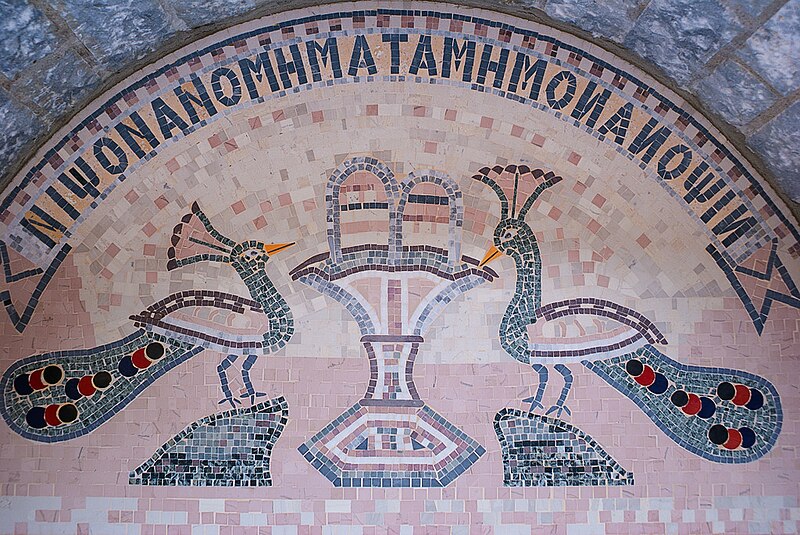
Sign in to savethumb|upright=1.3|4th-century Greek Byzantine palindrome: ΝΙΨΟΝ ΑΝΟΜΗΜΑΤΑ ΜΗ ΜΟΝΑΝ ΟΨΙΝ (Wash Your Sins, Not Only Your Face) on a mosaic in the in Greece.
A palindrome is a word, phrase, or text that reads the same forwards and backwards, like the ancient Greek inscription shown here that instructs "Wash Your Sins, Not Only Your Face." Palindromes have been created since at least the 4th century and demonstrate a fascinating interplay between language and symmetry, capturing the interest of writers and puzzle enthusiasts throughout history.
AI-generated from the Wikipedia summary — may contain errors.
In the Vinony graph
Within Vinony's link graph, palindrome is referenced by 390 other articles, and connects out to genome, nucleotide and Sator Square.
It is catalogued under the topic Palindromes.
Its subject is documented across 81 Wikipedia language editions.
Wikidata facts
- Instance of
- genre
- Subclass of
- word
- Image
- Un claro ejemplo de un palíndromo es la palabra "reconocer" 2013-06-01 19-11.jpg
- Has use
- stylistic device
Show 3 more facts
- Commons category
- Palindromes
- topic's main category
- Category:Palindromes
- different from
- Palindromes
via Wikidata · CC0
~22 min read
Encyclopedic overview
21 sectionsContents
- Etymology
- Historical development
- Types
- Characters, words, or lines
- Sentences and phrases
- Names
- Numbers
- Dates
- {{anchor|Phonetic}} In speech
- Longest palindromes
- Other occurrences
- Classical music
- Biological structures
- Computation theory
- Notable palindromists
- See also
- Related topics
- Related cases
- References
- Further reading
- External links
thumb|upright=1.3|4th-century Greek Byzantine palindrome: ΝΙΨΟΝ ΑΝΟΜΗΜΑΤΑ ΜΗ ΜΟΝΑΝ ΟΨΙΝ (Wash Your Sins, Not Only Your Face) on a mosaic in the in Greece.
A palindrome (/ˈpæl.ɪn.droʊm/) is a term given to describe a word, a number, a phrase, or other sequence of symbols that read the same backwards as they read forwards. Examples include the words madam or racecar, the date "22/02/2022", or the sentence "A man, a plan, a canal, Panama". The 19-letter Finnish word saippuakivikauppias (a soapstone vendor) is the longest single-word palindrome that is still in everyday use, while the 12-letter term tattarrattat (from James Joyce in Ulysses) is the longest in the English language.
Excerpted from Wikipedia’s “palindrome” article, available under the CC BY-SA 4.0 licence.
Gallery (25)
Available in 81 languages
- Español
- Français
- Deutsch
- 中文
- 日本語
- Русский
- Português
- Italiano
- العربية
- हिन्दी
- Abkhazian
- Afrikaans
- Albanian
- Armenian
- Assamese
- Azerbaijani
- Bahasa Indonesia
- Bangla
Show 62 more
- Bashkir
- Basque
- be_x_old
- Belarusian
- Bikol
- Bosnian
- Bulgarian
- Catalan
- Chuvash
- Croatian
- Czech
- Danish
- Esperanto
- Estonian
- Finnish
- fiu_vro
- Georgian
- Greek
- Hebrew
- Hungarian
- Ido
- Inari Sami
- Interlingua
- Irish
- Kazakh
- Kurdish
- Latin
- Latvian
- Limburgish
- Luxembourgish
- Malay
- Malayalam
- Marathi
- Nederlands
- Nepali
- Northern Frisian
- Norwegian
- Norwegian Nynorsk
- Occitan
- Polski
- Romanian
- Sanskrit
- Serbian
- Serbian (Latin)
- simple
- Slovak
- Slovenian
- Svenska
- Tamil
- Telugu
- Toki Pona
- Türkçe
- Ukrainian
- Urdu
- Welsh
- Western Frisian
- Wu Chinese
- Zaza
- zh_yue
- فارسی
- ไทย
- 한국어
via Wikidata sitelinks · CC0