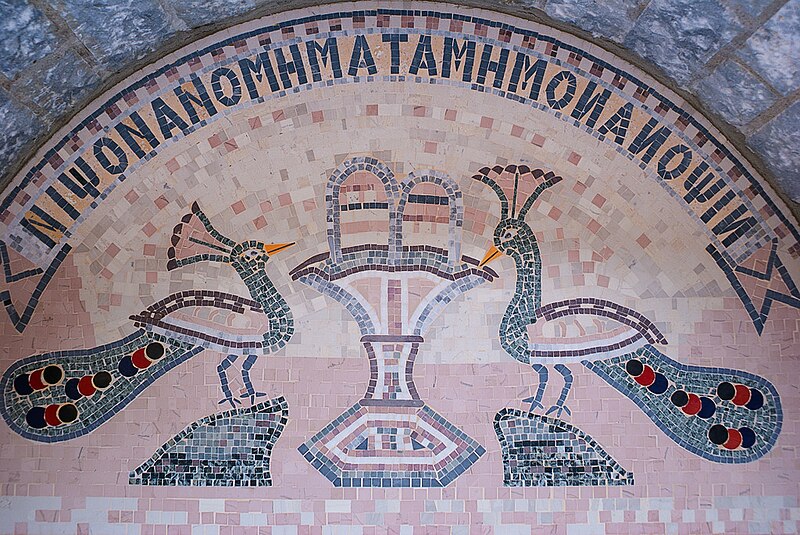
File:Ambigram_palindrome_ΝΙΨΟΝΑΝΟΜΗΜΑΤΑΜΗΜΟΝΑΝΟΨΙΝ_(Wash_your_sins,_not_only_your_face,_in_Greek).jpg · Wikimedia Commons · See Wikimedia Commons
AI overview
A palindrome is a word, phrase, or text that reads the same forwards and backwards, like the ancient Greek inscription shown here that instructs "Wash Your Sins, Not Only Your Face." Palindromes have been created since at least the 4th century and demonstrate a fascinating interplay between language and symmetry, capturing the interest of writers and puzzle enthusiasts throughout history.
AI-generated from the Wikipedia summary — may contain errors.
Wikidata facts
- Image
- Un claro ejemplo de un palíndromo es la palabra "reconocer" 2013-06-01 19-11.jpg
Show 1 more fact
- Commons category
- Palindromes
via Wikidata · CC0
Article · Polski
Palindrom (gr. παλίνδρομος, palindromos – biegnący na powrót, palindromeo – biec z powrotem) – wyrażenie brzmiące tak samo czytane od lewej do prawej i od prawej do lewej. Przykładem palindromu jest: Kobyła ma mały bok. Współcześnie palindromy pełnią funkcję gry słownej. Prawdopodobnie tak było również i w przeszłości, choć pewne znaleziska sugerują, że palindromy mogły też mieć znaczenie magiczne.Przykładowe wyrazy będące palindromami: Abba, Ada, Aga, Ala, anilina, Anna, Ałła, apokopa, Ara, Aviva, Axa, Bob, bób, Elle, gag, inni, łajał, łapał, łamał, łatał, kajak, kok, Malajalam, macam, mełłem, Natan, Noyon, Olo, oko, Otto, owocowo, PKP, pop, potop, Qaanaaq, radar, rotor, sedes, senes, sos, towot, Xanax, Xotox, zakaz, zaraz, zez.
Abstract from DBpedia / Wikipedia · CC BY-SA