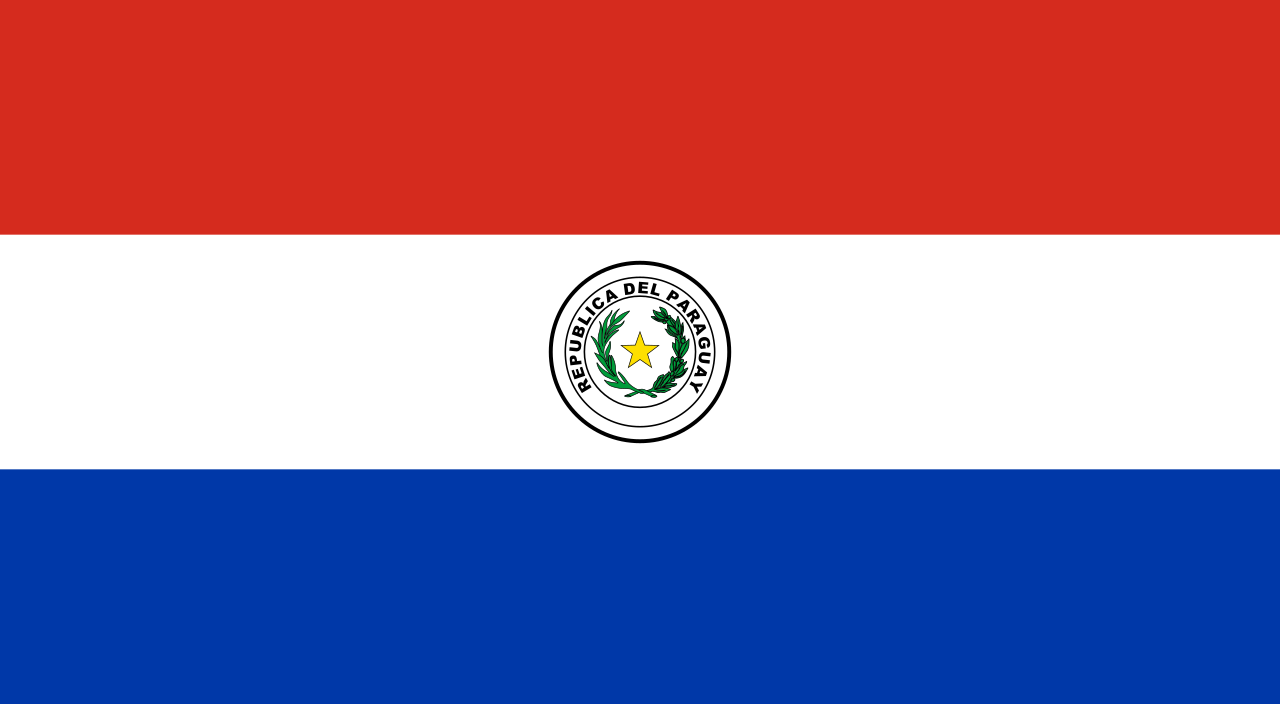
Paraguay
Also known as Republic of Paraguay, Heart of South America
republik i Sydamerika
AI overview
Paraguay is a landlocked country in central South America that borders Bolivia, Brazil, and Argentina, with access to the Atlantic Ocean through the Paraná–Paraguay Waterway. It is governed as a unitary presidential republic with its capital in Asunción.
AI-generated from the Wikipedia summary — may contain errors.
Weather now
cached 4h ago12°clear sky
96% 1.6 m/s OpenWeatherMap
7-day forecast
via Open-Meteo
Country

- Capital
- Asunción
- Population
- 6,109,644
- Region
Travel guide
Understand
Paraguay is often overlooked as a travel destination, even though it has been experiencing a steady increase in tourist arrivals. The majority of tourists visiting Paraguay in 2022 came from neighbouring Argentina, accounting for 76% of all visitors. Brazilians often come over to Paraguayan border towns to shop for imported goods.
Although the country is one of South America's breadbaskets, Paraguay has historically not been a wealthy country; a quarter of the population lives below the poverty line and there's an incredibly wide gap between the rich and the poor. Decades of political instability, as well as a young and largely unskilled work force have stunted prospects of growth and development.
Most Paraguayans, save the upper class, may not have a lot of material wealth and possessions, but they strive to be happy and content with what they have. Tranquility (known as tranquilo pa) is one value Paraguayans cherish the most. Nature is the heart and soul of most Paraguayans; they find absolute solace and contentment in it.
A major producer of beef, so do not be surprised to find cattle eating grass just a few centimetres from the highways, especially in the Chaco region and Misiones Department. Paraguay is the world's fifth largest exporter of soya beans, so expect to see hundreds of square kilometres of soya plantations especially in the southeast, east and northeast regions.
Get in
thumb|right|375px|Visa policy of Paraguay
thumb|Inside Silvio Petrossi International Airport thumb|Port of Asunción thumb|Donkey meets bus in Concepción
Get around
thumb|Taxi in Asunción thumb|Asunción by night thumb|Road junction in Filadelfia, with the "Faith, Unity and Labor" monument
See
thumb|The Itaipu Dam The capital Asunción hosts a large part of the country's sights. In Trinidad you can see Paraguay's only UNESCO World Heritage Site; the Jesuit Missions of La Santisima Trinidad de Paraná and Jesus de Tavarangue. There is a well in the city of Santani (San Pedro) that does not go dry. The local museum also contains a large snakeskin. The Itaipu dam near Ciudad del Este which is the largest hydroelectric dam in the world, measured by generated power. Contrary to the Brazilian side, all tours to the dam are free, just some require early registration. Also in Ciudad del Este (actually in Presidente Franco just south), you can find the impressive Salto Del Monday waterfall, and while not as large as the nearby Iguazu Falls, but definitely worth a visit. Encarnación is a laid-back city with the beautiful San Jose (river) Beach and a relaxing promenade where you can just hang around for a couple of days and enjoy the local bar culture. The Catedral Virgen de Caacupé in Caacupé is a beautiful church with a tower viewpoint not far from Asunción. The Iglesia San Buenaventura de Yaguarón (or Templo de San Buenaventure) in Yaguarón inhibits impressive baroque wood carvings inside a rather unconventional, although typical for this region, church (closed Mondays).
Article · Svenska
För andra betydelser, se Paraguay (olika betydelser). Paraguay, formellt Republiken Paraguay (spanska: República del Paraguay, guarani: Tetã Paraguái), är en stat i centrala Sydamerika gränsande till Argentina i söder och sydväst, Bolivia i nordväst och Brasilien i öster. Den största delen av befolkningen på drygt sju miljoner personer bor i landets södra del. Genom landet flyter Paraguayfloden.
Abstract from DBpedia / Wikipedia · CC BY-SA
Gallery (59)
On the map
6 mapped locations
Connections
Categories
1811 establishments in South AmericaCountries and territories where Spanish is an official languageCountries in South AmericaFormer Spanish coloniesLandlocked countriesMember states of MercosurMember states of the United NationsParaguayRepublicsSource attributionStates and territories established in 1811