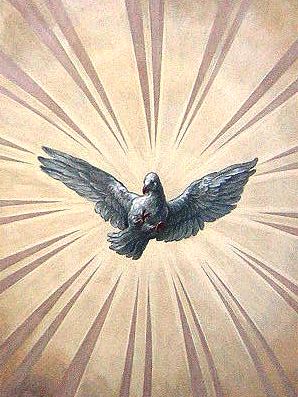
File:Vienna_Karlskirche_frescos4b.jpg · Wikimedia Commons · See Wikimedia Commons
Pentecostés
Sign in to savefestividad cristiana, que celebra la venida del Espíritu Santo, al final de la Pascua, que es el día 50
Pentecost is a Christian holiday celebrated 49 days after Easter that commemorates the descent of the Holy Spirit upon Jesus's Apostles and followers in Jerusalem, as described in the Acts of the Apostles. It is considered the "Birthday of the Church" because it marks the moment when the Holy Spirit empowered Jesus's followers to begin their mission.
AI-generated from the Wikipedia summary — may contain errors.
Key facts
- Holiday.holiday_name
- Pentecost
- Holiday.image
- Vienna Karlskirche frescos4b.jpg
- Holiday.caption
- Fresco of the Pentecostal dove (representing the Holy Spirit) at the Karlskirche in Vienna, Austria
- Holiday.observedby
- Catholic Church, Old Catholics, Lutherans, Eastern Orthodox, Oriental Orthodox, Amish, Anglicans and other Christians
- Holiday.observances
- Prayer, vigils, fasting (pre-festival), novenas, retreats, Holy Communion, litany
- Holiday.celebrations
- Church services, festive meals, processions, baptism, confirmation, ordination, folk customs, dancing, spring and woodland rites.
- Holiday.type
- Christian
- Holiday.significance
- Celebrates the descent of the Holy Spirit upon the Apostles and other followers of Jesus; birth of the Church
- Holiday.date
- 49 days after Easter
- Holiday.relatedto
- Jesus Day, Shavuot, Rosalia, Green Week, Pinkster, Whit Monday, Whit Tuesday, Whit Friday, Trinity Sunday
via Wikipedia infobox
Wikidata facts
- Instance of
- list of public holidays in the Netherlands
- Part of
- Eastertide
- Religion
- Christianity
- Followed by
- Trinity Sunday
- Follows
- Exaudi
- Image
- Ingeborg Psalter 02f 1200 (cropped).jpg
Show 5 more facts
- described by source
- Wikitólica
- Commons category
- Pentecost
- topic's main category
- Category:Pentecost
- day of week
- Sunday
- different from
- Semik
Sources (6)
via Wikidata · CC0
Article · Español
Pentecostés (del griego πεντηκοστή, pentēkostḗ, que significa ‘quincuagésimo’) es el término con el que se define la fiesta cristiana del quincuagésimo día del tiempo pascual. Se trata de una festividad que pone término a ese tiempo litúrgico y que configura la culminación solemne de la misma Pascua, su colofón y su coronamiento. Durante Pentecostés se celebra la venida del Espíritu Santo y el inicio de las actividades de la Iglesia. Por ello también se le conoce como la celebración del Espíritu Santo. En la liturgia católica es la fiesta más importante después de la Pascua y la Navidad. La liturgia incluye la secuencia medieval: Veni, Sancte Spiritus. En las Iglesias ortodoxas existe además la celebración de las «Tres Divinas Personas» o de la Santísima Trinidad. Las Iglesias occidentales celebran para esta ocasión, desde el siglo XIV, su propia fiesta llamada «Trinitatis» —la fiesta de la Santísima Trinidad— una semana después de Pentecostés. En las narraciones sobre Pentecostés de los Hechos de los Apóstoles, se le adjudica al Espíritu Santo (en congruencia con el Antiguo Testamento) características milagrosas (carismas): él ofrece valentía y libertad, posibilita la comprensión (glosolalia) y fortifica una comunidad universal. Pentecostés es considerada la tercera festividad más importante en la Iglesia católica, por detrás del Domingo de Resurrección y la Natividad.
Abstract from DBpedia / Wikipedia · CC BY-SA
Gallery (36)
Available in 111 languages
- Español
- Français
- Deutsch
- 中文
- 日本語
- Русский
- Português
- Italiano
- العربية
- हिन्दी
- Afrikaans
- Albanian
- Albanian
- Aragonese
- Aramaic
- Armenian
- Asturian
- Azerbaijani
Show 92 more
- Bahasa Indonesia
- Bangla
- Basque
- be_x_old
- Belarusian
- Bikol
- Breton
- Bulgarian
- Catalan
- Cebuano
- Colognian
- Croatian
- Czech
- Danish
- Egyptian Arabic
- Esperanto
- Estonian
- Faroese
- Filipino
- Finnish
- Galician
- Georgian
- Greek
- Hebrew
- Hungarian
- hyw
- Iban
- Icelandic
- Ido
- Igbo
- Interlingua
- Interlingue
- Irish
- Javanese
- Kashubian
- Khmer
- Latin
- Latvian
- Limburgish
- Lingala
- Lithuanian
- Lombard
- Low German
- Luxembourgish
- Macedonian
- Malagasy
- Malayalam
- Marathi
- Mari
- Moksha
- Mongolian
- nah
- nds_nl
- Neapolitan
- Nederlands
- Northern Frisian
- Norwegian
- Norwegian Nynorsk
- olo
- Palatine German
- Pennsylvania German
- Picard
- Polski
- Quechua
- roa_rup
- Romanian
- Romansh
- Serbian
- Serbian (Latin)
- simple
- Slovak
- Slovenian
- Svenska
- Swahili
- Tamil
- Tiếng Việt
- Türkçe
- Ukrainian
- Upper Sorbian
- Urdu
- Veps
- Walloon
- Waray
- Welsh
- Western Frisian
- Western Panjabi
- Wu Chinese
- Zeelandic
- zh_yue
- فارسی
- ไทย
- 한국어
via Wikidata sitelinks · CC0