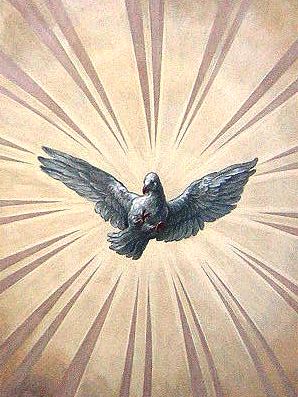
File:Vienna_Karlskirche_frescos4b.jpg · Wikimedia Commons · See Wikimedia Commons
Pentecostes
Sign in to savecelebração religiosa que relembra a descida do Espírito Santo sobre Maria e os apóstolos de Jesus
Pentecost is a Christian holiday celebrated 49 days after Easter that commemorates the descent of the Holy Spirit upon Jesus's Apostles and followers in Jerusalem, as described in the Acts of the Apostles. It is considered the "Birthday of the Church" because it marks the moment when the Holy Spirit empowered Jesus's followers to begin their mission.
AI-generated from the Wikipedia summary — may contain errors.
Key facts
- Holiday.holiday_name
- Pentecost
- Holiday.image
- Vienna Karlskirche frescos4b.jpg
- Holiday.caption
- Fresco of the Pentecostal dove (representing the Holy Spirit) at the Karlskirche in Vienna, Austria
- Holiday.observedby
- Catholic Church, Old Catholics, Lutherans, Eastern Orthodox, Oriental Orthodox, Amish, Anglicans and other Christians
- Holiday.observances
- Prayer, vigils, fasting (pre-festival), novenas, retreats, Holy Communion, litany
- Holiday.celebrations
- Church services, festive meals, processions, baptism, confirmation, ordination, folk customs, dancing, spring and woodland rites.
- Holiday.type
- Christian
- Holiday.significance
- Celebrates the descent of the Holy Spirit upon the Apostles and other followers of Jesus; birth of the Church
- Holiday.date
- 49 days after Easter
- Holiday.relatedto
- Jesus Day, Shavuot, Rosalia, Green Week, Pinkster, Whit Monday, Whit Tuesday, Whit Friday, Trinity Sunday
via Wikipedia infobox
Wikidata facts
- Instance of
- list of public holidays in the Netherlands
- Part of
- Eastertide
- Religion
- Christianity
- Followed by
- Trinity Sunday
- Follows
- Exaudi
- Image
- Ingeborg Psalter 02f 1200 (cropped).jpg
Show 5 more facts
- described by source
- Wikitólica
- Commons category
- Pentecost
- topic's main category
- Category:Pentecost
- day of week
- Sunday
- different from
- Semik
Sources (6)
via Wikidata · CC0
Article · Português
Pentecostes ("quinquagésimo" em grego) é uma das celebrações mais importantes do calendário cristão e comemora a descida do Espírito Santo sobre os apóstolos de Jesus Cristo, sua mãe Maria e outros seguidores. O Pentecostes é celebrado 50 dias depois do domingo de Páscoa, e ocorre no décimo dia depois da celebração da Ascensão de Jesus. Isto porque ele ficou quarenta dias, após Sua ressurreição, dando os últimos ensinamentos a seus discípulos. E para os cinquenta dias que se completam da Páscoa até o último dia da grande festa de Pentecostes, sobram dez dias. Foram estes os dias em que os discípulos permaneceram no cenáculo até a descida do Espírito Santo no dia de Pentecostes. Pentecostes é historicamente e simbolicamente ligado ao festival judaico da colheita (Shavuot), que comemora a entrega dos Dez Mandamentos no Monte Sinai cinquenta dias depois do Êxodo. Para os cristãos, o Pentecostes celebra a descida do Espírito Santo sobre os apóstolos e seguidores de Cristo, através do dom de línguas, como descrito no Novo Testamento, durante aquela celebração judaica do quinquagésimo dia em Jerusalém. Por esta razão o dia de Pentecostes é, às vezes, considerado o dia do nascimento da igreja cristã. O movimento pentecostal tem seu nome derivado desse evento. A ocasião (o Domingo de Pentecostes) é o último dia da Festa do Divino Espírito Santo, muito difundida no catolicismo popular brasileiro e de outros países.
Abstract from DBpedia / Wikipedia · CC BY-SA
Gallery (36)
Available in 111 languages
- Español
- Français
- Deutsch
- 中文
- 日本語
- Русский
- Português
- Italiano
- العربية
- हिन्दी
- Afrikaans
- Albanian
- Albanian
- Aragonese
- Aramaic
- Armenian
- Asturian
- Azerbaijani
Show 92 more
- Bahasa Indonesia
- Bangla
- Basque
- be_x_old
- Belarusian
- Bikol
- Breton
- Bulgarian
- Catalan
- Cebuano
- Colognian
- Croatian
- Czech
- Danish
- Egyptian Arabic
- Esperanto
- Estonian
- Faroese
- Filipino
- Finnish
- Galician
- Georgian
- Greek
- Hebrew
- Hungarian
- hyw
- Iban
- Icelandic
- Ido
- Igbo
- Interlingua
- Interlingue
- Irish
- Javanese
- Kashubian
- Khmer
- Latin
- Latvian
- Limburgish
- Lingala
- Lithuanian
- Lombard
- Low German
- Luxembourgish
- Macedonian
- Malagasy
- Malayalam
- Marathi
- Mari
- Moksha
- Mongolian
- nah
- nds_nl
- Neapolitan
- Nederlands
- Northern Frisian
- Norwegian
- Norwegian Nynorsk
- olo
- Palatine German
- Pennsylvania German
- Picard
- Polski
- Quechua
- roa_rup
- Romanian
- Romansh
- Serbian
- Serbian (Latin)
- simple
- Slovak
- Slovenian
- Svenska
- Swahili
- Tamil
- Tiếng Việt
- Türkçe
- Ukrainian
- Upper Sorbian
- Urdu
- Veps
- Walloon
- Waray
- Welsh
- Western Frisian
- Western Panjabi
- Wu Chinese
- Zeelandic
- zh_yue
- فارسی
- ไทย
- 한국어
via Wikidata sitelinks · CC0