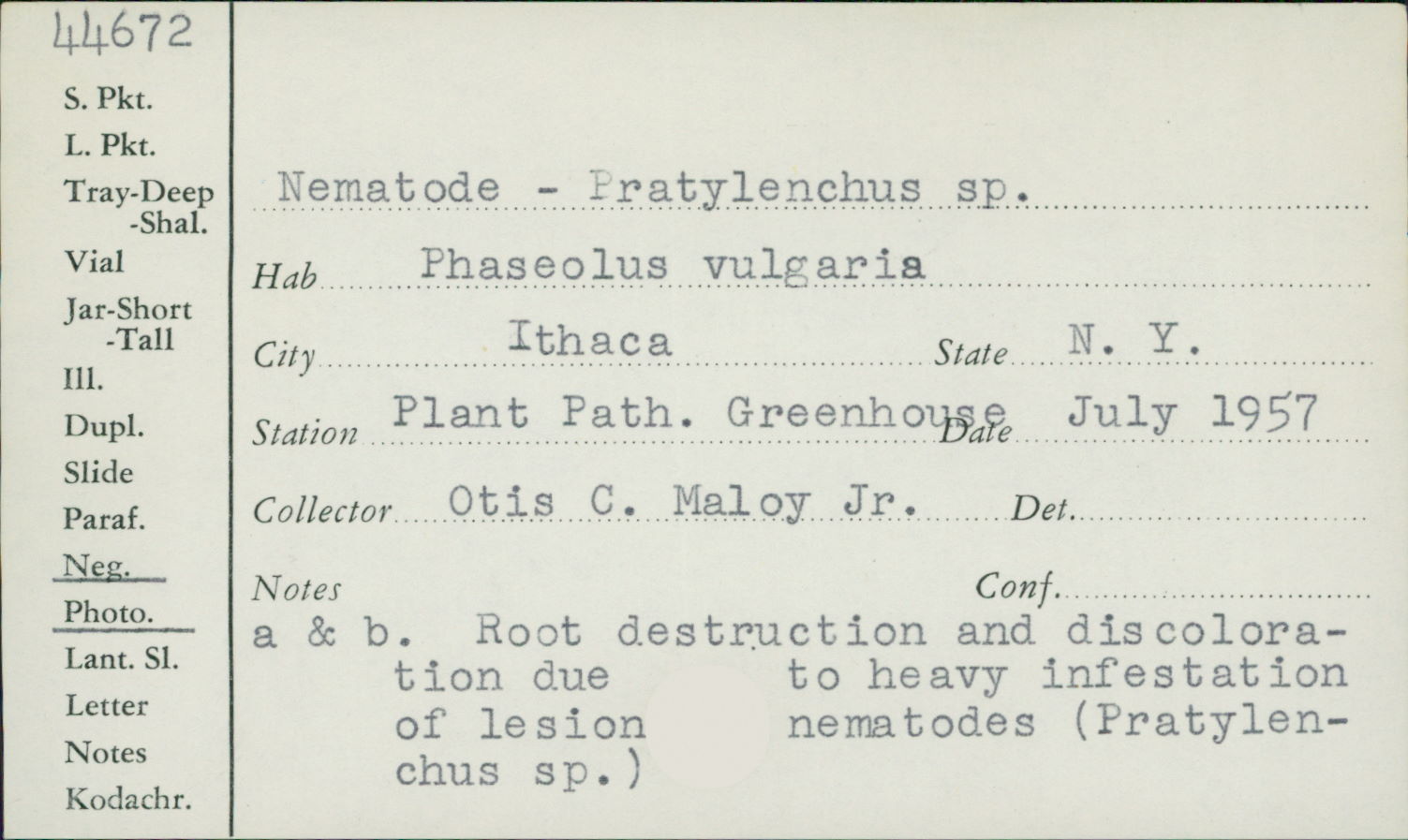
Specimen image via iDigBio · BY-NC-SA
Pratylenchus
Sign in to savePratylenchus is a genus of nematodes known commonly as lesion nematodes. They are parasitic on plants and are responsible for root lesion disease on many taxa of host plants in temperate regions around the world. Lesion nematodes are migratory endoparasites that feed and reproduce in the root and move around, unlike the cyst or root-knot nematodes, which may stay in one place. They usually only feed on the cortex of the root. Species are distinguished primarily by the morphology of the stylets.
Species
GENUS
- KingdomAnimalia
- PhylumNematoda
- ClassChromadorea
- OrderRhabditida
- FamilyPratylenchidae
via GBIF
Museum specimens
- Specimen records
- 49
- With media
- 1
- Family
- Pratylenchidae
- Collections
- IFIT-CP
- Recorded in
- Mexico
Wikidata facts
- Instance of
- taxon
- Parent taxon
- Hoplolaimidae
- Image
- Pratylenchus zeae.jpg
Show 4 more facts
- taxon name
- Pratylenchus
- taxon rank
- genus
- topic's main category
- Category:Pratylenchus
- Commons category
- Pratylenchus
Sources (3)
via Wikidata · CC0
~3 min read
Encyclopedic overview
6 sectionsContents
- Hosts and symptoms
- Environment
- Management
- Life cycle and pathology
- References
- External links
Pratylenchus is a genus of nematodes known commonly as lesion nematodes. They are parasitic on plants and are responsible for root lesion disease on many taxa of host plants in temperate regions around the world. Lesion nematodes are migratory endoparasites that feed and reproduce in the root and move around, unlike the cyst or root-knot nematodes, which may stay in one place. They usually only feed on the cortex of the root. Species are distinguished primarily by the morphology of the stylets.
==Hosts and symptoms== Root lesion nematodes infect a great variety of hosts. Pratylenchus penetrans alone has over 350 host plants. They include agricultural crops such as soybeans, potatoes, corn, bananas, and wheat. The genus is found most often in corn. Signs of disease are similar in most plants and generally include necrotic lesions of the roots. The lesions can also be entrances for pathogenic bacteria and fungi, which produce secondary infections. Above ground the plant becomes stunted, chlorotic, and wilted, and it often dies. A crop field may be patchy as plants wither and die. Root lesion nematodes can cause significant yield losses.
Excerpted from Wikipedia’s “Pratylenchus” article, available under the CC BY-SA 4.0 licence.