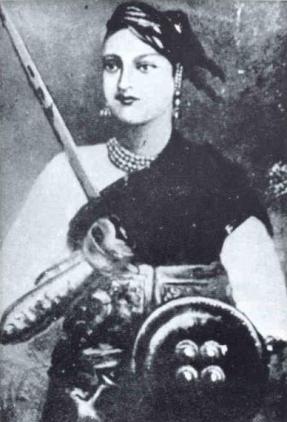
Rani Lakshmibai
Also known as Manikarnika, Lakshmi Bai, Laxmi Bai, Laxmibai, Jhansi ki Rani, Rani of Jhansi, Lakshmibai, Manikarnika Tambe
queen of a princely state in India
AI overview
Rani Lakshmibai was a queen who ruled a princely state in India during the 19th century. She is remembered as an important historical figure, though the specific details of her reign and significance would require further historical sources to fully explain.
AI-generated from the Wikipedia summary — may contain errors.
Recent publications · Crossref
5 total works indexed
- Guidelines for the use and interpretation of assays for monitoring autophagy (3rd edition)
· 2016 · cited 4,394x
- Global burden of bacterial antimicrobial resistance 1990–2021: a systematic analysis with forecasts to 2050
· 2024 · cited 2,725x
- Human Protein Reference Database--2009 update
· 2009 · cited 2,694x
- A communal catalogue reveals Earth’s multiscale microbial diversity
· 2017 · cited 2,482x
- Guidelines for the use and interpretation of assays for monitoring autophagy (4th edition)<sup>1</sup>
Article
The Rani of Jhansi (Hindi: Jhānsi Ki Rāni; born Manikarnika Tambe; 1827–30, or 1835 – 18 June 1858), also known as Rani Lakshmibai, was one of the leading figures of the Indian Rebellion of 1857. The queen consort of the princely state of Jhansi from 1843 to 1853, she assumed its leadership after the outbreak of the conflict and fought several battles against the British. Her life and deeds are celebrated in modern India and she remains a potent symbol of Indian nationalism.
Born into a Marathi family in Varanasi, Manikarnika Tambe was married to the raja of Jhansi, Gangadhar Rao, at a young age, taking the name Rani Lakshmibai. The couple had one son but he died young, and so when Gangadhar Rao was on his deathbed in 1853, he adopted Damodar Rao, a young relative, to be his successor. The British East India Company, which by then had subjugated much of India, including Jhansi, refused to recognise this succession and annexed Jhansi under the Doctrine of Lapse, ignoring the Rani's vigorous protests to the Governor-General Lord Dalhousie.
Gallery (12)
On the map
9 mapped locations