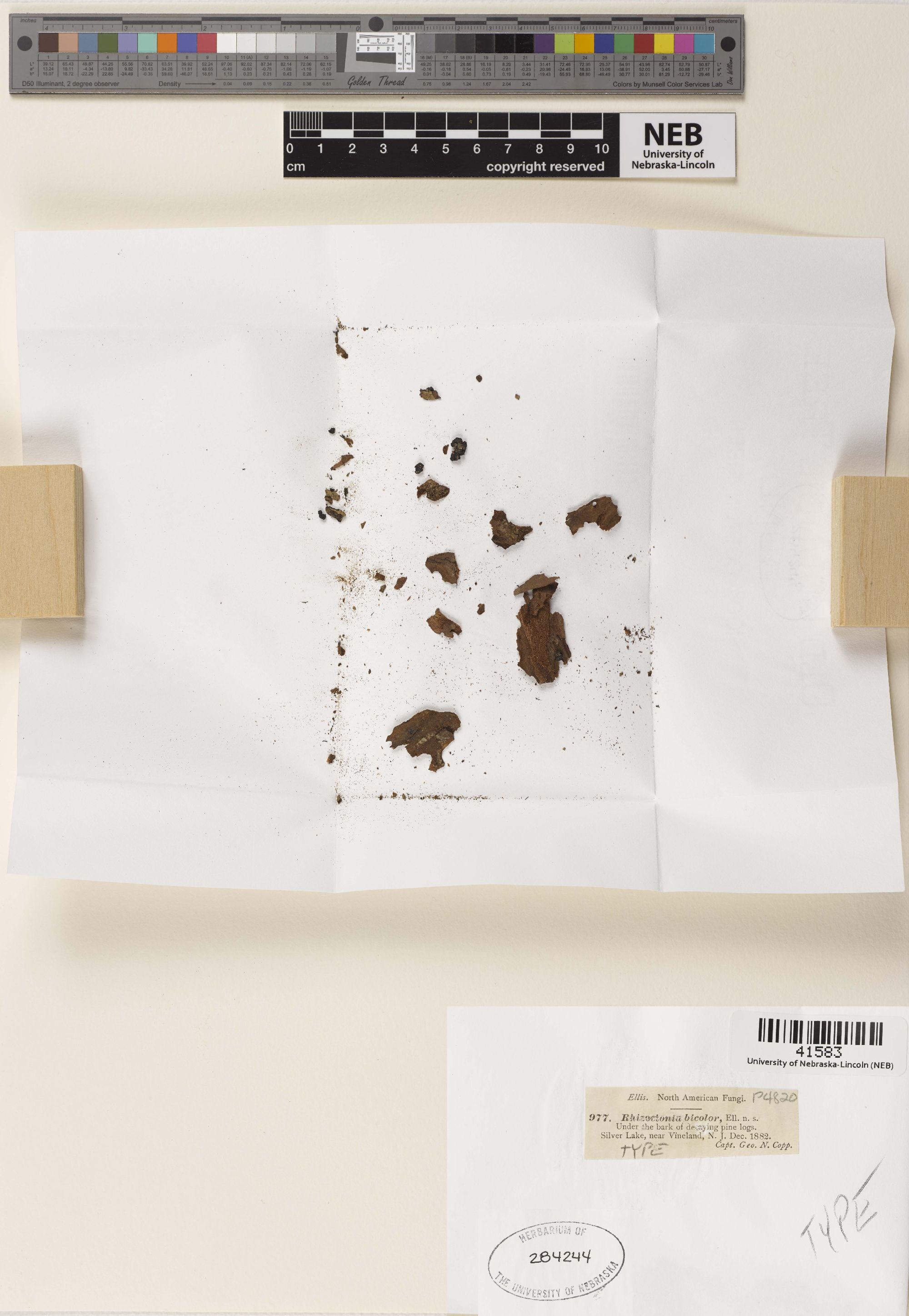
Specimen image via iDigBio · BY-NC-SA
Rhizoctonia
Sign in to saveRhizoctonia is a genus of fungi in the family Ceratobasidiaceae. Species form thin, effused, corticioid basidiocarps (fruit bodies), but are most frequently found in their sterile, anamorph state. Rhizoctonia species are saprotrophic, but some are also facultative plant pathogens, causing commercially important crop diseases. Some are also endomycorrhizal associates of orchids. The genus name was formerly used to accommodate many superficially similar, but unrelated fungi. As of 2025, the synonymisation of several genera under a unified Rhizoctonia was formalised, and the genus now includes na
Species
GENUS
- KingdomFungi
- PhylumBasidiomycota
- ClassAgaricomycetes
- OrderCantharellales
- FamilyCeratobasidiaceae
via GBIF
Museum specimens
- Specimen records
- 439
- With media
- 166
- Family
- Ceratobasidiaceae
- Collections
- CIIDIR-IPN, F, CUP, NEB, FLAS, CDA
- Recorded in
- Mexico, India, United States
Research
3,929 papers- Variation of rDNA Internal Transcribed Spacer Sequences in Rhizoctonia cerealis.Current microbiology · 2017
- Molecular and genetic aspects of controlling the soilborne necrotrophic pathogens Rhizoctonia and Pythium.Plant science : an international journal of experimental plant biology · 2014
- Real-time PCR quantification of Rhizoctonia solani AG-3 from soil samples.Journal of microbiological methods · 2020
- Tobacco leaf spot and root rot caused by Rhizoctonia solani Kühn.Molecular plant pathology · 2011
- Fungal extracellular vesicles mediate cross-kingdom trafficking of virulence effectors into plant cells to promote infection.Molecular plant · 2025
via PubMed
Wikidata facts
- Instance of
- taxon
- Parent taxon
- Ceratobasidiaceae
- Image
- Rhizoctonia solani.jpg
Show 4 more facts
- Commons category
- Rhizoctonia
- taxon name
- Rhizoctonia
- taxon rank
- genus
- taxon author citation
- DC.
via Wikidata · CC0
~9 min read
Encyclopedic overview
10 sectionsContents
- Taxonomy
- History
- [[Anamorphs]]
- [[Teleomorph, anamorph and holomorph|Teleomorphs]]
- Current status
- Redisposition of former species
- Habitat and distribution
- Economic importance
- References
- External links
Rhizoctonia is a genus of fungi in the family Ceratobasidiaceae. Species form thin, effused, corticioid basidiocarps (fruit bodies), but are most frequently found in their sterile, anamorph state. Rhizoctonia species are saprotrophic, but some are also facultative plant pathogens, causing commercially important crop diseases. Some are also endomycorrhizal associates of orchids. The genus name was formerly used to accommodate many superficially similar, but unrelated fungi. As of 2025, the synonymisation of several genera under a unified Rhizoctonia was formalised, and the genus now includes names formerly circumscribed under Moniliopsis, Ceratobasidium, Thanatephorus, Uthatobasidium, Koleroga, Cejpomyces, Oncobasidium, Ypsilonidium, Ceratorhiza, and Tofispora. As currently circumscribed, the genus contains 52 accepted species.
==Taxonomy== ===History=== ====Anamorphs==== Rhizoctonia was introduced in 1815 by French mycologist Augustin Pyramus de Candolle for anamorphic plant pathogenic fungi that produce both hyphae and sclerotia. The name is derived from Ancient Greek, ῥίζα (rhiza, "root") + κτόνος (ktonos, "murder"), and de Candolle's original species, Rhizoctonia crocorum (teleomorph Helicobasidium purpureum), is the causal agent of violet root rot of carrots and other root vegetables. Subsequent authors added over 100 additional names to the genus, most of them plant pathogens bearing only a superficial resemblance to the type species. Rhizoctonia thus became an artificial form genus of anamorphic fungi comprising a diverse range of unrelated species.
Excerpted from Wikipedia’s “Rhizoctonia” article, available under the CC BY-SA 4.0 licence.