Encyclopedia of Life · EOL (see source)
Species
GENUS
- KingdomPlantae
- PhylumTracheophyta
- ClassLiliopsida
- OrderPoales
- FamilyPoaceae
华箬竹属(学名:Sasamorpha)是禾本科下的一个属,为小灌木状竹。该属共有约3种,分布于日本和朝鲜。
via GBIF · Kew POWO
Museum specimens
- Specimen records
- 120
- With media
- 99
- Family
- Poaceae
- Collections
- INECOL, MICH, US
- Recorded in
- Mexico, Japan, United States, China
Research
3,746 papers- Sasa argenteostriata - A potential plant for phytostabilization remediation of lead-zinc tailing-contaminated soil.Ecotoxicology and environmental safety · 2024
- Sasa Quelpaertensis Nakai Induced Antidepressant-Like Effect in Ovariectomized Rats.BioMed research international · 2019
- Sasa veitchii extract induces anticancer effects via inhibition of cyclin D1 expression in MCF-7 cells.Nagoya journal of medical science · 2020
- Sasa quelpaertensis leaf extract mitigates fatigue and regulates the transcriptome profile in mice.Genes & genomics · 2019
- Sasa veitchii extracts protect phenytoin-induced cell proliferation inhibition in human lip mesenchymal cells through modulation of miR-27b-5p.Biomedical research (Tokyo, Japan) · 2023
via PubMed
Wikidata facts
- Instance of
- taxon
- Parent taxon
- Arundinarieae
- Image
- Sasa 001.jpg
Show 8 more facts
- taxon name
- Sasa
- Commons category
- Sasa
- taxon rank
- genus
- topic's main category
- Category:Sasa
- taxon common name
- 笹属
- has fruit type
- caryopsis
- different from
- Sasa
Sources (3)
via Wikidata · CC0
~14 min read
Encyclopedic overview
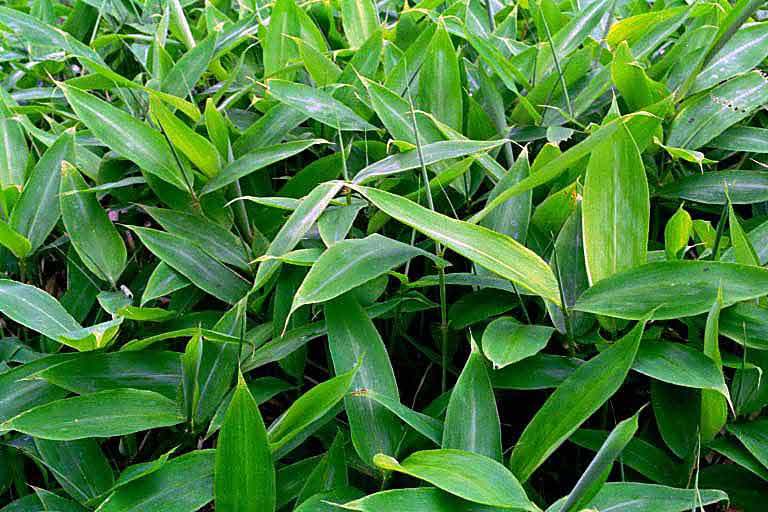
Sasa is a genus of bamboo and part of the grass family (Poaceae). Sasa are characterized as being dwarf species of bamboo, typically under 2m in height, producing many thin culms from a highly branched and running root stock with only one branch per node. For their size, they have relatively large, wide leaves leading to the common name broadleaf bamboo.
All species are native to Asia, with the majority are native to Japan. Some species of Sasa have the northern-most distribution of any bamboo species and are native to Sakhalin in the Russian Far East and the nearby Kuril islands. The genus name Sasa is derived from the Japanese name sasa (笹 / ササ) meaning bamboo grass, used to distinguish Sasa from taller bamboo in Japan.
Excerpted from Wikipedia’s “Sasa” article, available under the CC BY-SA 4.0 licence.