Species
SPECIES
- KingdomAnimalia
- PhylumChordata
- ClassSquamata
- FamilyScincidae
Observations recorded29,896
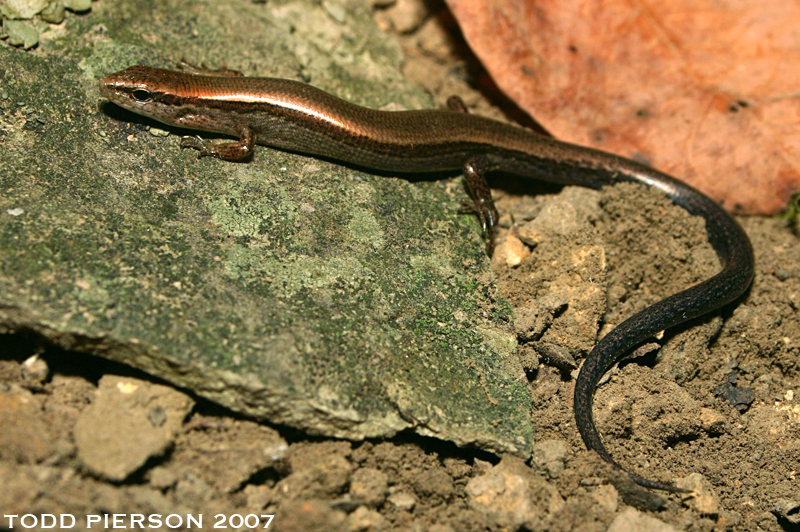
When alarmed, the Ground Skink (Scincella lateralis) is quick to take refuge under the nearest shelter. When running, it makes lateral, snakelike movements. It does not hesitate to enter water to escape, but seldom climbs. (Conant and Collins 1991)Scincella lateralis responds to both visual and chemical cues of prey. A visual stimulus is associated with an increased rate of tongue flicking, orientation to the prey, and attack behavior. Chemical cues are of reduced importance when the visual cue (movement) is present. However, when the visual stimulus of prey is removed, the rate of tongue flicking increases, and is significantly greater in the presence of a prey extract than to a dead prey item or a water control. When prey are non-moving or dead, chemical cues enable the lizard to distinguish potential prey from inanimate objects. (Nicoletto 1985)Scincella lateralis, like many lizards, autotomizes its tail as a defense strategy. Tail autotomy involves the lizard releasing ("dropping") its tail to allow it to escape from a predator. The tails of many lizard species, including S. lateralis, may thrash wildly from side to side after being autotomized. Dial and Fitzpatrick (1983) expe
via GBIF
Wikidata facts
Article · Svenska
Scincella lateralis är en ödleart som beskrevs av Thomas Say 1823. Scincella lateralis ingår i släktet Scincella och familjen skinkar. IUCN kategoriserar arten globalt som livskraftig. Inga underarter finns listade i Catalogue of Life.
Abstract from DBpedia / Wikipedia · CC BY-SA
Available in 11 languages
via Wikidata sitelinks · CC0