
Semeiskie
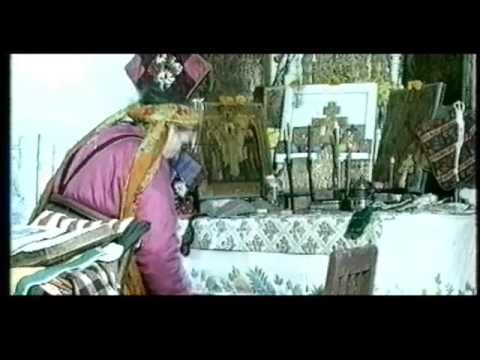
Sign in to savethumb|320px|An Old Believers chapel at the Ulan-Ude Ethnographic Museum in [[Buryatia]] The Semeiskie are a community of orthodox Old Believers who have lived in the Transbaikal since the reign of Catherine the Great. The sacred rites and rituals of the Old Believers came to be in opposition to those of the official state church after the introduction of the 17th century religious reforms known as the Raskol. Those who rejected the reforms became known as "Old Believers" (mostly, the Russian Old-Orthodox Church) and continued to practice their faith despite repression. The Semeiskie were a par
Described at
Cultural space and oral culture of the Semeiskie - UNESCO Intangible Cultural Heritage
ich.unesco.org →The Semeiskie communities are formed by a group of so-called “Old Believers”, a confessional community originating from the time of the Instigation of the Russian Orthodox Church in the seventeenth century.Their history is marked by repression and exile. During the reign of Catherine the Great, believers in the “old system” from various regions of Russia had to move to the Transbaikal region in Siberia, where they still live today. In this remote area, they have preserved elements of their respective culture, forming a distinct group identity. The cultural space of the Semeiskie, east of Lake Baikal, represents a remnant of cultural expressions from pre-seventeenth century Russia. The community, totalling around 200,000 persons, speaks a south Russian dialect featuring borrowings from Bielorussian, Ukrainian and Bouryat. The Semeiskie still practised ancient orthodox rituals and perpetuate everyday activities mainly based on the cult of the family - the term Semeskie refers to “those who live as a family” - and strong moral principles. They are also characterized by their traditional dress, handicrafts, dwellings, paintings, ornaments and food as well as their music. Also noteworthy are their polyphonic choirs, which perform traditional songs at family celebrations and popular festivals. These songs are known as “drawl” singing and are rooted in the Russian liturgical music of the Middle Ages. 1. Oral traditions and expressions (384) 2. Social practices, rituals and festive events (584) 3. Traditional craftsmanship (460)
Excerpt from a page describing this subject · 7,882 chars · not written by Vinony
Wikidata facts
- Instance of
- ethnoreligious group
- Part of
- Russians
- Languages spoken
- Russian
- Native language
- Russian
- Religion
- Old Believers
- Country
- Zabaykalsky Krai
- Population
- 80
- Country of origin
- Russia
Show 3 more facts
- Commons category
- Semeiskie
- described at URL
- ich.unesco.org/es/RL/00017
- intangible cultural heritage status
- Masterpieces of the Oral and Intangible Heritage of Humanity
via Wikidata · CC0
~2 min read
Encyclopedic overview
2 sectionsContents
- Culture
- References
thumb|320px|An Old Believers chapel at the Ulan-Ude Ethnographic Museum in [[Buryatia]] The Semeiskie are a community of orthodox Old Believers who have lived in the Transbaikal since the reign of Catherine the Great. The sacred rites and rituals of the Old Believers came to be in opposition to those of the official state church after the introduction of the 17th century religious reforms known as the Raskol. Those who rejected the reforms became known as "Old Believers" (mostly, the Russian Old-Orthodox Church) and continued to practice their faith despite repression. The Semeiskie were a particular group of Old Believers who fled to Gomel in Belarus (at that time part of Poland). Catherine the Great then exiled the group to Buryatia, on the pretext that they could there become farmers for the Cossack guards who defended the borders of the empire. The descendants of these original Semeiskie have lived in the region ever since.
== Culture == The Semeiskie have a long oral tradition, in speech as well as vocal music. The Semeiskie songs are notable for their polyphonic dissonance in both sacred and secular music. The themes of the songs vary widely, from religious texts to everyday songs. The cultural space and oral culture of the Semeiskie was placed on the UNESCO List of the Intangible Cultural Heritage of Humanity in 2001.
Excerpted from Wikipedia’s “Semeiskie” article, available under the CC BY-SA 4.0 licence.