File:Serket.svg · Wikimedia Commons · See Wikimedia Commons
Serket
Sign in to saveAlso known as Selket, Serqet, Selcis
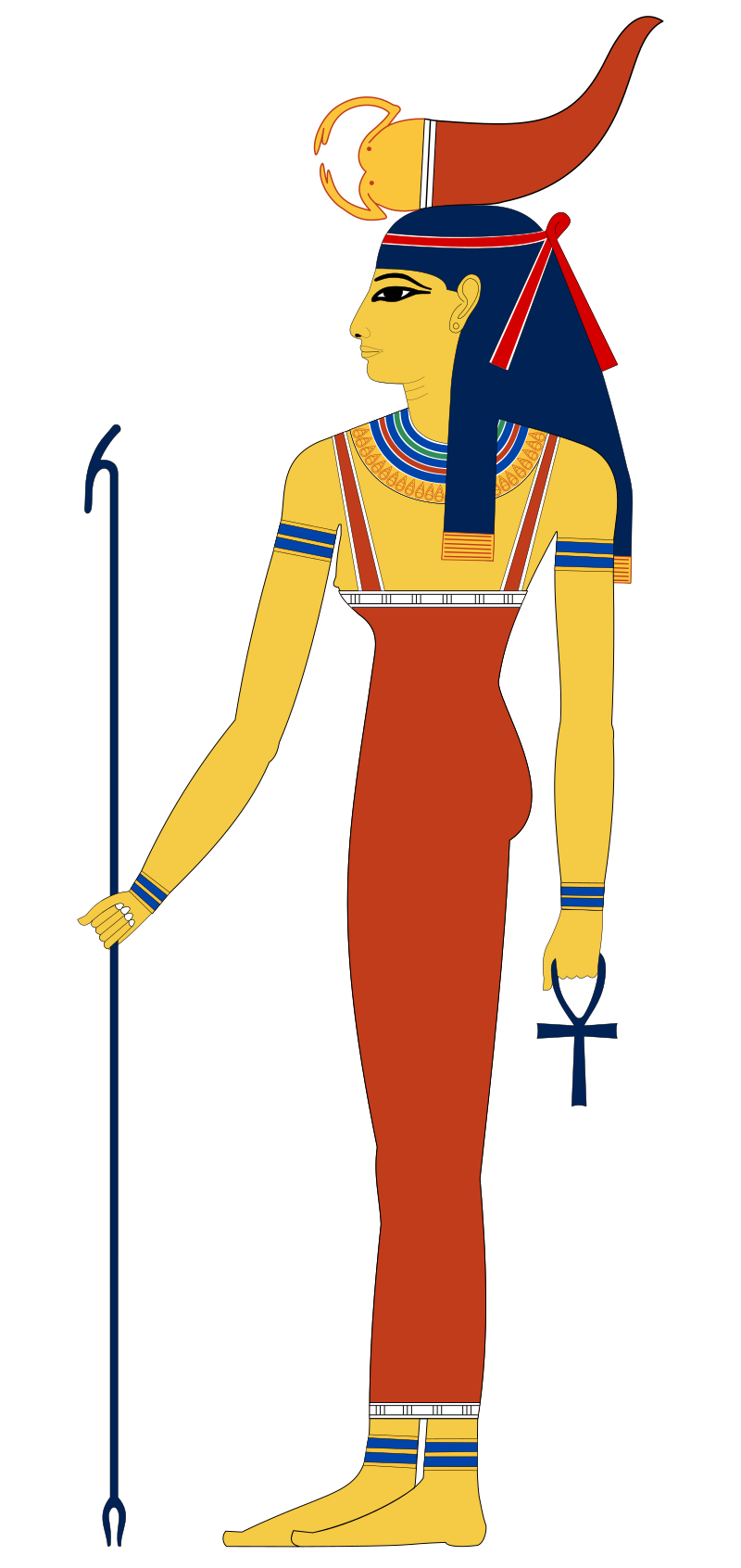
Serket /ˈsɜːrˌkɛt/ (Ancient Egyptian: srqt) is the goddess of protection against the venomous stings and bites of scorpions in Egyptian mythology. She was primarily worshiped in Lower Egypt during the Predynastic Period (c. 6000 – c. 3150 BCE). Serket is often depicted as a woman whose head is surmounted by a scorpion with its tail is ready to sting, an ankh in one hand, and a was-sceptre in her other. Her name, also rendered as Serqet, Selkis, or Selket, is a shortened version of 'Serket hetyt' which means "she who causes the throat to breathe."
Key facts
- Deity.type
- Egyptian
- Deity.name
- Serket
- Deity.image
- Serket.svg
- Deity.caption
- The Egyptian goddess Serket is often depicted as a woman with a scorpion gracing her crown. She holds the ankh, the symbol of life, in one hand and a was-sceptre, representing power, in the other.
- Deity.hiero
- z:r-q:t-B1orz:r-q:t-L7
- Deity.symbol
- Scorpion
- Deity.parents
- Set, or Khnum and Neith
- Deity.siblings
- Apep (in some myths), Sobek (in some myths)
- Deity.consort
- Horus the Younger or Horus the Elder
- Deity.offspring
- Nehebkau (in some myths)
via Wikipedia infobox
Wikidata facts
- Instance of
- death deity
- Part of
- Egyptian mythology
- Gender
- female
- Image
- Serket.svg
Show 2 more facts
- Commons category
- Serket
- worshipped by
- religion of ancient Egypt
Sources (1)
via Wikidata · CC0
~5 min read
Encyclopedic overview
9 sectionsContents
- Old Kingdom
- Name and Roles
- Middle Kingdom
- New Kingdom
- Dedications and rituals
- Family
- Gallery
- References
- Further reading
Serket /ˈsɜːrˌkɛt/ (Ancient Egyptian: srqt) is the goddess of protection against the venomous stings and bites of scorpions in Egyptian mythology. She was primarily worshiped in Lower Egypt during the Predynastic Period (c. 6000 – c. 3150 BCE). Serket is often depicted as a woman whose head is surmounted by a scorpion with its tail is ready to sting, an ankh in one hand, and a was-sceptre in her other. Her name, also rendered as Serqet, Selkis, or Selket, is a shortened version of 'Serket hetyt' which means "she who causes the throat to breathe."
== Old Kingdom == === Name and Roles === She is associated with healing, magic, and protection. Another interpretation of her name is, 'she who gives breath.' As many of the venomous creatures of Egypt could prove fatal, Serket was considered a protector of the dead, particularly being associated with venoms and fluids that cause stiffening.
Excerpted from Wikipedia’s “Serket” article, available under the CC BY-SA 4.0 licence.