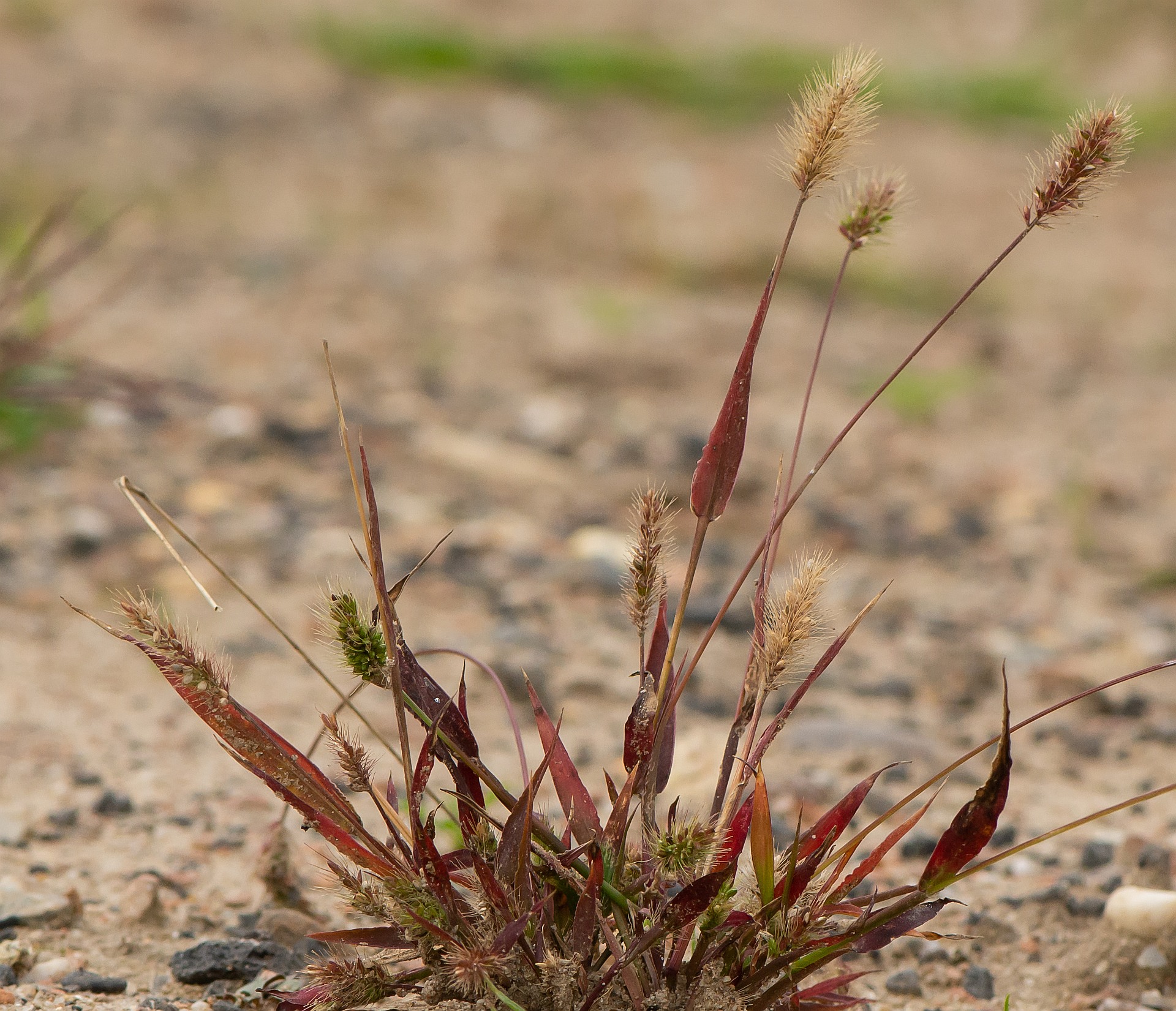
Image from GBIF · CC BY-NC
Setaria viridis
Sign in to saveAlso known as green foxtail millet, green bristlegrass, green foxtail, green bristle-grass
species of plant
OverviewAI-generated
Setaria viridis, commonly known as green bristlegrass or green fox-tail grass, is a species of annual, herbaceous plant in the family Poaceae. It belongs to the genus Setaria and is classified within the order Poales. The species has an accepted taxonomic status with the authority citation (L.) Beauv. Its fruit type is a caryopsis.
The plant’s native range includes Afghanistan, Albania, Algeria, Altay, Amur, Austria, Baleares, Bangladesh, Belgium, Bulgaria, Buryatiya, and Cambodia. It has also been recorded in China, specifically in Beijing, Shanghai, and Fujian. Additionally, records exist for Mexico, the United States, and Canada. The species has a regional conservation status of Near Threatened.
Setaria viridis is used as fodder, a medicinal plant, for fiber, and as food. It has been observed in solutional caves. The species has a sequenced genome and is documented in various biological collections, including those at IBUNAM, UAAAN, the University of Alberta Museums, FCF-UANL, and CIIDIR-IPN.
Synthesized by Vinony from 49 facts across 8 sources: Wikidata, GBIF, iNaturalist, Gbif Occ, Plants of the World, WoRMS, iDigBio, Vinony graph. Generated from structured data (not the Wikipedia text) and checked against those facts — may still contain errors.
Species
green fox-tail grass
SPECIES
- KingdomPlantae
- PhylumTracheophyta
- ClassLiliopsida
- OrderPoales
- FamilyPoaceae
Die Grüne Borstenhirse (Setaria viridis) ist eine Pflanze, die zur Gattung der Borstenhirsen (Setaria) und damit zu den Süßgräsern (Poaceae) gehört. Inhaltsverzeichnis 1 Beschreibung 2 Typische Merkmale 2.1 Jungpflanze 2.2 Halme 2.3 Blätter 2.4 Blüten 2.5 Blütezeit 3 Verbreitung 4 Standort 5 Hauptkeimzeit 6 Ökologie 7 Bedeutung 8 Bilder 9 Literatur 10 Einzelnachweise 11 Weblinks Beschreibung Die Grüne Borstenhirse wächst als krautige Pflanze und erreicht Wuchshöhen von 5 bis 50 cm. Ihre Halme sind knickig aufsteigend. Die Laubblätter sind grün mit hellem oder violettem Mittelnerv und kahl. Die Ligula bildet einen Haarkranz. Die Blütenähre wirkt beim Aufwärtsstreichen glatt, sie ist kompakt und nicht unterbrochen. Die Borsten sind 5 bis 10 mm lang, weich, dünn, grün, später violett überlaufen. Die Deckspelzen des oberen Blütchens sind glatt oder schwach strukturiert, die obere Hüllspelze ist so lang wie die Deckspelze. Die Chromosomenzahl beträgt 2n = 18.[1] Grüne Borstenhirse (Setaria viridis) Typische Merkmale Pflanze erscheint im Jugendstadium kräftig grün, im Erwachsenenstadium mehr rötlich überlaufen. Ohne Blatthäutchen, dafür mit einem Kranz feiner, langer Wimpernhaare. Jungpf
via GBIF · Kew POWO
Museum specimens
- Specimen records
- 13,368
- With media
- 8,548
- Family
- Poaceae
- Collections
- IBUNAM, UAAAN, UNIVERSITY OF ALBERTA MUSEUMS, FCF-UANL, CIIDIR-IPN, GH
- Recorded in
- Mexico, United States, Canada
Wikidata facts
- Instance of
- taxon
- Subclass of
- herbaceous plant
- Parent taxon
- Setaria
- Image
- Groene naaldaar plant (Setaria viridis).jpg
- Has use
- insecticide
Show 13 more facts
- taxon rank
- species
- taxon name
- Setaria viridis
- Commons category
- Setaria viridis
- taxon common name
- zeleni muhvič
- Commons gallery
- Setaria viridis
- has fruit type
- caryopsis
- sequenced genome URL
- plants.ensembl.org/Setaria_viridis
- taxon range
- Tibet Autonomous Region
- habitat
- solutional cave
- short name
- S. viridis
- taxon author citation
- (L.) P.Beauv.
- regional conservation status
- Near Threatened
via Wikidata · CC0
~2 min read
Encyclopedic overview
Clumping Setaria viridis, Chiba Japan Symbiosis of Setaria viridis and Setaria pumila, Chiba Japan in 2008
Setaria viridis is a species of grass known by many common names, including green foxtail, green bristlegrass, and wild foxtail millet. It is sometimes considered a subspecies of Setaria italica. It is native to Eurasia, but it is known on most continents as an introduced species and is closely related to Setaria faberi, a noxious weed. It is a hardy grass which grows in many types of urban, cultivated, and disturbed habitat, including vacant lots, sidewalks, railroads, lawns, and at the margins of fields. It is the wild antecedent of the crop foxtail millet.
Excerpted from Wikipedia’s “Setaria viridis” article, available under the CC BY-SA 4.0 licence.