Category
page 1Commons link is on Wikidata
.jpg)
Uetersen
Uetersen (, formerly known as Ütersen (Holstein)) is a town in the district of Pinneberg, in Schleswig-Holstein, Germany. It is situated approximately south of Elmshorn, and northwest of Hamburg at the small Pinnau River, close to the Elbe river. Uetersen is home to the Rosarium Uetersen, the oldest and largest rose garden in Northern Germany, created in 1929.

Raphael
Raffaello Sanzio da Urbino (; March 28 or April 6, 1483April 6, 1520), now generally known in English as Raphael ( , ), was an Italian painter and architect of the High Renaissance. His work is admired for its clarity of form, ease of composition, and visual achievement of the Neoplatonic ideal of human grandeur. Together with Leonardo da Vinci and Michelangelo, he forms the traditional trinity of great masters of that period.
.jpg)
Pretoria
Pretoria ( ; ) is the administrative capital of South Africa, serving as the seat of the executive branch of government, and as the host to all foreign embassies to the country.
%20(8231709397).jpg)
wheat
Wheat is a group of wild and domesticated grasses of the genus Triticum (). As cereals, they are cultivated for their grains, which are staple foods around the world. Well-known wheat species and hybrids include the most widely grown common wheat (T. aestivum), spelt, durum, emmer, einkorn, and Khorasan or Kamut. The archaeological record suggests that wheat was first cultivated in the regions of the Fertile Crescent around 9600 BC.

Narendra Modi
Narendra Damodardas Modi is an Indian politician who has served as the prime minister of India since 2014. Modi was the chief minister of Gujarat from 2001 to 2014 and is the member of parliament (MP) for Varanasi. He is a member of the Bharatiya Janata Party (BJP) and of the Rashtriya Swayamsevak Sangh (RSS), a right-wing Hindutva paramilitary volunteer organisation. He is the longest-serving prime minister outside the Indian National Congress.
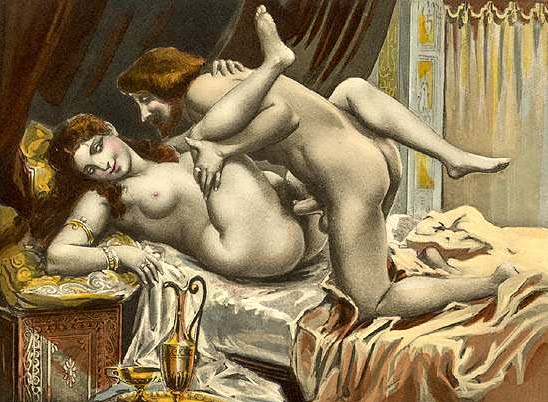
Sexual intercourse
Sex, more formally known as sexual intercourse, coitus, or copulation, is an intimate social activity typically involving the insertion of the erect male penis inside the female vagina and followed by thrusting motions for erotic pleasure, biological reproduction, or both. This specific type of sex is also known as vaginal intercourse. However, other forms of penetrative sexual intercourse also exist, including anal sex, oral sex, fingering and penetration by use of a dildo, and vibrators. The desire for these activities is grounded in natural human instinct and they involve physical intimacy between two or more people, usually enacted by humans solely for physical-emotional pleasure, sometimes contributing to human bonding.

steel
Steel is an alloy of iron and carbon that demonstrates improved mechanical properties compared to the pure form of iron. Due to its high elastic modulus, yield strength, fracture strength and low raw material cost, steel is one of the most commonly manufactured materials in the world. Steel is used in structures (as concrete reinforcing rods or steel beams), in bridges, infrastructure, tools, ships, trains, cars, bicycles, machines, electrical appliances, furniture, and weapons.

Wiesbaden
Wiesbaden (; ) is the capital of the German state of Hesse, and the second-largest Hessian city after Frankfurt am Main. With around 283,000 inhabitants, it is Germany's 24th-largest city. Wiesbaden forms a conurbation with a population of around 500,000 with the neighbouring city of Mainz. This conurbation is in turn embedded in the Rhine-Main Metropolitan Region—Germany's second-largest metropolitan region after Rhine-Ruhr—which also includes the nearby cities of Frankfurt am Main, Darmstadt, Offenbach am Main, and Hanau, and has a combined population exceeding 5.8 million.

Salzburg
Salzburg is the fourth-largest city in Austria. In 2020 its population was 156,852. The city lies on the Salzach River, near the border with Germany and at the foot of the Alps mountains.

vanadium
Vanadium is a chemical element; it has symbol V and atomic number 23. It is a hard, silvery-grey, malleable transition metal. The elemental metal is rarely found in nature, but once isolated artificially, the formation of an oxide layer (passivation) somewhat stabilizes the free metal against further oxidation.

squirrel

Wilhelm Röntgen
German physicist (1845–1923)

R/r
R, or r, is the eighteenth letter of the Latin alphabet, used in the modern English alphabet, the alphabets of other western European languages and others worldwide. Its name in English is ar (pronounced ), plural ars.

S/s
S, or s, is the nineteenth letter of the Latin alphabet, used in the English alphabet, the alphabets of other western European languages and other latin alphabets worldwide. Its name in English is ess (pronounced ), plural esses.

V/v
V, or v, is the twenty-second letter of the Latin alphabet, used in the modern English alphabet, the alphabets of other western European languages and others worldwide. Its name in English is vee (pronounced ), plural vees.

U/u
U, or u, is the twenty-first letter and the fifth vowel letter of the Latin alphabet, used in the modern English alphabet and the alphabets of other western European languages and others worldwide. Its name in English is u (pronounced ), plural ues.

tungsten
Tungsten (also called wolfram) is a chemical element which has the symbol W (from ) and atomic number 74. It is a metal found naturally on Earth almost exclusively in compounds with other elements. It was identified as a distinct element in 1781 and first isolated as a metal in 1783. Its important ores include scheelite and wolframite, the latter lending the element its alternative name.

T/t
T, or t, is the twentieth letter of the Latin alphabet, used in the modern English alphabet, the alphabets of other western European languages and others worldwide. Its name in English is tee (pronounced ), plural tees.

polonium
Polonium is a chemical element; it has symbol Po and atomic number 84. A rare and highly radioactive metal (although sometimes classified as a metalloid) with no stable isotopes, polonium is a chalcogen and chemically similar to selenium and tellurium, though its metallic character resembles that of its horizontal neighbours in the periodic table: thallium, lead, and bismuth. Due to the short half-life of all its isotopes, its natural occurrence is limited to tiny traces of the fleeting polonium-210 (with a half-life of 138 days) in uranium ores, as it is the penultimate daughter of natural ur
.jpg)
technetium
Technetium is a chemical element; it has symbol Tc and atomic number 43. It is the lightest element whose isotopes are all radioactive. Technetium and promethium are the only radioactive elements whose neighbours in the sense of atomic number are both stable. All available technetium is produced as a synthetic element. Naturally occurring technetium is a spontaneous fission product in uranium ore and thorium ore (the most common source), or the product of neutron capture in molybdenum ores. This silvery gray, crystalline transition metal lies between manganese and rhenium in group 7 of th
tantalum
Tantalum is a chemical element; it has symbol Ta and atomic number 73. It is named after Tantalus, a figure in Greek mythology. Tantalum is a very hard, ductile, lustrous, blue-gray transition metal that is highly corrosion-resistant. It is part of the refractory metals group, which are widely used as components of strong high-melting-point alloys. It is a group 5 element, along with vanadium and niobium, and it always occurs in geologic sources together with the chemically similar niobium, mainly in the mineral groups tantalite, columbite, and coltan.

tellurium
Tellurium is a chemical element; it has the symbol Te and atomic number 52. It is a brittle, mildly toxic, rare, silver-white metalloid. Tellurium is chemically related to selenium and sulfur, all three of which are chalcogens. It is occasionally found in its native form as elemental crystals. Tellurium is far more common in the universe as a whole than on Earth. Its extreme rarity in the Earth's crust, comparable to that of platinum, is due partly to its formation of a volatile hydride that caused tellurium to be lost to space as a gas during the hot nebular formation of Earth.

rhodium
Rhodium is a chemical element; it has symbol Rh and atomic number 45. It is a very rare, dark silvery-white, hard, corrosion-resistant transition metal. It is a noble metal and a member of the platinum group. It has only one naturally occurring isotope, which is 103Rh. Naturally occurring rhodium is usually found as a free metal or as an alloy with similar metals and rarely as a chemical compound in minerals such as bowieite and rhodplumsite. It is one of the rarest and most valuable precious metals. Rhodium is a group 9 element (cobalt group). It is used for the enhancement of jewelry.

ruthenium
Ruthenium is a chemical element; it has symbol Ru and atomic number 44. It is a rare transition metal belonging to the platinum group of the periodic table. Like the other metals of the platinum group, ruthenium is unreactive to most chemicals. Karl Ernst Claus, a Russian scientist of Baltic-German ancestry, discovered the element in 1844 at Kazan State University and named it in honor of Russia, using the Latin name Ruthenia. Ruthenium is usually found as a minor component of platinum ores; the annual production has risen from about 19 tonnes in 2009 to 35.5 tonnes in 2017. Mos

Szczecin
Szczecin (; ; ) is the capital and largest city of the West Pomeranian Voivodeship in northwestern Poland. Located near the Baltic Sea and the German border, it is a major seaport, the largest city of northwestern Poland, and seventh-largest city of Poland. the population was 391,566.

rhenium
Rhenium is a chemical element; it has symbol Re and atomic number 75. It is a silvery-gray, heavy, third-row transition metal in group 7 of the periodic table. With an estimated average concentration of 1 part per billion (ppb), rhenium is one of the rarest elements in the Earth's crust. It has one of the highest melting and boiling points of any element. It resembles manganese and technetium chemically and is mainly obtained as a by-product of the extraction and refinement of molybdenum and copper ores. It shows in its compounds a wide variety of oxidation states ranging from −3 to +7.

Psalms
thumb|Scroll of the Psalms

seed
thumb|350px| Micrograph|Photomicrograph of various seeds

Poznań
Poznań ( ) is a city on the River Warta in west Poland, within the Greater Poland region. The city is an important cultural and business center and one of Poland's most populous regions with many regional customs such as Saint John's Fair (Jarmark Świętojański), traditional Saint Martin's croissants and a local dialect. Among its most important heritage sites are the Renaissance Old Town, Town Hall and Poznań Cathedral.

São Tomé
capital city of São Tomé and Príncipe

Ptolemy
Claudius Ptolemy (; , ; ; – 160s/170s AD), better known mononymously as Ptolemy, was a Greco-Roman mathematician, astronomer, astrologer, geographer, and music theorist who wrote about a dozen scientific treatises, three of which were important to later Byzantine, Islamic, and Western European science. The first was his astronomical treatise now known as the Almagest, originally entitled '''' (, 'Mathematical Treatise'). The second is the Geography, which is a thorough discussion on maps and the geographic knowledge of the Greco-Roman world. The third is the astrological treatise in which he a

seaborgium
Seaborgium is a synthetic chemical element; it has symbol Sg and atomic number 106. It is named after the American nuclear chemist Glenn T. Seaborg. As a synthetic element, it can be created in a laboratory but is not found in nature. It is also radioactive; the most stable known isotopes have half-lives on the order of several minutes.

protactinium
Protactinium is a chemical element; it has symbol Pa and atomic number 91. It is a dense, radioactive, silvery-gray actinide metal which readily reacts with oxygen, water vapor, and inorganic acids. It forms various chemical compounds, in which protactinium is usually present in the oxidation state +5, but it can also assume +4 and even +3 or +2 states. Concentrations of protactinium in the Earth's crust are typically a few parts per trillion, but may reach up to a few parts per million in some uraninite ore deposits. Because of its scarcity, high radioactivity, and high toxicity, there are cu

Swami Vivekananda
Indian Hindu monk and philosopher (1863–1902)

pomegranate
The pomegranate (Punica granatum) is a fruit-bearing, deciduous shrub in the family Lythraceae, subfamily Punicoideae, that grows to between tall. Rich in symbolic and mythological associations in many cultures, it originated in the region spanning the Caucasus and Iranian plateau — including modern-day Iran,Turkmenistan, Afghanistan and Pakistan. Pomegranate was first domesticated by ancient Iranians in the Persian plateau and nearby regions about 5,000 years ago. It is extensively cultivated for its fruit.
%20nitrate%20hydrate.jpg)
promethium
Promethium is a chemical element; it has symbol Pm and atomic number 61. All of its isotopes are radioactive; it is extremely rare, with only about 500–600 grams naturally occurring in the Earth's crust at any given time. Promethium is one of the only two radioactive elements that are both preceded and succeeded in the periodic table by elements with stable forms, the other being technetium. Chemically, promethium is a lanthanide. Promethium shows only one stable oxidation state of +3.
%20hydroxide.jpg)
praseodymium
Praseodymium is a chemical element; it has symbol Pr and atomic number 59. It is the third member of the lanthanide series and is considered one of the rare-earth metals. It is a soft, silvery, malleable and ductile metal, valued for its magnetic, electrical, chemical, and optical properties. It is too reactive to be found in native form, and pure praseodymium metal slowly develops a green oxide coating when exposed to air.

terbium
Terbium is a chemical element; it has symbol Tb and atomic number 65. It is a silvery-white, rare earth metal that is malleable and ductile. The ninth member of the lanthanide series, terbium is a fairly electropositive metal that reacts with water, evolving hydrogen gas. Terbium is never found in nature as a free element, but it is contained in many minerals, including cerite, gadolinite, monazite, xenotime and euxenite.

sushi
is a traditional Japanese dish made with , typically seasoned with sugar and salt, and combined with a variety of , such as seafood, vegetables, or meat; raw seafood is the most common, although some may be cooked. While sushi has numerous styles and presentations, the current defining component is the vinegared rice, also known as , or .

Valladolid
Valladolid ( ; ), also popularly known as Pucela, is a city in Spain and the primary seat of government and de facto capital of the autonomous community of Castile and León. It is also the capital of the province of Valladolid. With a population of 299,816 as of 2024, it is the most populated municipality in the region. The city is located roughly in the centre of the northern half of the Iberian Peninsula's Meseta Central, at the confluence of the Pisuerga and Esgueva rivers before they join the Duero, surrounded by winegrowing areas.

Auguste Rodin
French sculptor (1840–1917)

thulium
Thulium is a chemical element; it has symbol Tm and atomic number 69. It is the thirteenth element in the lanthanide series of metals. It is the second-least abundant lanthanide in the Earth's crust, after radioactively unstable promethium. It is an easily workable metal with a bright silvery-gray luster. It is fairly soft and slowly tarnishes in air. Despite its high price and rarity, thulium is used as a dopant in solid-state lasers. It has no significant biological role and is not particularly toxic. Artificial radioactive isotopes of thulium are used as radiation sources in some portable X

Trier
Trier ( , ; ), formerly and traditionally known in English as Trèves ( , ) and Triers (see also names in other languages), is a city on the banks of the Moselle in Germany. It lies in a valley between low vine-covered hills of red sandstone in the west of the state of Rhineland-Palatinate, near the border with Luxembourg and within the important Moselle wine region.

Pokémon
is a Japanese media franchise consisting of video games, animated series and films, a trading card game, and other related media. The franchise takes place in a shared universe in which humans co-exist with creatures known as Pokémon, a large variety of species endowed with special powers. The franchise's primary target audience is children aged 5 to 12, but it is known to attract people of all ages. Pokémon is estimated to be the world's highest-grossing media franchise and is one of the best-selling video game franchises.
topology
thumb|upright=1.5|A three-dimensional model of a Figure-eight knot (mathematics)|figure-eight knot. The figure-eight knot is a [[prime knot and has an Alexander–Briggs notation of 41.]]
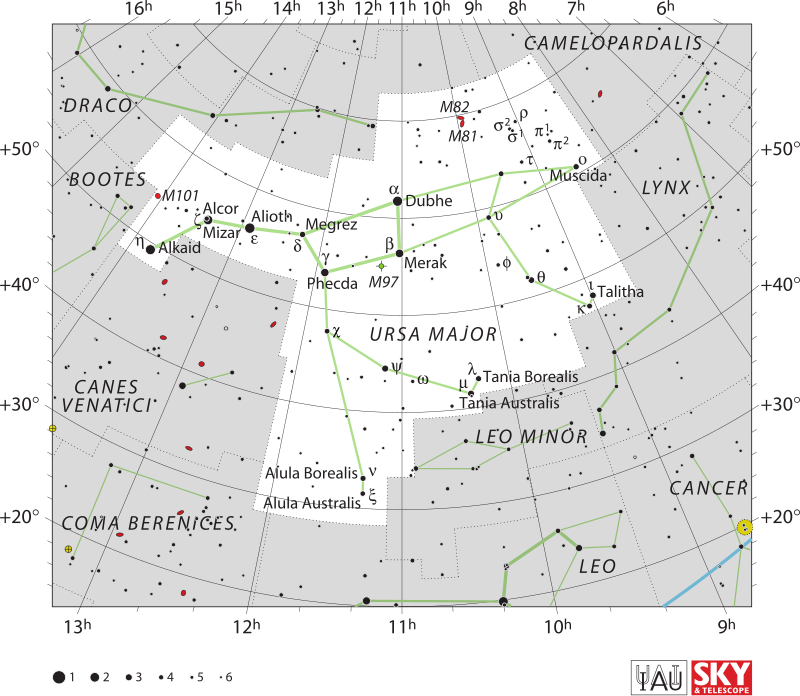
Ursa Major
constellation visible throughout the year in most of the northern hemisphere

synagogue
thumb|Eldridge Street Synagogue in [[New York City, United States]]

Tahiti
Tahiti (; ; ) is the largest island of the Windward group of the Society Islands in French Polynesia, an overseas collectivity of France. It is a tropical island located in the central part of the Pacific Ocean. Tahiti is composed of two roughly circular land masses joined by an isthmus:Tahiti Nui and Tahiti Iti. Both are the eroded remnants of now-extinct shield volcanoes. The terrain of Tahiti is mostly high and mountainous, with the beaches and coral reefs that surround the island supporting tourism and fishing industries.
.jpg)
Taranto
Taranto (; ), historically also called Tarent in English, is a coastal city in Apulia, Southern Italy. It is the capital of the province of Taranto, serving as an important commercial port as well as the main Italian naval base. With a population of 185,909 as of 2025, Taranto is the second-largest city in Apulia.

Versailles
French city and commune in Yvelines, in Île-de-France
.jpeg)
Schwerin
Schwerin () is the capital and second-largest city of the northeastern German state of Mecklenburg-Vorpommern as well as of the region of Mecklenburg, after Rostock. It has around 96,000 inhabitants, and is thus the least populous of all German state capitals.

Santa Cruz de Tenerife
municipality in Canary Islands, Spain
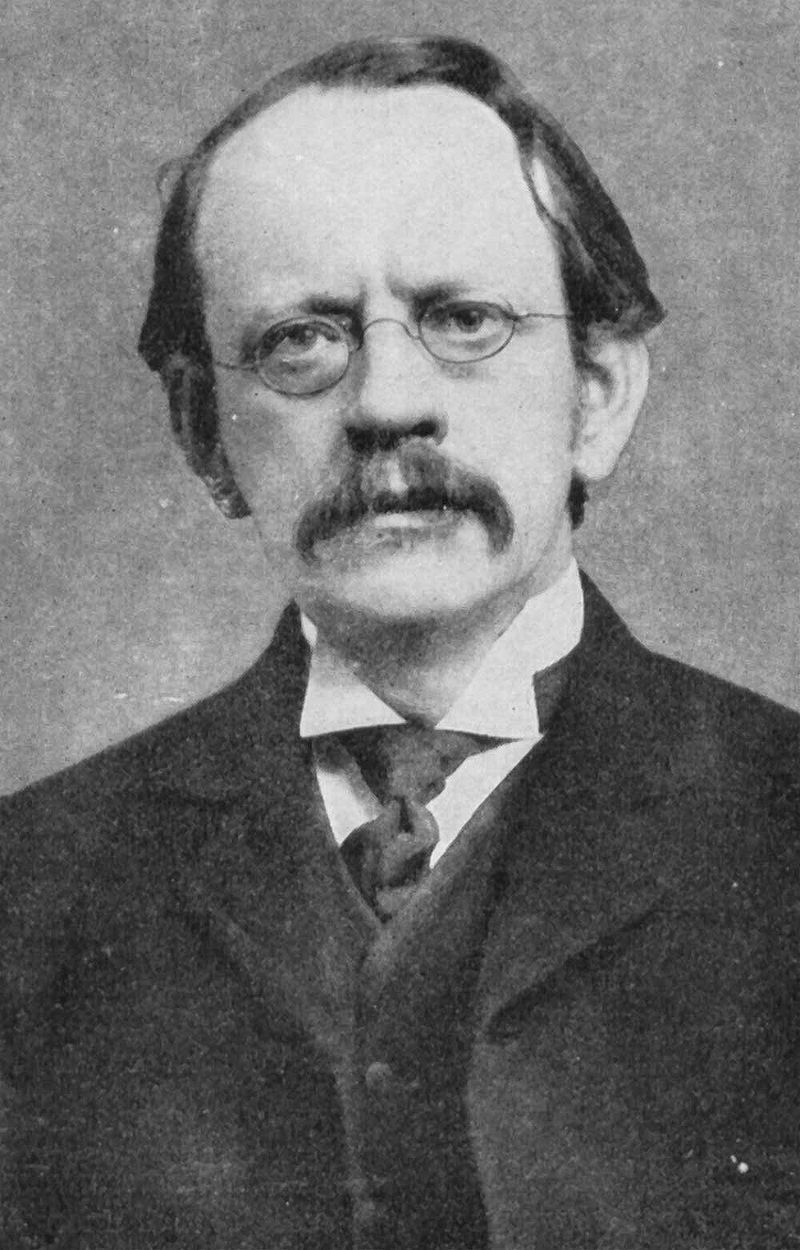
J. J. Thomson
British physicist (1856-1940)

Tórshavn

Saint-Dié-des-Vosges
Saint-Dié-des-Vosges (; , before 1999: Saint-Dié) is a commune in the Vosges department, Grand Est, northeastern France.

Syracuse
Italian municipality

Tiberius
Tiberius Julius Caesar Augustus ( ; 16 November 42 BC – 16 March AD 37) was Roman emperor from AD 14 until 37. He succeeded his stepfather Augustus, the first Roman emperor. Tiberius was born in Rome in 42 BC to politician Tiberius Claudius Nero and his wife, Livia Drusilla. In 38 BC, Livia divorced Nero and married Augustus. Following the untimely deaths of Augustus's two grandsons and adopted heirs, Gaius and Lucius Caesar, Tiberius was designated Augustus's successor. Prior to this, Tiberius had proved himself an able diplomat and one of the most successful Roman generals. His conquests of

spleen
alt=3D medical animation still showing structure of as well as location of the spleen in human body|thumb|A 3D medical animation still of spleen structure and exact location

temple
thumb|299x299px|The 12th-century Angkor Wat temple complex in [[Cambodia is the largest religious structure in the world and is dedicated to the Hindu deity Vishnu.]]
thumb|right|300px|Borobudur temple, the largest [[Buddhist temple in the world, located in Central Java, Indonesia.]]
thumb|300x300px|The Erechtheion in [[Athens, Greece, is associated with some of the most ancient and holy relics of the Athenians, such as the Palladion, a xoanon of Athena Polias]]
thumb|300x300px|Ram Mandir at [[Ayodhya, Uttar Pradesh, India, dedicated to Hindu deity Rama. The temple was opened on 22 January 202
Vorarlberg
Vorarlberg ( ; ; , , or ) is the westernmost state () of Austria. It has the second-smallest geographical area after Vienna and, although it also has the second-smallest population, it is the state with the second-highest population density (also after Vienna). It borders three countries: Germany (Bavaria and Baden-Württemberg via Lake Constance), Switzerland (Grisons and St. Gallen), and Liechtenstein. The only Austrian state that shares a border with Vorarlberg is Tyrol, to the east.