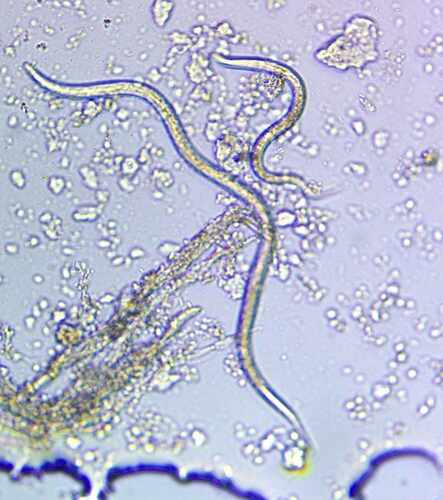
(c) Tig, all rights reserved, uploaded by Tig
Steinernema
Sign in to saveSteinernema is a genus of nematodes in the family of Steinernematidae. The genus Steinernema is named after the nematologist Gotthold Steiner. Nematodes of this genus have been shown to be effective as a biological control for agricultural pests of the Scarabaeidae family, such as Maladera formosae.
Species
GENUS
- KingdomAnimalia
- PhylumNematoda
- ClassChromadorea
- OrderRhabditida
- FamilySteinernematidae
via GBIF
Museum specimens
- Specimen records
- 951
- Family
- Steinernematidae
- Collections
- IFIT-CP
- Recorded in
- Mexico
~2 min read
Encyclopedic overview
5 sectionsContents
- Life cycle
- Species
- Use in agriculture
- References
- Further reading
Steinernema is a genus of nematodes in the family of Steinernematidae. The genus Steinernema is named after the nematologist Gotthold Steiner. Nematodes of this genus have been shown to be effective as a biological control for agricultural pests of the Scarabaeidae family, such as Maladera formosae.
== Life cycle == Species form symbiotic relationships with Xenorhabdus and Photorhabdus bacteria. The free-living third stage juvenile, termed a dauer juvenile, enters its insect hosts through natural openings, such as the mouth, anus, and spiracles. left|thumb|272x272px|Steinernema scapterisci emerging from [[Neoscapteriscus vicinus]] Bacterial cells from the intestines are regurgitated into the insect. The insect hemolymph provides a rich medium for the bacterial cells which grow, releasing toxins and exoenzymes, causing the insect host to die from septicemia. The bacteria also produce other compounds to protect the insect from other microbes in the soil.
Excerpted from Wikipedia’s “Steinernema” article, available under the CC BY-SA 4.0 licence.