AI overview
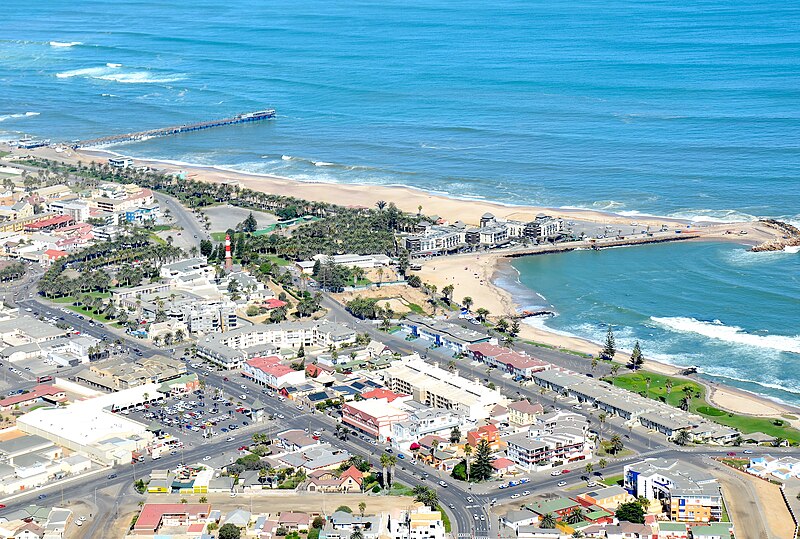
Swakopmund is a coastal city in western Namibia, located west of the capital Windhoek, and serves as the capital of the Erongo administrative district. With a population of about 25,000 people, it functions as a significant urban center in the region.
AI-generated from the Wikipedia summary — may contain errors.
Weather now
cached 26h ago11°clear sky
81% 0.6 m/s OpenWeatherMap
7-day forecast
via Open-Meteo
Place details
- Locality
- Swakopmund
- Region
- Erongo Region
- Country
- Namibia
- Population
- 53,009
- Timezone
Travel guide
Get around
As with other Namibian cities, there is no public transport in Swakopmund. But the city is small enough to get around easily on foot. All the major attractions and facilities are in the centre. It´s hard to get a taxi in city centre (there are no taxis on a Saturday after 19:00), but once you get one it takes you wherever you want for the same rate as the Windhoek Taxis. A trip to Walvis Bay shouldn´t be more than N$40.
Do
Swakopmund is Namibia's adventure capital, and there's a great selection of activities to try out on land, sea and in the air. Tours and activities may also be booked once you're in Swakopmund.
Buy
thumb|Brauhaus Arcade Many Namibians travel to Swakopmund for shopping. While the selection is not as wide as in the capital, you can really buy everything you need here. There are several nice shops in Swakop selling souvenirs and art; in particular if you're interested in traditional African silver jewelry. There is also a very good craft market near the lighthouse, which has a lot of items which are difficult to find elsewhere in Namibia.
Eat
Typical local cuisine is a combination of the hearty German cuisine, and fish and seafood of the ocean. Being a resort city, many restaurants are located in hotels. For some of the most popular ones you will need to book a few days ahead, especially on weekends and holidays.
An average sit-down restaurant meal costs around N$150-300, and on top of that it's customary to leave a tip of 10%. thumbnail|Sam Nujoma Avenue
Drink
thumbnail|Homebrewed beer from a street vendor is also an option This is Jägermeister country and don't forget to sample the famous, locally brewed Hansa Draught. There is also a local independent craft brewery, called Namib Dunes.
Stay safe
Swakopmund is generally a safe city, though you should follow some basic rules: Don't leave valuables visible in your car. Park at guarded parking lots if possible. It's customary to tip the guards N$5, and N$10-20 for a multiple hour stay. Guards knock off when the restaurants close; park at your accommodation overnight. Avoid walking alone at night and deserted streets. Strangers that may come and talk to you on the street are often up to no good. This is a frequent occurrence and may involve aggressive or persistent panhandling. New arrivals are especially targeted. Sunburn is a real risk for everyone (you're in the tropics!), particularly on a cold and foggy day where you do not notice how much UV is hitting your skin.
Article · Português
Swakopmund é a segunda mais populosa cidade da Namíbia. Se situa no litoral, a oeste da capital, Windhoek. Com um população em torno de 42 000 habitantes, é o principal balneário da Namíbia e um dos mais bem preservados exemplos da arquitetura colonial alemã no mundo. Foi fundada em 1892 como o principal porto do Sudoeste Africano Alemão e é um dos poucos lugares da África onde uma minoria considerável da população fala alemão e tem raízes germânicas. A cidade fica no trajeto da Rodovia B2 e da Rede Ferroviária Transnamibiana, que vai Windhoek a Walvis Bay. Tem seu próprio aeroporto. Prédios notáveis na cidade incluem a prisão Altes Gefaengnis, desenhada por em 1909 e a Woermannhaus, construída em 1906, que, atualmente, é um museu militar e que tem como destaque sua torre proeminente. Atrações em Swakopmund incluem o Museu do Transporte, o Aquário Nacional Marinho, uma galeria de cristal e as dunas ao sul do . A cidade é conhecida por seus esportes radicais, pela criação de dromedários e pela locomotiva a vapor Martin Luther, datada de 1896 e abandonada no deserto. Em Swakopmund, nasceu no dia 27 de maio de 2006, Shiloh Nouvel Jolie-Pitt, filha dos atores Angelina Jolie e Brad Pitt.
Abstract from DBpedia / Wikipedia · CC BY-SA
Gallery (26)
On the map
5 mapped locations