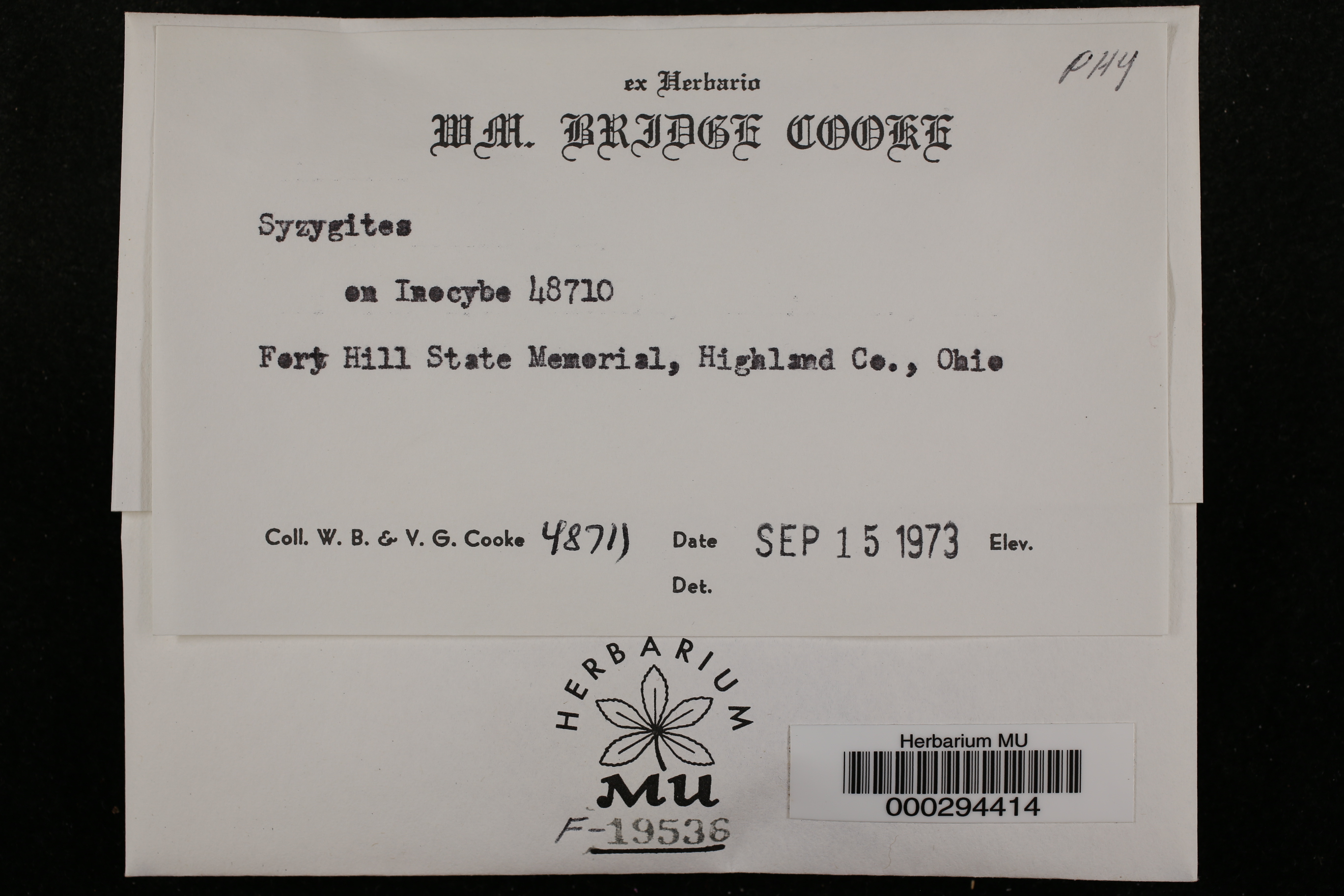
Specimen image via iDigBio · CC0
Syzygites
Sign in to saveSyzygites is a monotypic genus in Zygomycota. The sole described species is Syzygites megalocarpus, which was the first fungus for which sex was reported and the main homothallic representative in the research that allowed for the classification of fungi as homothallic or heterothallic. It is also the fungus from which the term "zygospore" was coined.
In the Vinony graph
Within Vinony's link graph, Syzygites is referenced by 2 other articles, and connects out to fungi, Wikidata and genus.
It is catalogued under topics including Fungus genera, Taxa named by Christian Gottfried Ehrenberg and Zygomycota.
Its subject is documented across 5 Wikipedia language editions.
Species
GENUS
- KingdomFungi
- PhylumMucoromycota
- ClassMucoromycetes
- OrderMucorales
- FamilyRhizopodaceae
via GBIF
Museum specimens
- Specimen records
- 19
- With media
- 5
- Family
- Rhizopodaceae
- Collections
- ILLS, MIN, FLAS, MU
- Recorded in
- United States
Wikidata facts
- Instance of
- taxon
- Parent taxon
- Mucoraceae
- Image
- Syzygites megalocarpus 166737.jpg
Show 5 more facts
- taxon name
- Syzygites
- taxon rank
- genus
- taxonomic type
- Syzygites megalocarpus
- Commons category
- Syzygites
- IPA transcription
- ˈsɪzɪɡaɪts
Sources (1)
via Wikidata · CC0
~3 min read
Encyclopedic overview
5 sectionsContents
- Morphology
- Ecology
- Sexuality
- Taxonomy
- References
Syzygites is a monotypic genus in Zygomycota. The sole described species is Syzygites megalocarpus, which was the first fungus for which sex was reported and the main homothallic representative in the research that allowed for the classification of fungi as homothallic or heterothallic. It is also the fungus from which the term "zygospore" was coined.
==Morphology== thumb|Dichotomously branched sporangiophores of Syzygites megalocarpus viewed at 100x thumb|Syzygites megalocarpus sporagiospores at the tip of a sporangiophore viewed at 400x Syzygites megalocarpus produces phototropic, repeatedly dichotomously branched sporangiophores that terminate in globose, apophysate sporangia. Sporangiospores have a spinose wall, which is rare in Mucorales. Zygospores are pigmented, ornamented, and produced on equally sized suspensors. Due to the presence of carotenoids, the myceliuem can appear yellowish, though mature sporangia darken giving it a brownish appearance.
Excerpted from Wikipedia’s “Syzygites” article, available under the CC BY-SA 4.0 licence.