Encyclopedia of Life · EOL (see source)
Telmatobius
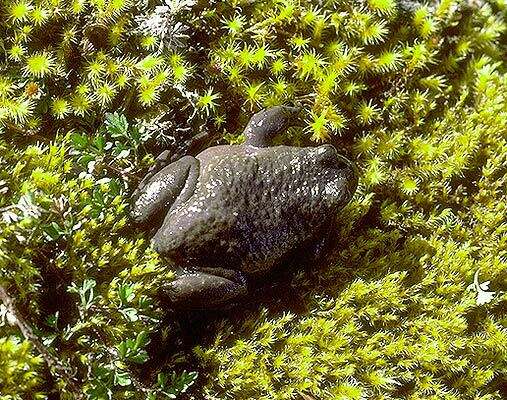
Sign in to saveTelmatobius is a genus of frogs native to the Andean highlands in South America, where they are found in Ecuador, Peru, Bolivia, northwestern Argentina and northern Chile. It is the only genus in the family Telmatobiidae. Some sources recognize Batrachophrynus as a valid genus distinct from Telmatobius. ==Etymology== The word Telmatobius is derived from the Greek: τέλμα (télma, "swamp") and βίος (bios, "life").
Species
GENUS
- KingdomAnimalia
- PhylumChordata
- ClassAmphibia
- OrderAnura
- FamilyTelmatobiidae
Царство: Животные Подцарство: Эуметазои Без ранга: Двусторонне-симметричные Без ранга: Вторичноротые Тип: Хордовые Подтип: Позвоночные Инфратип: Челюстноротые Надкласс: Четвероногие Класс: Земноводные Подкласс: Беспанцирные Инфракласс: Batrachia Надотряд: Прыгающие Отряд: Бесхвостые Подотряд: Neobatrachia Семейство: Telmatobiidae Fitzinger, 1843 Род: Андские свистуны Международное научное название Telmatobius Wiegmann, 1834 Синонимы Pseudobatrachus Peters, 1873 Batrachophrynus Peters, 1873 Cophaeus Cope, 1889 Lynchophrys Laurent, 1983 Систематикана ВикивидахИзображенияна Викискладе ITIS 207997NCBI 93484EOL 42664 Андские свистуны[1] (лат. Telmatobius) — род бесхвостых земноводных, обитающих в Южной Америке. Содержание 1 Описание 2 Распространение 3 Систематика 4 Классификация 5 Примечания 6 Литература Описание По своему строению похожи на представителей семейства свистуновых и рогатковых (кроме наростов на веках). Отличаются по генетическим признакам. Их особенностью является образ жизни: способны жить на высоте до 4000—5000 м над уровнем моря, при небольшом количестве кислорода. Выдерживают низкие температуры, способны длительное время находиться в холодной воде. Ведут водный образ
via GBIF
Museum specimens
- Specimen records
- 368
- With media
- 6
- Family
- Telmatobiidae
- Collections
- ROM, MVZ, USNM, UF, CM
- Recorded in
- Peru, Bolivia, Argentina
Wikidata facts
- Instance of
- taxon
- Image
- Telmatobius atahualpai01.jpeg
Show 4 more facts
- Commons category
- Telmatobius
- topic's main category
- Category:Telmatobius
- taxon name
- Telmatobius
- taxon rank
- genus
Sources (1)
via Wikidata · CC0
~2 min read
Encyclopedic overview
5 sectionsContents
- Etymology
- Ecology and conservation
- Species
- References
- External links
Telmatobius is a genus of frogs native to the Andean highlands in South America, where they are found in Ecuador, Peru, Bolivia, northwestern Argentina and northern Chile. It is the only genus in the family Telmatobiidae. Some sources recognize Batrachophrynus as a valid genus distinct from Telmatobius. ==Etymology== The word Telmatobius is derived from the Greek: τέλμα (télma, "swamp") and βίος (bios, "life").
== Ecology and conservation == All Telmatobius species are closely associated with water and most species are semi-aquatic, while a few are entirely aquatic. They are found in and near lakes, rivers and wetlands in the Andean highlands at altitudes between . The genus includes two of the world's largest fully aquatic frogs, the Lake Junin frog (T. macrostomus) and Titicaca water frog (T. culeus), but the remaining are considerably smaller. In terms of tadpoles, the species with the largest tadpoles tend to be in higher elevated streams and lakes. This includes the species T. culeus, T. macrostomus, T. mayoloi, and T. gigas. Telmatobius contains more than 60 species; the vast majority seriously threatened, especially from habitat loss, pollution, diseases (chytridiomycosis and nematode infections), introduced trout, and capture for human consumption.
Excerpted from Wikipedia’s “Telmatobius” article, available under the CC BY-SA 4.0 licence.