Category
page 1Amphibian genera

Rana
genus of amphibians

Triturus
Triturus is a genus of newts comprising the crested and the marbled newts, which are found from Great Britain through most of continental Europe to westernmost Siberia, Anatolia, and the Caspian Sea region. Their English names refer to their appearance: marbled newts have a green–black colour pattern, while the males of crested newts, which are dark brown with a yellow or orange underside, develop a conspicuous jagged seam on their back and tail during their breeding phase.

Bufo
Bufo is a genus of true toads in the amphibian family Bufonidae. As traditionally defined, it was a wastebasket genus containing a large number of toads from much of the world but following taxonomic reviews most of these have been moved to other genera, leaving only seventeen extant species from Europe, northern Africa and Asia in this genus, including the well-known common toad (B. bufo). Some of the genera that contain species formerly placed in Bufo are Anaxyrus (many North American species), Bufotes (European green toad and relatives), Duttaphrynus (many Asian species, including the Asian

Salamandra
Salamandra is a genus of six species of salamanders localized in central and southern Europe, Northern Africa, and western Asia.
.jpg)
Hyla
Hyla is a genus of frogs in the tree frog family Hylidae. As traditionally defined, it was a wastebasket genus with more than 300 species found in Europe, Asia, Africa, and across the Americas. After a major revision of the family, most of these have been moved to other genera so that Hyla now only contains 17 extant (living) species from Europe, northern Africa and Asia. The earliest known fossil member of this genus is †Hyla swanstoni from the Eocene of Saskatchewan, Canada, but its designation to Hyla happened before the major revision, meaning that its position needs confirmation.

Pelophylax
Pelophylax is a genus of true frogs widespread in Eurasia, with a few species ranging into northern Africa. This genus was erected by Leopold Fitzinger in 1843 to accommodate the green frogs of the Old World, which he considered distinct from the brown pond frogs of Carl Linnaeus' genus Rana.

Xenopus
Xenopus () (from Greek ξενος, xenos 'strange' + πους, pous 'foot', commonly known as the clawed frog) is a genus of highly aquatic frogs native to sub-Saharan Africa. Twenty species are currently described within it. The two best-known species of this genus are Xenopus laevis and Xenopus tropicalis, which are commonly studied as model organisms for developmental biology, cell biology, toxicology, neuroscience and for modelling human disease and birth defects.

Amphiuma
Amphiuma is a genus of aquatic salamanders from the southeastern United States, the only extant genus within the family Amphiumidae . They are colloquially known as amphiumas. They are also known to fishermen as "conger eels" or "Congo snakes", which are zoologically incorrect designations or misnomers, since amphiumas are actually salamanders (and thus amphibians), and not eels (fish), nor reptiles and are not from Congo. Amphiuma exhibits one of the largest complements of DNA in the living world, around 25 times more than a mere human.

fire-bellied toad
genus of amphibians
.jpg)
Dendrobates
Dendrobates is a genus of poison dart frogs native to Central and South America. It once contained numerous species, but most originally placed in this genus have been split off into other genera such as Adelphobates, Ameerega, Andinobates, Epipedobates, Excidobates, Oophaga, Phyllobates and Ranitomeya (essentially all the brightly marked poison dart frogs; i.e. excluding the duller genera in the family like Colostethus and Hyloxalus), leaving only five large to medium-sized species in the genus Dendrobates. All the other genera used to be grouped in with Dendrobates because it was previously
%20Litoria%20everetti%20Meleotegi%20River%2C%20Ermera%20District%2C%20Timor-Leste%20(USNM%20578928).jpg)
Litoria
Litoria is a genus of hylid tree frogs, sometimes collectively referred to as Australasian treefrogs.

Atelopus
Atelopus is a large genus of Bufonidae, commonly known as harlequin frogs or toads, from Central and South America, ranging as far north as Costa Rica and as far south as Bolivia. Atelopus species are small, generally brightly colored, and diurnal. Most species are associated with mid-to-high elevation streams.

Phyllobates
Phyllobates is a genus of poison dart frogs native to Central and South America. The genus contains seven known species, which are distributed from eastern Nicaragua to the Pacific coast of Colombia.

Rhacophorus
Rhacophorus is a genus of frogs in the shrub-frog family Rhacophoridae, which, with the related Hylidae, is one of the two genera of true tree frogs. They are found in China, India, Japan, and throughout Southeast Asia, including the island of Borneo. Over 40 species are currently recognised.
.jpg)
Phyllomedusa
Phyllomedusa is a genus of tree frogs in the subfamily Phyllomedusinae found in tropical and subtropical South America (south to northern Argentina) and Panama. It has 16 recognised species.

Paedophryne
thumb|250px|Map of localities where Paedophryne specimens have been found (P. titan from Normanby Island (Papua New Guinea)|Normanby Island, not shown)

Andrias
Andrias is a genus of giant salamanders. It includes the largest salamanders in the world, with A. japonicus reaching a length of , and A. sligoi reaching . While extant species are known only from East Asia, several extinct species in the genus are known from late Oligocene and Neogene aged fossils collected in Europe and North America, indicating that the genus formerly had a much wider range.

Lissotriton
Lissotriton is a genus of newts native to Europe and parts of Asia Minor. As most other newts, they are aquatic as larvae and during breeding time but live in terrestrial, humid environments over the rest of the season.
.jpg)
Taricha
The genus Taricha consists of four species of highly toxic newts in the family Salamandridae. Their common name is Pacific newts, sometimes also western newts or roughskin newts. The four species within this genus are the California newt, the rough-skinned newt, the red-bellied newt, and the Sierra newt, all of which are found on the Pacific coastal region from southern Alaska to southern California, with one species possibly ranging into northern Baja California, Mexico.

Mantella
Mantella (also known as golden frogs or Malagasy poison frogs) are a prominent genus of aposematic frogs in the family Mantellidae, endemic to the island of Madagascar. Members of Mantella are diurnal and terrestrial, with bright aposematic coloration or cryptic markings.

Pipa
genus of amphibians
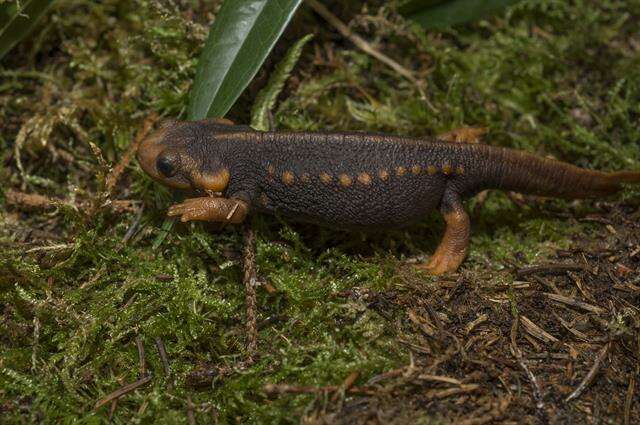
Tylototriton
Tylototriton is a genus of newts commonly known as crocodile newts or knobby newts. About 38 known species are in this genus, with many species having been described recently. They range from northeastern India and Nepal through Burma to northern Thailand, Laos, Vietnam, and southern China.

Pleurodeles
Pleurodeles is a genus of three species, the ribbed newts:

Necturus
Necturus is a genus of aquatic salamanders in the family Proteidae. Species of the genus are native to the eastern United States and Canada. They are commonly known as waterdogs and mudpuppies. The common mudpuppy (N. maculosus) is probably the best-known species – as an amphibian with gill slits, it is often dissected in comparative anatomy classes. The common mudpuppy has the largest distribution of any fully aquatic salamander in North America.

Discoglossus
Discoglossus (common name: painted frogs) is a genus of frogs in the family Alytidae (formerly Discoglossidae) found in southern Europe and northwestern Africa.

Euproctus
Euproctus, the European mountain salamanders, is a genus of salamanders in the family Salamandridae from Sardinia and Corsica.

Acris
genus of amphibians

Oophaga
Oophaga is a genus of poison-dart frogs containing twelve species, many of which were formerly placed in the genus Dendrobates. The frogs are distributed in Central and South America, from Nicaragua south through the El Chocó to northern Ecuador (at elevations below ). Their habitats vary with some species being arboreal while other being terrestrial, but the common feature is that their tadpoles are obligate egg feeders. Most species in this genus are seriously threatened and O. speciosa is already extinct.

Siren
genus of amphibians

Ansonia
genus of amphibians
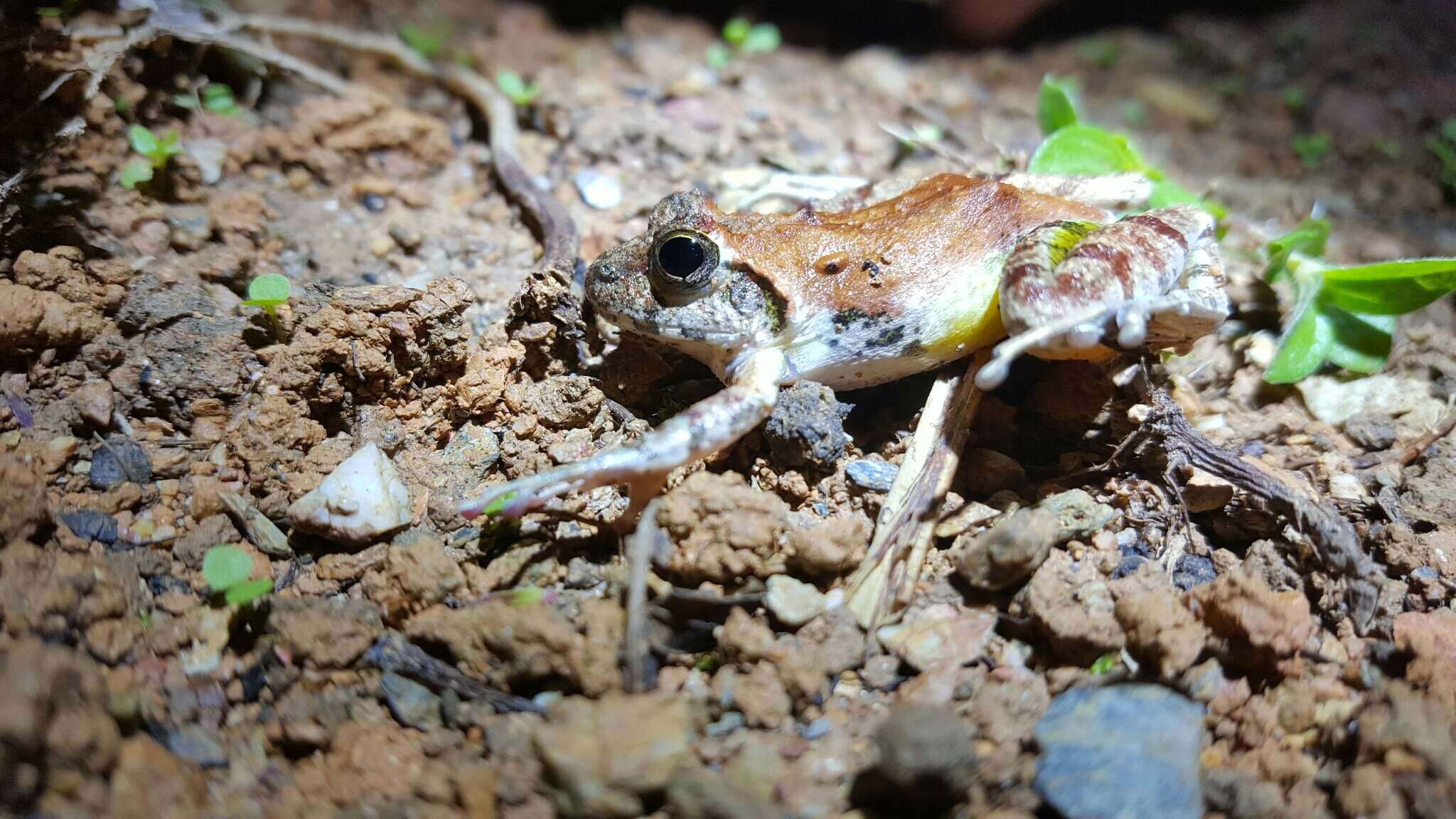
Buergeria
Buergeria is a genus of frogs in the family Rhacophoridae, and the sole genus of subfamily Buergeriinae. It is the sister taxon for all the other rhacophorids (subfamily Rhacophorinae). The available genetic data firmly supports this position.

Gastrotheca
Gastrotheca is a genus of frogs in the family Hemiphractidae. They are found in Central America south of Costa Rica and in South America. Most species occur in the American Cordillera from southern Costa Rica to north-western Argentina. This genus makes up the bulk of marsupial frog diversity; formerly it was placed in the "Leptodactylidae" assemblage.
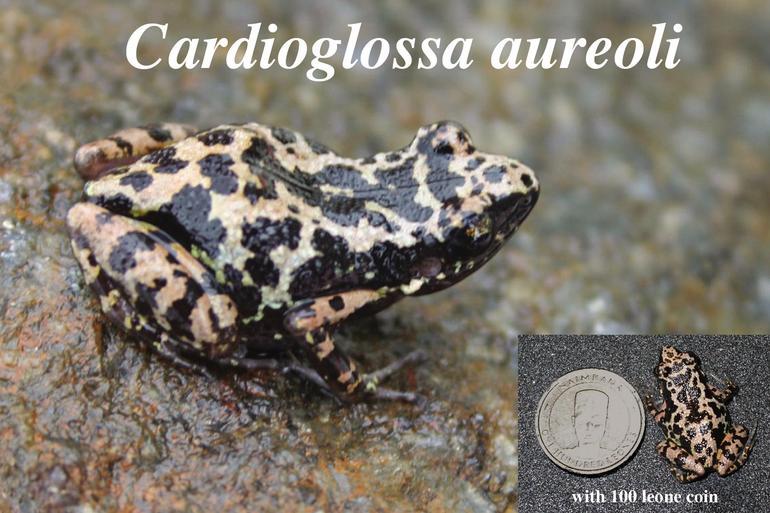
Arthroleptis
Arthroleptis is a genus of frogs in the family Arthroleptidae found in tropical sub-Saharan Africa. Their common names include screeching frogs, sometimes simply squeakers.

Eleutherodactylus
thumb|Eleutherodactylus marnockii|Cliff chirping frog (E. marnockii)
Eleutherodactylus is a genus of frogs in the family Eleutherodactylidae. Many of the 200 species of the genus are commonly known as "rain frogs" or "robber frogs", due to their sharp, high-pitched, insect-like calls. They are found from the southern United States south to Central America, and reach their greatest diversity in the Caribbean.
%20edit.jpg)
Hynobius
Hynobius is a genus of salamander (Asian salamanders) in the family Hynobiidae, occurring in Japan, Korea, China, Taiwan and Far East Russia. It is a large genus containing over 40 species. The Japanese archipelago is the primary diversity hotspot for the genus, with nearly 67.3% of Hynobius species being endemic to it.
.jpg)
Agalychnis
Agalychnis is a genus of tree frogs native to forests in Mexico, Central America and northwestern South America. The genus consists of 14 species within the family Phyllomedusidae.
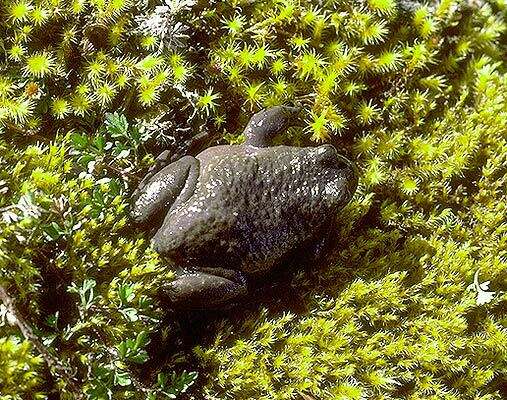
Telmatobius
Telmatobius is a genus of frogs native to the Andean highlands in South America, where they are found in Ecuador, Peru, Bolivia, northwestern Argentina and northern Chile. It is the only genus in the family Telmatobiidae. Some sources recognize Batrachophrynus as a valid genus distinct from Telmatobius.
==Etymology==
The word Telmatobius is derived from the Greek: τέλμα (télma, "swamp") and βίος (bios, "life").
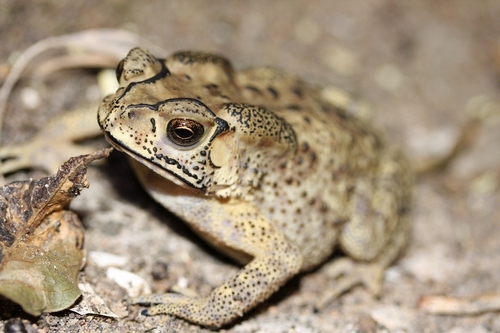
Duttaphrynus
Duttaphrynus, named after Sushil Kumar Dutta, is a genus of true toads endemic to southwestern and southern China (including Hainan), Taiwan and throughout southern Asia from northern Pakistan and Nepal through India and Bangladesh to Sri Lanka, Andaman Island, Sumatra, Java, Borneo and Bali.

Neurergus
Neurergus is a genus of salamanders, more specifically newts, in the family Salamandridae. They are found in the Middle East (predominantly in Turkey and Iran), and are kept and bred in captivity for their bright colors. In nature, they inhabit streams and small rivers, and the surrounding forests or shrublands. All of the Neurergus are considered threatened species, primarily due to destruction of habitat and overcollection for the pet trade.

Polypedates
Polypedates is a genus of frogs in the family Rhacophoridae, the shrub frogs and Paleotropic tree frogs. They belong to subfamily Rhacophorinae. Members of this genus are collectively known as whipping frogs. They occur in eastern and southern Asia.

Caecilia
Caecilia is a genus of amphibians in the family Caeciliidae.
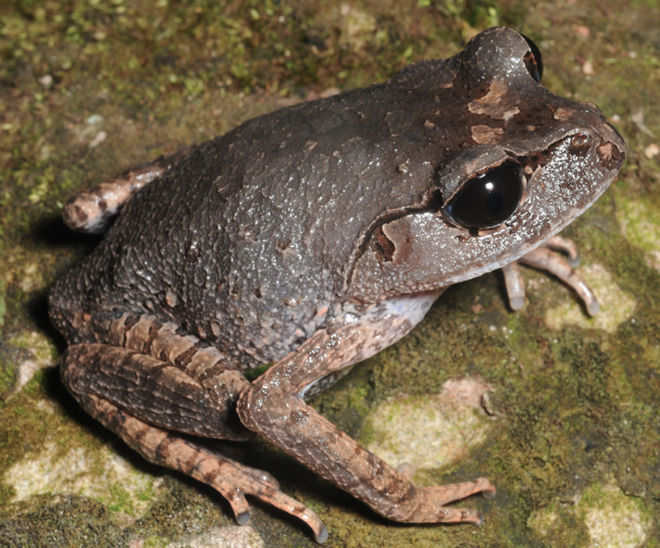
Leptobrachium
genus of amphibians
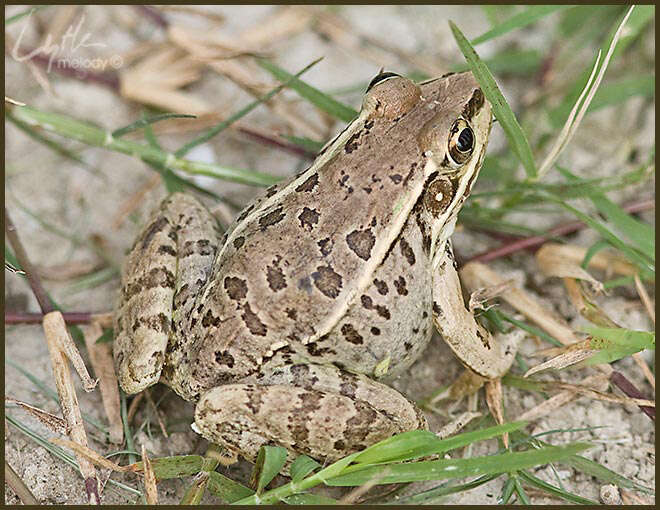
Lithobates
Lithobates is a genus of frogs belonging to the family Ranidae, native to the Americas. The name is derived from '' (stone) and : '' (one that treads), meaning one that treads on rock, or rock climber. As presently defined, it includes many of eastern North America's most familiar aquatic frog species, including the American bullfrog, green frog, and the leopard frogs.
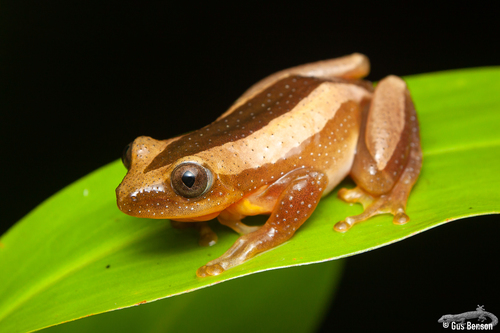
Afrixalus
Afrixalus, commonly known as the banana frogs, spiny reed frogs, '''cat's eye reed frogs, or leaf-folding frogs''', is a genus of frog in the family Hyperoliidae. They occur in the Subsaharan Africa. They lay their eggs in vegetation above water, often folding leaves around the eggs for protection—hence the common name "leaf-folding frogs".
%20(7073641407).jpg)
Leptopelis
Leptopelis is a genus of frogs in the family Arthroleptidae. They are found throughout Sub-Saharan Africa, excluding Madagascar. It is placed in monotypic subfamily Leptopelinae, although this subfamily is not always recognized. They have a number of common names, including forest treefrogs, tree frogs, leaf-frogs, and big-eyed frogs.
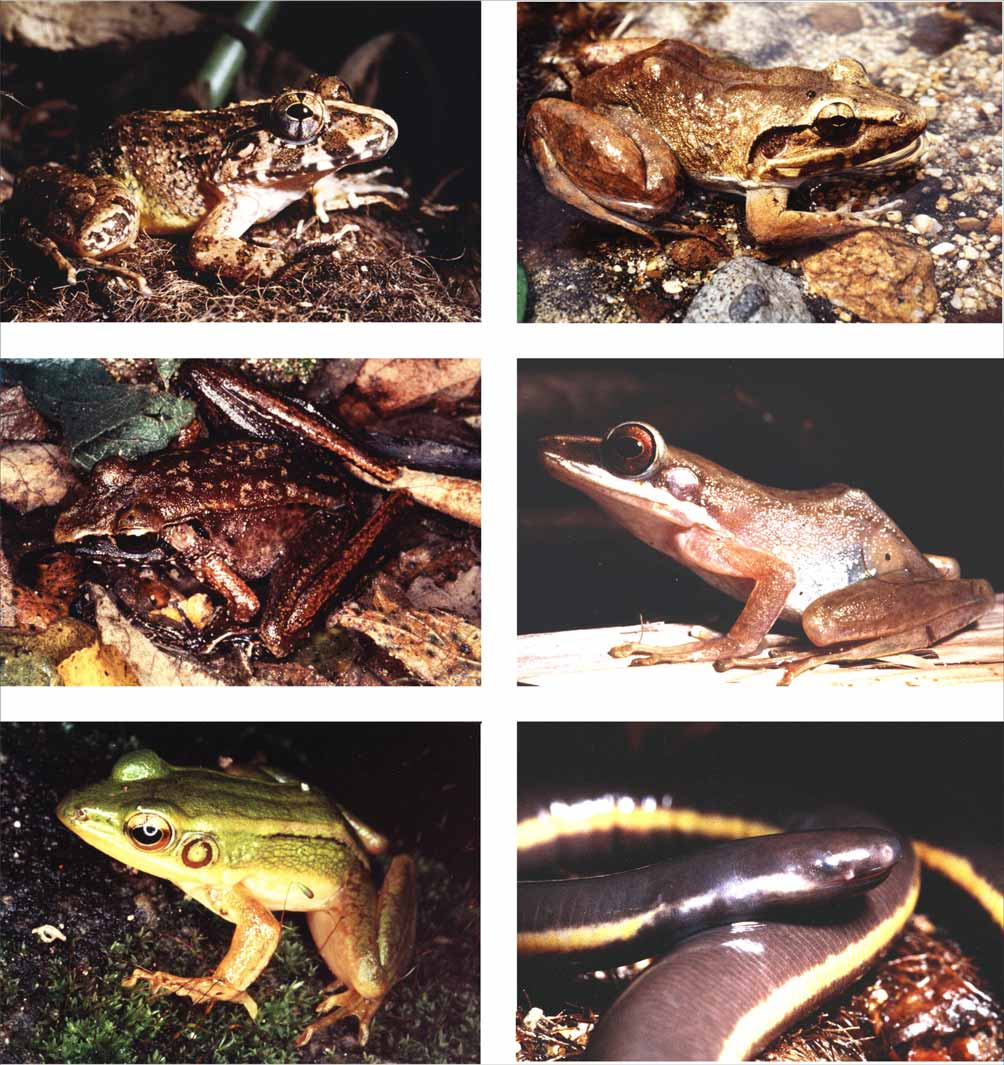
Amolops
Amolops (commonly known as cascade frogs or sucker frogs) is a genus of true frogs (family Ranidae) native mainly to eastern and south-eastern Asia. These frogs are closely related to such genera as Huia, Meristogenys, Odorrana, Pelophylax and Rana, but still form a distinct lineage among the core radiation of true frogs. They are commonly known as "torrent frogs" after their favorite habitat - small rapid-flowing mountain and hill streams - but this name is used for many similar-looking frogs regardless of whether they are loosely related.

Breviceps
Breviceps is a genus of frogs in the family Brevicipitidae. Species in the genus Breviceps are commonly known as rain frogs or short-headed frogs, recognized by their stout, rounded bodies, short limbs, and small, flat snouts. They occur in arid to semiarid climates of Eastern and Southern Africa.
Limnonectes
Limnonectes is a genus of fork-tongued frogs of 91 known species, but new ones are still being described occasionally. They are collectively known as fanged frogs because they tend to have unusually large teeth, which are small or absent in other frogs.

Eurycea
genus of amphibians

Physalaemus
thumb|Physalaemus marmoratus
thumb|Physalaemus maculiventris
thumb|Physalaemus olfersii
Physalaemus is a large genus of leptodactylid frogs. These frogs, sometimes known as dwarf frogs or foam frogs, are found in South America. It is very similar to Leptodactylus, a close relative, and indeed the recently described Leptodactylus lauramiriamae is in some aspects intermediate between them. They have been described by researchers as presenting one of the most puzzling taxonomic histories among Neotropical anurans because of the occurrence of highly polymorphic and cryptic species.
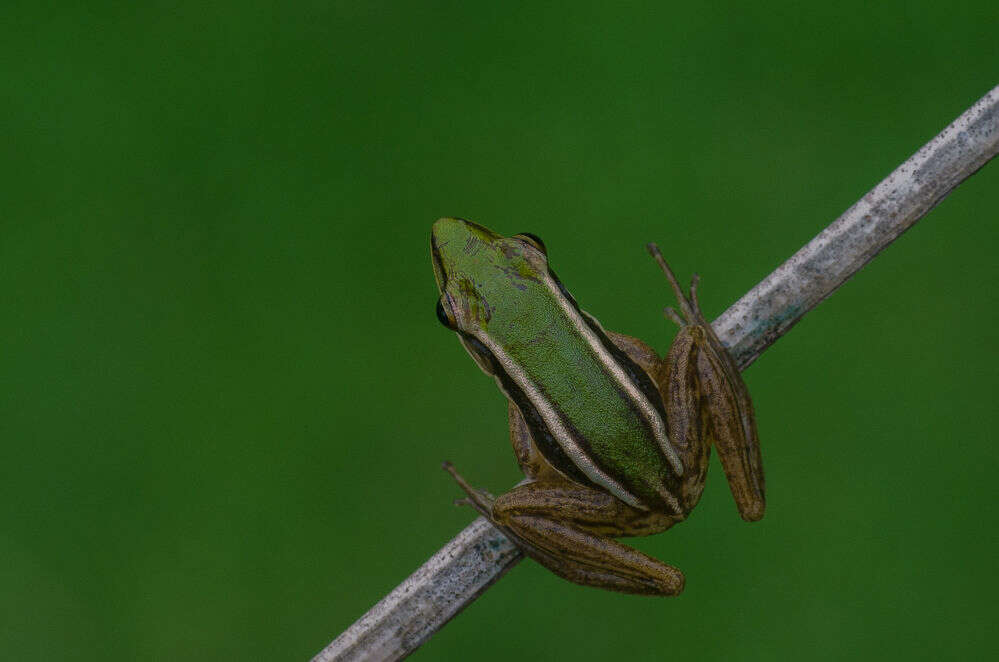
Hylarana
Hylarana, commonly known as golden-backed frogs, is a genus of true frogs found in tropical Asia. It was formerly considered highly diverse, containing around 84 to 96 valid species, but taxonomic revision resulted in a major change in the contents of the genus, recognizing just four species.
Salamandrina
Salamandrina, the spectacled salamanders, is a genus of salamander, the only of subfamily Salamandrininae in the family Salamandridae which is still alive, as one of its own relatives is extinct. The IUCN Red List follows Mattoccia et al. (2005) and Canestrelli et al. (2006) in accepting two species, both only found in Italy:
Southern spectacled salamander (Salamandrina terdigitata)
Northern spectacled salamander (Salamandrina perspicillata)
DNA testing is the most effective way to distinguish between S. terdigitata and S. perspicillata, however there is a some slight morphological differenc
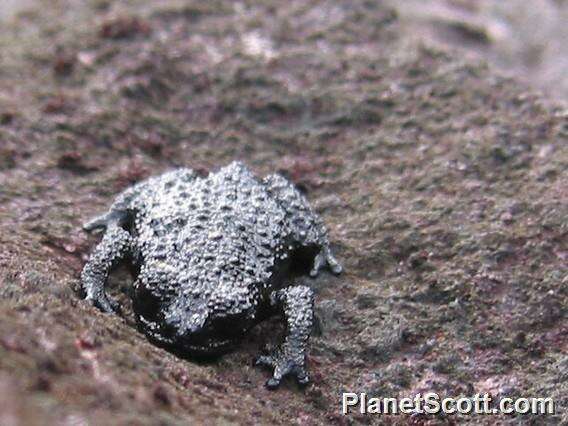
Oreophrynella
Oreophrynella, commonly known as bush toads, is a genus of true toads native to the tepuis of southern Venezuela and adjacent Guyana. The distribution of some species is restricted to a couple of tepuis or even a single tepui, as in the case of Oreophrynella weiassipuensis, which occurs on Wei-Assipu-tepui.
.png)
Ranitomeya
Ranitomeya is a genus of dart poison frogs found in Panama and South America south to Peru and Brazil, possibly into Bolivia.
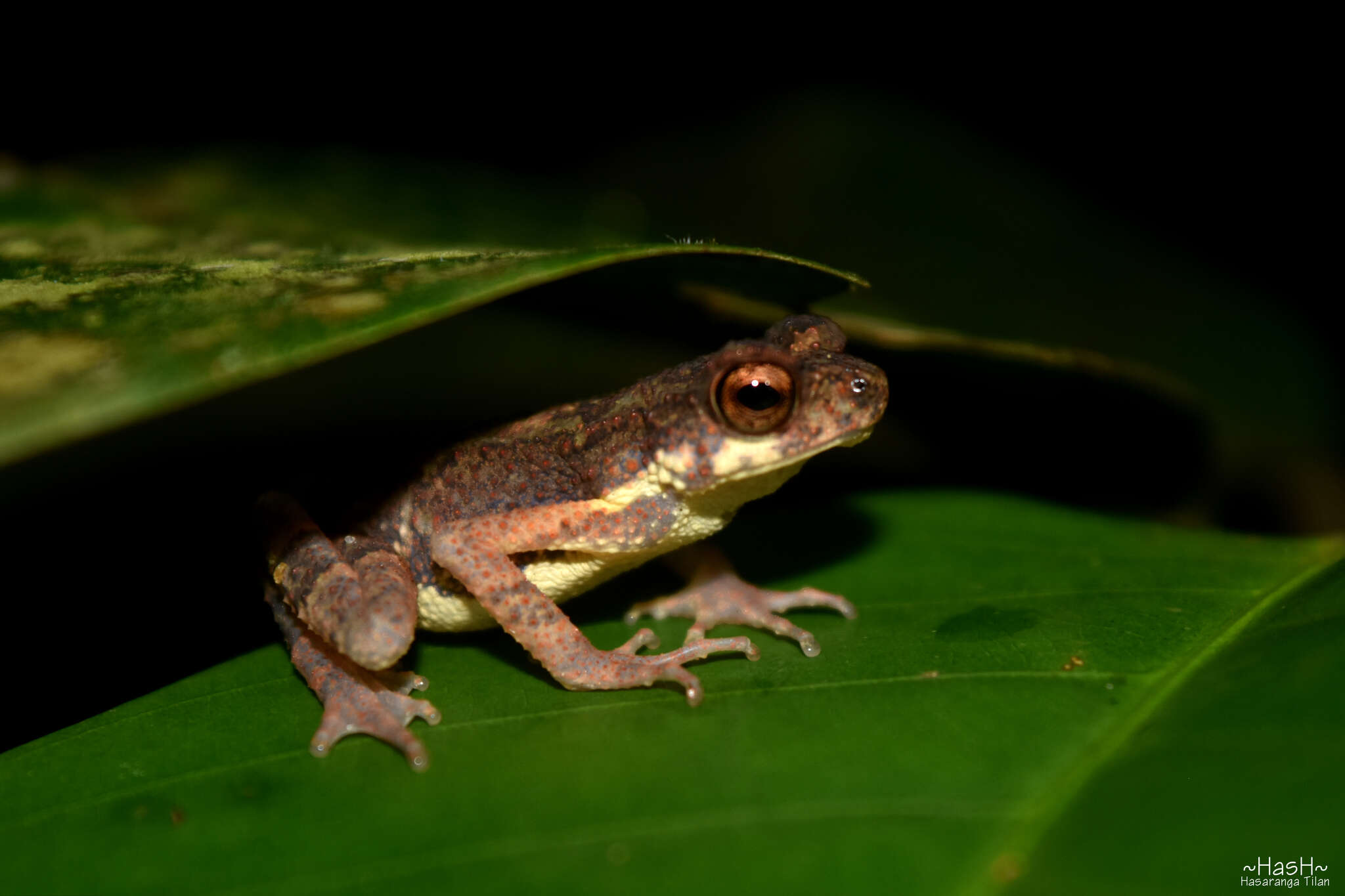
Adenomus
Adenomus is a small genus of true toads, with only two species, endemic to Sri Lanka. Adenomus kandianus was considered as extinct for 133 years, but was rediscovered in October 2009 in the Kandy area.
Ingerophrynus
Ingerophrynus is a genus of true toads with 12 species. The genus is found in southern Yunnan and Southeast Asia; from Myanmar and Indochina to peninsular Thailand and Malaya, Sumatra, Borneo, Java, Nias Island, Sulawesi, and the Philippines. This genus was established after a major taxonomical revision of frogs in 2006.

Indirana
thumb|Tadpole of I. cf semipalmata
thumb
Indirana is a genus of frogs in the family Ranixalidae. These frogs are endemic to the Western Ghats of India. They are sometimes known under the common name Indian frogs, whereas members of their parent family are named "leaping frogs".

Leptodactylus
Leptodactylus is a genus of leptodactylid frogs. It includes the species commonly called ditch frogs or white-lipped frogs. It is very similar to Physalaemus, a close relative, and indeed the 2005 described Leptodactylus lauramiriamae is in some aspects intermediate between them.

Rhinella
Rhinella, commonly known as South American toads, beaked toads or Rio Viejo toads, is a genus of true toads native to Neotropical parts of Mexico, Central and South America. Additionally, the cane toad has been Introduced to Australia, the Caribbean, the Philippines and elsewhere.
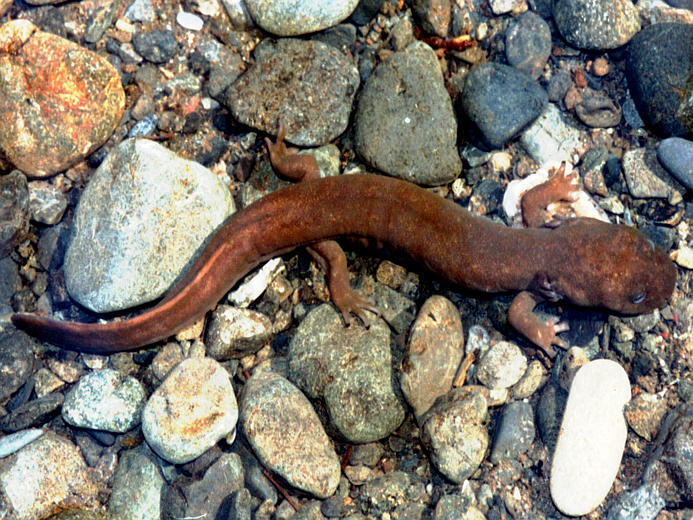
Dicamptodon
genus of amphibians