Framenau, Volker W.;Hudson, Peter
Tetralycosa
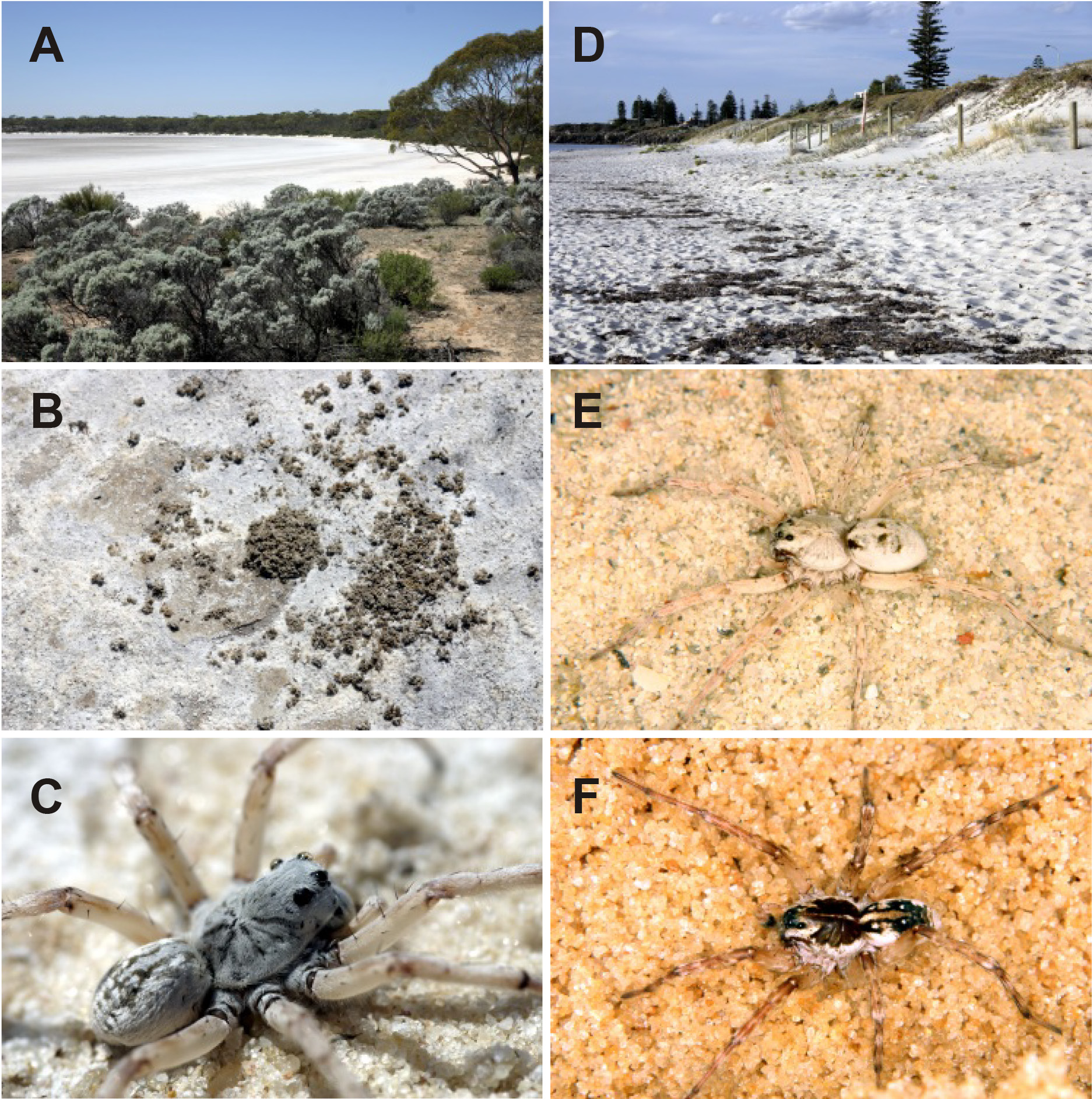
Sign in to saveTetralycosa is a genus of Australian spiders in the family Lycosidae first described by Roewer in 1960, later revised by Framenau & Hudson to include thirteen species. Genetic studies show that these spiders all diverged from a common ancestor who likely wandered into the salty area and remained. They live exclusively in certain saline environments of Australia's interior, including coastal beaches, mound springs, clay pans, and salt lakes. There haven't been enough studies to establish a conservation status, but some species have only been found in solitary salt lakes, suggesting that the inc
In the Vinony graph
Within Vinony's link graph, Tetralycosa is referenced by 4 other articles, and connects out to Lycosidae, Animalia and Araneae.
It sits within the topics Lycosidae genera, Spiders of Australia and Taxa named by Carl Friedrich Roewer.
Its subject is documented across 11 Wikipedia language editions.
Species
GENUS
- KingdomAnimalia
- PhylumArthropoda
- ClassArachnida
- OrderAraneae
- FamilyLycosidae
Tetralycosa is een geslacht van spinnen uit de familie wolfspinnen (Lycosidae).
via GBIF
Museum specimens
- Specimen records
- 137
- With media
- 3
- Family
- Lycosidae
- Collections
- WAM, SAMA
- Recorded in
- Australia
Wikidata facts
Show 6 more facts
- taxon name
- Tetralycosa
- taxon rank
- genus
- topic's main category
- Category:Tetralycosa
- endemic to
- Australia
- Commons category
- Tetralycosa
- taxon author citation
- Roewer, 1960
Sources (2)
via Wikidata · CC0
~1 min read
Encyclopedic overview
1 sectionsContents
- References
Tetralycosa is a genus of Australian spiders in the family Lycosidae first described by Roewer in 1960, later revised by Framenau & Hudson to include thirteen species. Genetic studies show that these spiders all diverged from a common ancestor who likely wandered into the salty area and remained. They live exclusively in certain saline environments of Australia's interior, including coastal beaches, mound springs, clay pans, and salt lakes. There haven't been enough studies to establish a conservation status, but some species have only been found in solitary salt lakes, suggesting that the increase of mining, agriculture, recreational, and similar disturbances of these unique ecosystems may eventually lead to their extinction if not properly regulated.
==References==
Excerpted from Wikipedia’s “Tetralycosa” article, available under the CC BY-SA 4.0 licence.
Gallery (3)
Available in 11 languages
via Wikidata sitelinks · CC0