
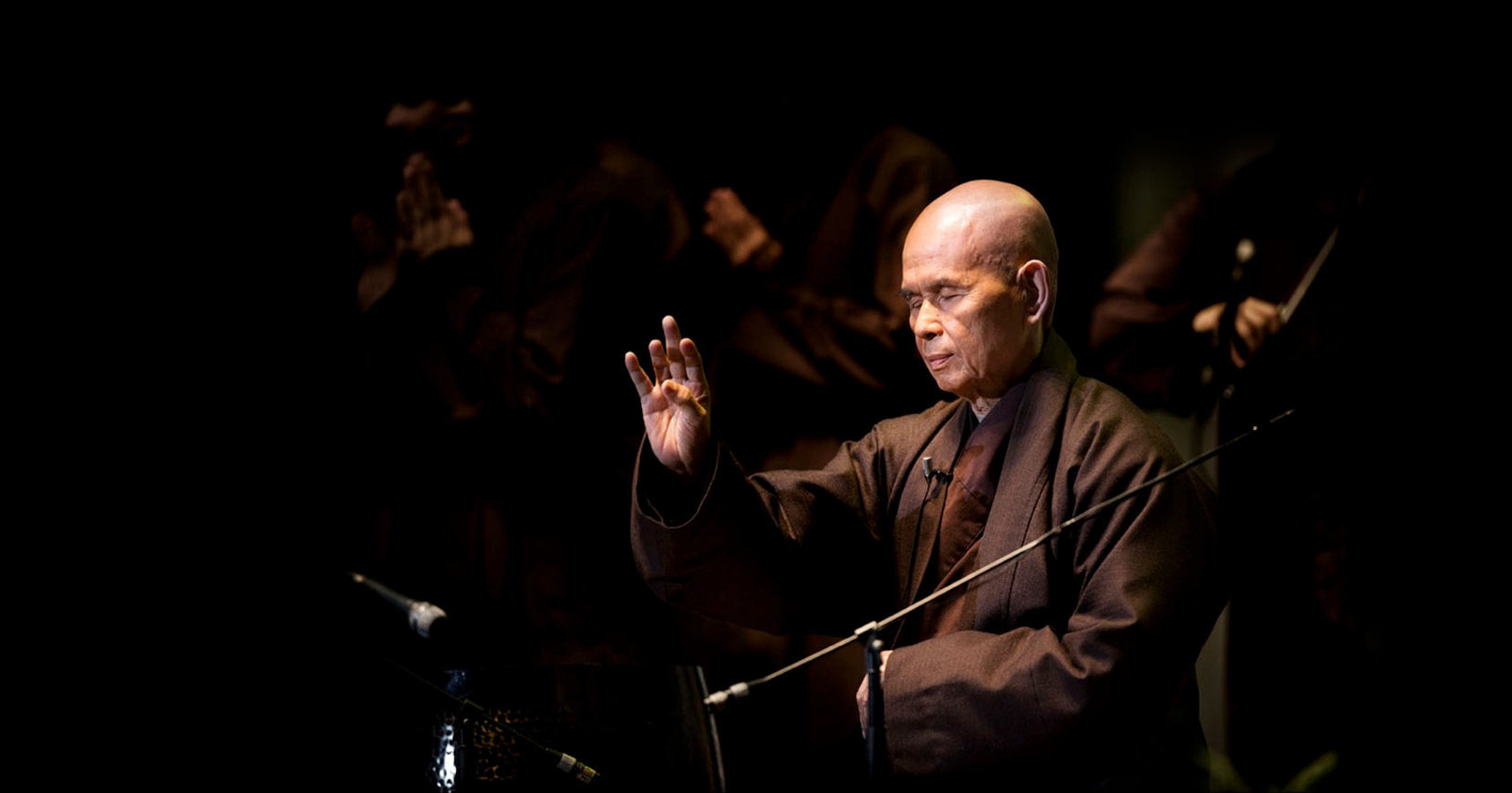
File:一行禪師_越南佛教臨濟宗第四十二代法嗣.jpg · Wikimedia Commons · See Wikimedia Commons
Thích Nhất Hạnh
Sign in to saveAlso known as Nhat Hanh, Nguyễn Đình Lang, Nguyễn Xuân Bảo, Trừng Quang, Phùng Xuân, Thầy Nhất Hạnh, Thiền Sư Nhất Hạnh, Thich Nhat Hanh
Vietnamese Buddhist monk and activist (1926–2022)
Thích Nhất Hạnh was a Vietnamese Buddhist monk and peace activist who lived from 1926 to 2022 and became influential in spreading Buddhist teachings and mindfulness practices to audiences around the world. He is remembered for combining spiritual practice with social engagement, particularly through his work promoting nonviolence and interfaith dialogue during and after the Vietnam War.
AI-generated from the Wikipedia summary — may contain errors.
Film & TV
Thừa Thiên–Huế
Thích Nhất Hạnh was a Vietnamese Zen Buddhist monk, teacher, author, poet and peace activist. He published more than 100 books, including more than 40 in English.
Known for
- A Cloud Never Dies — Self (archive footage)2022
- Walk with Me — Self2017
- Mindfulness: Be Happy Now — Self2015
- Gone with the Wind2014
- Peace Is Every Step — Himself2005
- Mindful Movements: Gentle, Contemplative Exercises with the Monks and Nuns of Plum Village — Himself1998
- Steps of Mindfulness — Himself1998
- Obsessive Becoming — Narrator1995
- Touching Peace - An Evening with Thich Nhat Hanh — Himself1993
- Merton: A Film Biography — Self - Buddhist Monk1984
via TMDB
Official website

Thich Nhat Hanh, pleine conscience et Reiki - www.thich-nhat-hanh.fr
thich-nhat-hanh.fr →Link to the official site · 10,865 chars · not written by Vinony
Described at
Thich Nhat Hanh | Plum Village
Ordained as a monk aged 16 in Vietnam, Thich Nhat Hanh soon envisioned a kind of engaged Buddhism that could respond directly to the needs of society.
plumvillage.org →In response to the war and growing humanitarian crisis in Ukraine, our international Plum Village community is releasing A Cloud Never Dies, a documentary about our teacher, Zen Master Thich Nhat Hanh (Thay). Share your memories of hearing Thay’s teachings, attending his retreats, or simply how his teachings and writings have impacted your life. Zen Master Thich Nhat Hanh is a global spiritual leader, poet and peace activist, revered around the world for his pioneering teachings on mindfulness, global ethics and peace. He was a prominent teacher and social activist in his home country before finding himself exiled for calling for peace. In the West he played a key role in introducing mindfulness and created mindful communities (sanghas) around the world. His teachings have impacted politicians, business leaders, activists, teachers and countless others. Thich Nhat Hanh has published more than 100 books, including classics like The Miracle of Mindfulness and Peace is Every Step. Through his simple yet profound teachings, mindfulness has reached a mainstream audience. With the energy of mindfulness, any action in our daily life—including walking, eating, brushing our teeth, or doing the dishes—can become joyful, relaxed and meaningful. It’s a revolutionary approach that brings peace, clarity and insight. He has applied Buddhist insights to every aspect of society, including education, business, technology, and the environmental crisis. Thich Nhat Hanh has offered modern translations of key Buddhist texts and spoken out on a range of global issues. Thich Nhat Hanh’s simple and elegant calligraphies convey powerful teachings, and have been exhibited around the world. The present moment is filled with joy and happiness. If you are attentive, you will see it. On 11th November 2014, a month after his 89th birthday, Thich Nhat Hanh suffered a severe brain hemorrhage (stroke). We thank you for continuing to send him energy of compassion and healing to support his recovery. Thich Nhat Hanh has offered mindfulness retreats around the world. His monastic and lay students keep his teachings alive and continue to offer life-changing retreats.
Excerpt from a page describing this subject · 25,592 chars · not written by Vinony
Wikidata facts
- Instance of
- human
- Gender
- male
- Citizenship
- France
- Place of birth
- Huế
- Educated at
- Princeton University
- Languages spoken
- English language
- Native language
- Vietnamese
- Religion
- Buddhism
- Field of work
- vegetarianism
- Movement
- Engaged Buddhism
- Official website
- plumvillage.org/about/thich-nhat-hanh
- Image
- Thich Nhat Hanh 12 (cropped).jpg
Show 8 more facts
- Commons category
- Thich Nhat Hanh
- date of birth
- 1926-10-11
- social media followers
- 497753
- described at URL
- plumvillage.org/about/thich-nhat-hanh
- date of death
- 2022-01-22
- name in native language
- Thích Nhất Hạnh
- birth name
- Nguyễn Xuân Bảo
- on focus list of Wikimedia project
- Wikipedia:Vital articles/Level/4
via Wikidata · CC0
~40 min read
Encyclopedic overview
Thích Nhất Hạnh (/ˈtɪk ˈnɑːt ˈhɑːn/ TIK NAHT HAHN; Vietnamese: [tʰǐk̟ ɲə̌t hâjŋ̟ˀ] , Huế dialect: [tʰɨt̚˦˧˥ ɲək̚˦˧˥ hɛɲ˨˩ʔ]; born Nguyễn Xuân Bảo; 11 October 1926 – 22 January 2022) was a Vietnamese Thiền Buddhist monk, peace activist, prolific author, poet, and teacher, who founded the Plum Village Tradition, historically recognized as the main inspiration for engaged Buddhism. Known as the "father of mindfulness", Nhất Hạnh was a major influence on Western practices of Buddhism.
In the mid-1960s, Nhất Hạnh co-founded the School of Youth for Social Services and created the Order of Interbeing. He was exiled from South Vietnam in 1966 after expressing opposition to the war and refusing to take sides. In 1967, Martin Luther King, Jr. nominated him for a Nobel Peace Prize. Nhất Hạnh established dozens of monasteries and practice centers and spent many years living at the Plum Village Monastery, which he founded in 1982 in southwest France near Thénac, traveling internationally to give retreats and talks. Nhất Hạnh promoted deep listening as a nonviolent solution to conflict and sought to raise awareness of the interconnectedness of environments that sustain and promote peace. He coined the term "engaged Buddhism" in his book Vietnam: Lotus in a Sea of Fire.
Excerpted from Wikipedia’s “Thích Nhất Hạnh” article, available under the CC BY-SA 4.0 licence.