
Turkmenistán
Also known as Turkmenia, tm, TKM
país de Asia Central
AI overview
Turkmenistan is a landlocked country in Central Asia bordered by Kazakhstan, Uzbekistan, Afghanistan, Iran, and the Caspian Sea, and serves as one of six independent Turkic states with its capital in Ashgabat. With over 7 million people, it has the smallest population among Central Asian republics and remains one of Asia's most sparsely populated nations.
AI-generated from the Wikipedia summary — may contain errors.
Weather now
cached 12h ago36°clear sky
13% 2.8 m/s OpenWeatherMap
7-day forecast
via Open-Meteo
Country

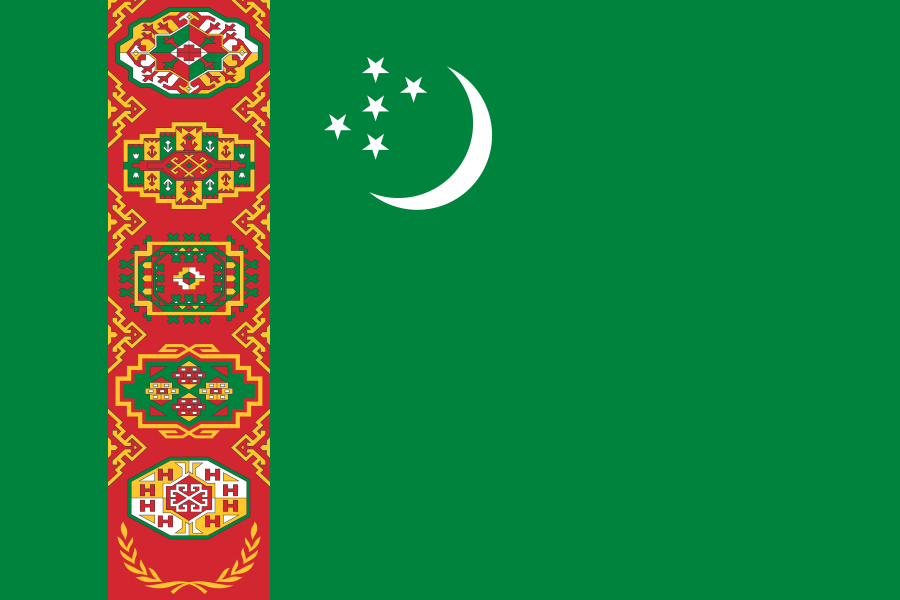
- Capital
- Ashgabat
- Population
- 7,057,841
- Region
Travel guide
Understand
thumb|Statue of former President for Life Saparmurat Niyazov. North Korea may get all the press, but even the Kim Family's cult of personality fades when compared to the surreal totalitarian state set up by Turkmenistan's former president, Saparmurat Niyazov.
Turkmenistan is known for its extravagant prices, over-the-top bureaucracy, and hard-to-get visas. Tourism is not a priority for the government, and you are likely to be closely observed by the authorities curious as to what you're doing in the country.
Get in
has one of the most restrictive visa policies in the world. In practice, the only visa available for independent travelers is the transit visa, usually granted for 3 to 7 days. Tourist visas are only possible by joining a guided tour lasting the entire duration of your time in the country. Journalists are not allowed to visit Turkmenistan on a tourist visa, and need to obtain special permission in order to visit.
Visa-free transit through Ashgabat is possible, but you'll be stuck at the transit area of the airport.
Get around
thumbnail|Public transport in Turkmenistan
See
thumb|280px|Nisa Fortress
Ancient cities, once major centers of trade and culture: Konye Urgench Merv Nissa Natural features: Karakum Desert Yangykala Canyon
Do
Horse trekking with Akhal Teke horses: Orexca offers a 12 day Turkem Akhalteke Horse Ride Wonders of the Karakum Desert with transfer from Ashgabar to Geokdepe Stud Farm, ride through the North East of the Karakum Desert to Tummekli, to the nomadic villages of Chyria, Gurrukly, Hakysh Gongurajy, Orazsahet and to the Geokdepe Reservoir. Hiking in the Köýtendag Nature Reserve (travel permit required) or in the mountains around Nokhur.
Eat
thumb|280px|Bread baking in Bai Bazaar, [[Dashoguz ]]
Expect distinctly average Russian cuisine in restaurants. As in Uzbekistan, plov and more central Asian-type fare can be found in markets. If you can find it, try sturgeon from the Caspian Sea, sometimes prepared in a tempura style.
Article · Español
Turkmenistán (en turcomano: Türkmenistan Respublikasy), oficialmente República de Turkmenistán, es un país situado en Asia Central que limita al noroeste con Kazajistán, al norte y noreste con Uzbekistán, al suroeste con Irán, al sureste con Afganistán y al oeste con el mar Caspio, aunque es considerado como un estado sin salida al mar. El desierto de Karakum ocupa la mayor parte del país, cuyos principales cursos fluviales son el Amu Daria, el Atrak y el Murgab. Su capital y ciudad más poblada es Asjabad. En la actualidad, Turkmenistán cubre un territorio que ha estado en la encrucijada de civilizaciones durante siglos. En la época medieval, Merv (hoy conocida como Mary) fue una de las grandes ciudades del mundo islámico y una importante parada de la Ruta de la Seda, una ruta de caravanas usada para el comercio con China hasta mediados del siglo XV. Anexado por el Imperio ruso en 1881, Turkmenistán más tarde ocupó un lugar destacado en el movimiento antibolchevique de Asia Central. En 1924, Turkmenistán se convirtió en una república constituyente de la Unión Soviética, denominada oficialmente República Socialista Soviética de Turkmenistán. Se independizó tras la disolución de la Unión Soviética el 27 de octubre de 1991. Tras lograr su independencia, Turkmenistán fue gobernado por el presidente vitalicio Saparmyrat Nyýazow —conocido como Türkmenbaşy o «líder de los turcomanos»— hasta su repentina muerte el 21 de diciembre de 2006. Gurbanguly Berdimuhamedow fue elegido nuevo presidente el 11 de febrero de 2007. De acuerdo con Human Rights Watch, Turkmenistán «sigue siendo un país aislado y represor bajo el autoritario gobierno de Berdomuhamedow y sus asociados», «castiga brutalmente a toda forma no autorizada de expresión política o religiosa. El acceso a la información está altamente controlado por el Estado. No se permiten grupos de monitoreo de derechos humanos. Se presume que existen docenas de personas desaparecidas forzosamente en sus prisiones». Berdimuhamedow promueve un culto a su personalidad en la que sus familiares y sus asociados disfrutan de un poder ilimitado y ejercen un control total sobre todos los aspectos de la vida pública. La tasa de crecimiento del PIB de Turkmenistán, del 11 % en 2012, es resultado de varios años de alto crecimiento sostenido, aunque a partir de una economía poco diversificada muy básica, impulsada por la exportación de un solo producto, pues Turkmenistán posee la cuarta reserva de recursos de gas natural más grande del mundo. Aunque es rico en recursos naturales en ciertas áreas, la mayor parte del país está cubierto por el desierto de Karakum, cuyo significado es «arena negra». Desde 1993, los ciudadanos reciben electricidad, agua y gas natural de forma gratuita y proporcionada por el gobierno, en una garantía programada para durar hasta 2030. Uno de los yacimientos de gas natural más conocidos del mundo es el pozo de Darvaza, conocido popularmente como «puerta al infierno», que atrae frecuentemente a medios de comunicación y turistas.
Gallery (59)
On the map
6 mapped locations
Connections
Categories
1991 establishments in AsiaCitation overkillCountries in AsiaCountries in Central AsiaIranian plateauMembers of the International Organization of Turkic CultureMember states of the Organisation of Islamic CooperationMember states of the United NationsObserver states of the Organization of Turkic StatesStates and territories established in 1991Totalitarian states