
File:Wikiwave_00000.png · Wikimedia Commons · See Wikimedia Commons
vaporwave
Sign in to saveAlso known as VAPORWAVE, eccojams, vapor, vapour, vapourwave
In the Vinony graph
Vinony's link graph records 1,436 inbound references to vaporwave, and connects out to plugg music, electro house and drum and bass.
It sits within the topics 2010s in music, 2010s neologisms and 2020s in music.
Vinony links it to 38 Wikipedia language editions.
Key facts
- Music genre.name
- Vaporwave
- Music genre.image
- Wikiwave 00000.png
- Music genre.caption
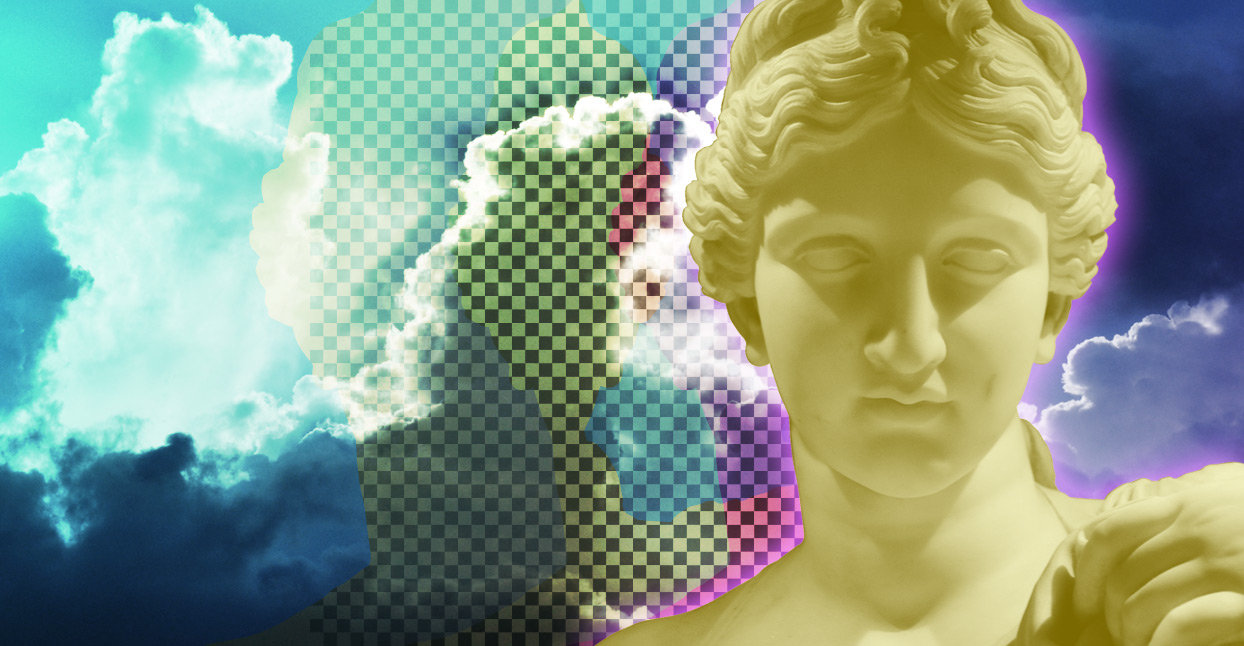
- A vaporwave-style image with Wikipedia as the main theme
- Music genre.etymology
- Vaporware
- Music genre.stylistic_origins
- Art pop chopped and screwed chillwave city pop dance electronic elevator music hypnagogic pop Italo disco lounge muzak post-noise new-age new wave plunderphonics pop ballads post-Internet R&B smooth jazz
- Music genre.cultural_origins
- Late 2000s–early 2010s, Internet
- Music genre.instruments
- Audio editing software digital audio workstation sequencer sampler
- Music genre.derivatives
- Simpsonwave (based on The Simpsons)
- Music genre.fusiongenres
- Fashwave
- Music genre.subgenres
- Mallsoft future funk hardvapour late night lo-fi VHS pop utopian virtual vaportrap vapornoise signalwave slushwave barber beats
- Music genre.other_topics
- Cloud rap distroid hauntology seapunk synthwave wave witch house post-internet music internet music
via Wikipedia infobox
Described at
Genre As Method: The Vaporwave Family Tree, From Eccojams to Hardvapour | Bandcamp Daily
Exploring the subgenres of the expansive Internet-based musical movement.
daily.bandcamp.com →Vaporwave isn’t just a genre; it’s an approach and an attitude—not just to music, but to popular culture. Vaporwave is often identified with particular sounds and stylings—slowed arown hits and muzak from the ’80s and ’90s—yet what’s also essential to it is the highly self-conscious, critical stance it takes to its source material. It remodels and repackages it, adding implicit layers of social commentary. Vaporwave artists have been quick to branch out, rising and falling in popularity until another supplants them. What began as an innocent practical joke early in the millennium has grown into a fully fledged genre that is entirely self-aware. And despite proclamations that “vaporwave is dead” by artists and critics, it seems that new subgenres, from mallsoft to vaportrap, pop up every day. This is why, in a bid to keep up with vaporwave’s expanding universe, we’ve outlined ten of its most pivotal subgenres. Yet if it began as an exercise in plunderphonics, it soon developed into a solid method and philosophy. Artists like Vektroid and Mediafired took the framework it offered and applied it to new songs, sounds and styles, providing the proof-of-concept that it could work outside of a narrow, side-project context. However, aside from enabling the likes of Darksleep and 회사AUTO to create new music using old songs, its sonic manipulations allowed those producers to reveal these tracks in a new light. Using distortions and dissections, it was as if Cyndi Lauper’s “Time After Time” and Mr Mister’s “Broken Wings” were being subjected to some kind of scrutiny. They were being celebrated, mocked and condemned all at the same time, and it was precisely in this kind of treatment that vaporwave revealed itself as a popular culture movement that criticized popular culture. Sitting alongside eccojams as the second of the genre’s two central threads, utopian virtual was born with James Ferraro’s landmark Far Side Virtual in 2011, before it became synonymous with vaporwave itself. In contrast to the blurred wooziness of eccojams, this subgenre is distinguished by an almost squeaky clean level of sonic clarity. More importantly, it’s also signalled by the predominant use of sounds drawn from the not-too distant history of commerce and computers, such as the iconic Windows 95 and Skype startup themes. Together, these elements combine to invoke the idealism, optimism and aspiration of the immediate post-Cold-War era. That optimism was quickly crushed by global recessions, terrorism and regional warfare, which makes albums GooglePlex Bionetwork and VIRTUAL UTOPIA EXPERIENCE less inspirational and more subtly disturbing. Their heavily compressed instrumentation and new-age futurism radiate a serenity that can’t help but appear indecent in the context of a still-turbulent world, and even if they and other standout LPs like Home™ and ATMOSPHERES 第1 are captivating listens, their simulated bliss partly comes across as an attempt to distract us from the fact that the promise of history’s end has itself ended. Extending out of utopian virtual is mallsoft, a subgenre that takes classic vaporwave’s interest in consumeristic detachment and uses it as the thematic basis for spacious ambient music—in the imagined space of the suburban shopping mall. While mallsoft is known to feature the shiny muzak of utopian virtual on occasion, archetypal records like Vacant Places and Yes! We’re Open generally aim to engineer a placid, meandering and cavernous atmosphere in which listeners can get lost looking for that perfect Christmas present. Melodies and chord progressions are kept low in the mix or at a bare minimum in such spare records, with猫 シ Corp.’s Palm Mall being filled largely by mall-related field recordings and incidental noises. The basic mood produced by such directionless and echo-heavy samples is one of floating aimlessly through a shopping center, yet there’s also the tangible suspicion that the intention of mallsoft’s practitioners is not sim
Excerpt from a page describing this subject · 40,000 chars · not written by Vinony
Wikidata facts
- Instance of
- music genre
- Subclass of
- popular music
- Named after
- new wave
- Country of origin
- United States
- Image
- Wikiwave 00000.png
Show 9 more facts
- topic's main category
- Category:Vaporwave
- inspired by
- consumerism
- Commons category
- Vaporwave
- inception
- 2009-00-00
- different from
- synthwave
- described at URL
- daily.bandcamp.com/lists/vaporwave-genres-list
- native label
- Vaporwave
- hashtag
- vaporwave
- stylized name
- VAPORWAVE
Sources (7)
via Wikidata · CC0
~30 min read
Encyclopedic overview
30 sectionsContents
- Characteristics
- History and legacy
- Precursors
- Origins
- Early scene
- Wider popularity
- In other media
- Political appropriations
- Critical interpretations
- Parody, subversion, and genre
- Capitalism and technology
- Offshoots and subgenres{{anchor|Subgenres}}
- Eccojams
- Vapor
- Future funk
- Simpsonwave
- Late night lo-fi
- VHS pop
- Utopian virtual
- Signalwave
- Slushwave
- Hardvapour
- Mallsoft
- Juchewave
- Barber beats
- See also
- Notes
- References
- Bibliography
- External links
Vaporwave is a microgenre of electronic music, an Internet aesthetic and meme that emerged in the late 2000s-early 2010s and became well known in 2015. It is defined partly by its slowed-down, chopped and screwed samples of smooth jazz, elevator music, R&B, and lounge music from the 1980s and 1990s, similar to synthwave. The surrounding subculture is sometimes associated with an ambiguous or satirical take on consumer capitalism and pop culture, and tends to be characterized by a nostalgic or surrealist engagement with the popular entertainment, digital technology and advertising of previous decades. Visually, it incorporates 1990s Web design and imagery, glitch art, anime, stylized Ancient Greek or Roman sculptures, Memphis Design geometric shapes, 3D-rendered objects, and cyberpunk tropes in its cover artwork and music videos.
Vaporwave originated as an ironic variant of chillwave, evolving from 2000s post-noise and hypnagogic pop trends, as well as similar retro-revivalist and post-Internet motifs that had become fashionable in underground digital music and art scenes of the era, such as Tumblr's seapunk. The style was pioneered by producers such as James Ferraro, Daniel Lopatin and Ramona Langley, who each used various pseudonyms. In 2010, Lopatin would release the influential cassette tape ''Chuck Person's Eccojams Vol. 1'', which was later followed by Ferraro's Far Side Virtual. After Langley's album Floral Shoppe (2011) established a blueprint for the genre, the movement built an audience on sites such as Last.fm, Reddit and 4chan while a flood of new acts, also operating under online pseudonyms, turned to Bandcamp for distribution.
Excerpted from Wikipedia’s “vaporwave” article, available under the CC BY-SA 4.0 licence.