
Venezuela
Also known as Bolivarian Republic of Venezuela, BR Venezuela, Republic of Venezuela
país en América del Sur y el Caribe
AI overview
Venezuela is a South American country located on the Caribbean coast with a population of about 31.8 million people, bordered by Colombia, Brazil, and Guyana, with its capital in Caracas. It matters as a significant nation in the region with substantial territory and population, comprising 23 states and various Caribbean islands.
AI-generated from the Wikipedia summary — may contain errors.
Weather now
cached 8h ago22°overcast clouds
100% 0.4 m/s OpenWeatherMap
7-day forecast
via Open-Meteo
Country
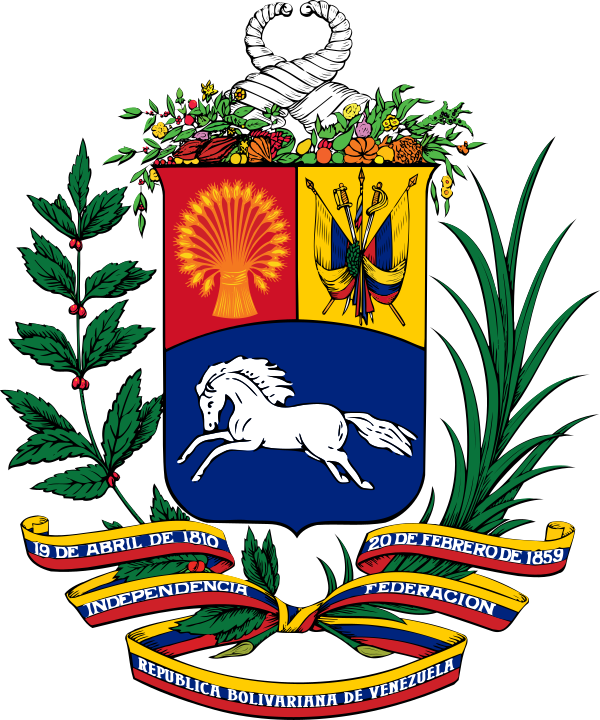
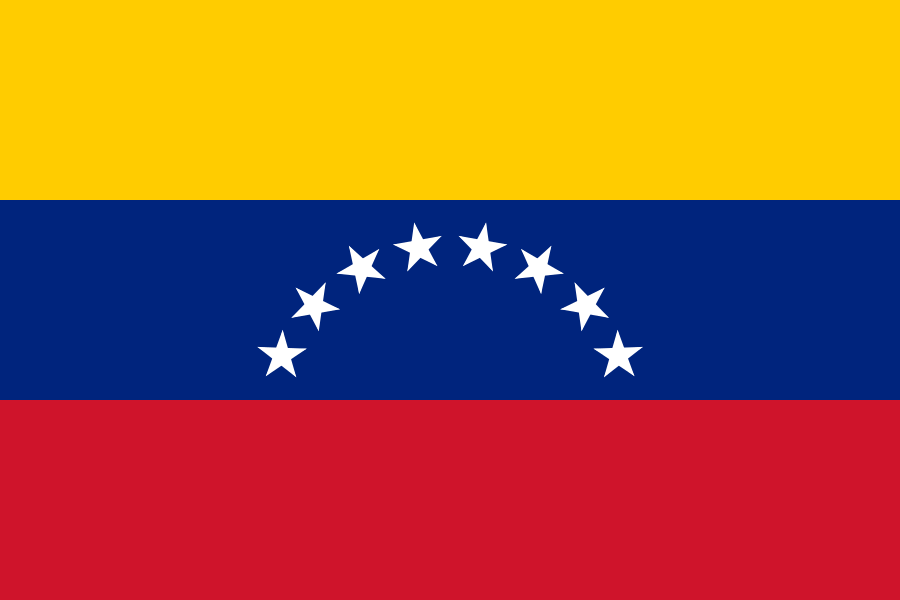
- Capital
- Caracas
- Population
- 28,517,000
- Region
Travel guide
Understand
thumb|Angel Falls Venezuela is home to the world's highest waterfall, Angel Falls and the second longest river in South America, the Orinoco. It also has the longest coastline to the Caribbean sea. Venezuela is the world's fifth-largest oil exporter and also has vast untapped reserves of natural gas. Ecologically, Venezuela is considered among the 20 Megadiverse countries of the planet; more than 40% of its national territory is covered by protected areas.
Although geologically diverse, the effects of climate change have gravely affected Venezuela's ecodiversity. May 2024 marked the date of when the country became the first Andean country and one of the first in the modern world to lose all of its glaciers.
Get in
thumb|375px|A map showing the visa requirements of Venezuela, with countries in red and blue having visa-free access thumb|Entry stamp
Get around
thumb|Avenida Bolívar in Caracas
See
Angel Falls in the Guiana Highlands and Canaima National Park Los Roques with its crystalline beaches. Los Llanos and its spectacular wildlife. Mérida and its breathtaking Andes scenery. Caracas, the true urban jungle.
Eat
Venezuela is experiencing a severe food shortage, and whatever food is available tends to be very expensive.
Arepas, thick corn tortillas which are split and stuffed with myriad fillings, are the quintessential Venezuelan dish. The most famous variations are the "reina pepiada" (shredded chicken salad with avocado) and “domino” (stuffed with black beans and shredded white cheese). Hallacas (Venezuela's homegrown version of the tamale, with meat, olives, raisins covered in cornmeal and wrapped in plantain leaves to be steamed) are a popular Christmas dish. Cachapas (corn pancakes often topped with a salty cheese called "telita" or "queso de mano"), empanadas (savory pastries) and the ubiquitous "perros calientes" (hot dogs) are popular street food. For slow food, try delicious fish meals, or a shrimp soup known as “cazuela de mariscos”.
The traditional Venezuelan lunch is pabellón, and consists of rice, black beans, and meat, with a side of fried plantain slices. The above dishes are known as "comida criolla", or Creole food.
Article · Español
Venezuela, oficialmente República Bolivariana de Venezuela, es un país soberano situado en la parte septentrional de América del Sur, constituido por un área continental y por un gran número de islas e islotes en el mar Caribe, cuya capital y mayor aglomeración urbana es la ciudad de Caracas. Posee una extensión territorial de 916 445 km². El territorio continental limita al norte con el mar Caribe y el océano Atlántico, al oeste con Colombia, al sur con Brasil y por el este con Guyana. Con este último país, el Estado venezolano mantiene una reclamación sobre 159 542 km² de territorio al oeste del río Esequibo, esta área es conocida como Guayana Esequiba o Zona en Reclamación. Por sus espacios marítimos, ejerce soberanía sobre 71 295 km² de mar territorial, 22 224 km² en su zona contigua, 471 507 km² del mar Caribe y del océano Atlántico bajo el concepto de zona económica exclusiva, y 99 889 km² de plataforma continental. Esta zona marina limita con las de trece Estados. El país tiene una biodiversidad muy alta y ocupa el séptimo lugar en la lista mundial de naciones con mayor cantidad de especies. Existen hábitats que van desde las montañas de los Andes en occidente hasta la selva tropical de la cuenca del Orinoco en el sur, a través de las extensas planicies de los Llanos, la costa del Caribe y el delta del río Orinoco en el oriente. El territorio ahora conocido como Venezuela fue colonizado por España en 1522, en medio de la resistencia de los pueblos amerindios. En 1811, se convirtió en uno de los primeros territorios hispanoamericanos en declarar la independencia, que no se estableció de manera segura hasta 1821, cuando Venezuela era un departamento de la República Federal de la Gran Colombia. Se separó como un país independiente en 1830. Durante el siglo XIX, Venezuela sufrió la agitación política y la autocracia y permaneció dominada por caudillos regionales hasta mediados del siglo XX. Desde 1958, el país ha tenido una serie de gobiernos democráticos. La crisis económica en los años 1980 y 90 llevó a varias crisis políticas, incluidos los mortales disturbios del Caracazo en 1989, dos intentos de golpe de Estado en 1992 y el juicio político al presidente Carlos Andrés Pérez por malversación de fondos públicos en 1993. Un colapso en la confianza a los partidos políticos existentes llevaron a la elección en 1998 del ex-oficial de carrera Hugo Chávez, implicado en el golpe, y el inicio de lo que llamó la Revolución bolivariana. Chávez comenzó su gobierno convocando a una Asamblea Constituyente en 1999, donde se redactó una nueva Constitución que cambiaría el nombre oficial del país a República Bolivariana de Venezuela. Para 2010, Venezuela tenía las reservas petroleras más grandes del mundo y era uno de los principales exportadores mundiales de petróleo. Antes de la explotación del petróleo, el país era un exportador de productos agrícolas, como café y cacao, pero el petróleo rápidamente alcanzó a dominar las exportaciones y los ingresos del país. La sobreoferta mundial de petróleo en los años 1980 condujo a una crisis de la deuda externa y a una prolongada crisis económica. La inflación se disparó en 1996 y las tasas de pobreza aumentaron al 66 % en 1995. Para 1998 el PIB per cápita cayó al mismo nivel que en 1963, una tercera parte de su máximo, alcanzado en 1978. El gobierno de Hugo Chávez se caracterizó por su ideología antiimperialista y un cambio en la geopolítica del mercado petrolero buscando nuevos mercados y apoyando a países carentes del recurso petrolero, se incrementó el gasto público con la teoría de distribuir la riqueza y creció la deuda externa a más de 118 mil millones de dólares de manera descontrolada que a pesar de tener un boom petrolero las consecuencias se notarían años después el ingreso de divisas que se invirtieron en gran parte en políticas de bienestar social, mientras la producción nacional venezolana se vio estancada durante los primeros años de su gobierno, aumentando el gasto social y temporalmente reduciendo la pobreza y la desigualdad económica, gracias en gran medida al aumento de los precios del petróleo que favorecieron el aumento de los ingresos del país. Años más tarde, la reducción de los ingresos debido en gran medida al excesivo gasto público, el aumento de las importaciones, la corrupción, la caída de la producción nacional debido al excesivo control del estado y políticas económicas que terminan ahogando al sector privado, se citan ampliamente como factores que desestabilizaron la economía del país. Esto condujo a una crisis generalizada que trajo como consecuencia hiperinflación, depresión económica, escasez de productos básicos y aumentos drásticos del desempleo, la pobreza, las enfermedades, la mortalidad infantil, la malnutrición y el crimen. A fines de 2017, las agencias de calificación crediticia declararon a Venezuela en mora con los pagos de la deuda. En 2019, la Alto Comisionado para los Derechos Humanos de las Naciones Unidas emitió un informe donde señala que el gobierno venezolano ha incurrido en sistemáticas violaciones a los derechos humanos.
Gallery (59)
On the map
6 mapped locations
Connections
Categories
Authoritarian statesCountries and territories where Spanish is an official languageCountries in South AmericaFederal constitutional republicsFormer Spanish coloniesG15 nationsHarv and Sfn no-target errorsMember states of OPECMember states of the Union of South American NationsMember states of the United NationsSource attributionStates and territories established in 1811