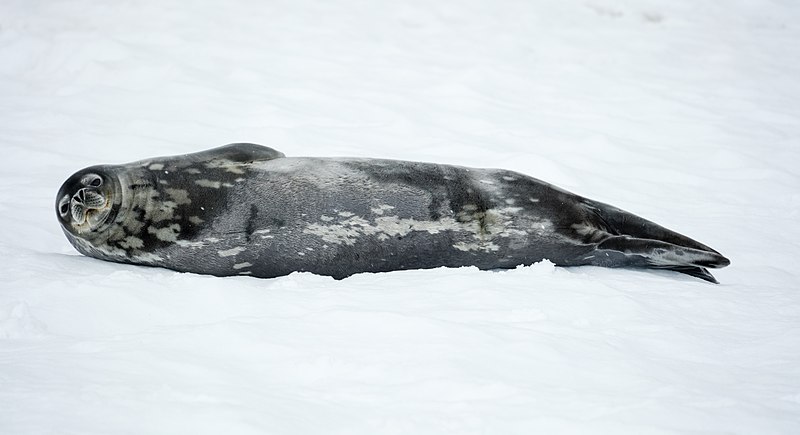
File:Mikkelsen_Harbour-2016-Trinity_Island_(D'Hainaut_Island)–Weddell_seal_(Leptonychotes_weddellii)_03.jpg · Wikimedia Commons · See Wikimedia Commons
OverviewAI-generated
The Weddell seal (*Leptonychotes weddellii*) is a species of marine mammal belonging to the family Phocidae within the order Carnivora. Classified under the class Mammalia and phylum Chordata, this taxon was described by Lesson in 1826 and named after James Weddell. The species is characterized by viviparity, with a gestation period of 11 months.
Its range is the Southern Ocean, where it inhabits marine environments during the Holocene time period. The primary food source for the Weddell seal is fish. The IUCN Red List assessed the species as Least Concern in 2015, and its taxonomic status is accepted.
Synthesized by Vinony from 27 facts across 4 sources: Wikidata, WoRMS, IUCN Red List, Vinony graph. Generated from structured data (not the Wikipedia text) and checked against those facts — may still contain errors.
Species
Least ConcernWeddell seal
Species
- PhylumChordata
- ClassMammalia
- OrderCarnivora
- FamilyPhocidae
via IUCN
Wikidata facts
- Instance of
- taxon
- Named after
- James Weddell
- Image
- Mikkelsen Harbour-2016-Trinity Island (D'Hainaut Island)–Weddell seal (Leptonychotes weddellii) 02.jpg
Show 13 more facts
- taxon rank
- species
- IUCN conservation status
- Least Concern
- taxon name
- Leptonychotes weddellii
- Commons category
- Leptonychotes weddellii
- Commons gallery
- Leptonychotes weddellii
- taxon common name
- Foca de Weddell
- gestation period
- 11
- taxon author citation
- (Lesson, 1826)
- short name
- L. weddellii
- has characteristic
- viviparity
- taxon range
- Southern Ocean
- main food source
- fish
- time period
- Holocene
via Wikidata · CC0
~16 min read
Encyclopedic overview
The Weddell seal (Leptonychotes weddellii) is a relatively large and abundant true seal with a circumpolar distribution surrounding Antarctica. The Weddell seal was discovered and named in the 1820s during expeditions led by British sealing captain James Weddell to the area of the Southern Ocean now known as the Weddell Sea. The life history of this species is well documented since it occupies fast ice environments close to the Antarctic continent and often adjacent to Antarctic bases. It is the only species in the genus Leptonychotes.
Description
Excerpted from Wikipedia’s “Weddell seal” article, available under the CC BY-SA 4.0 licence.