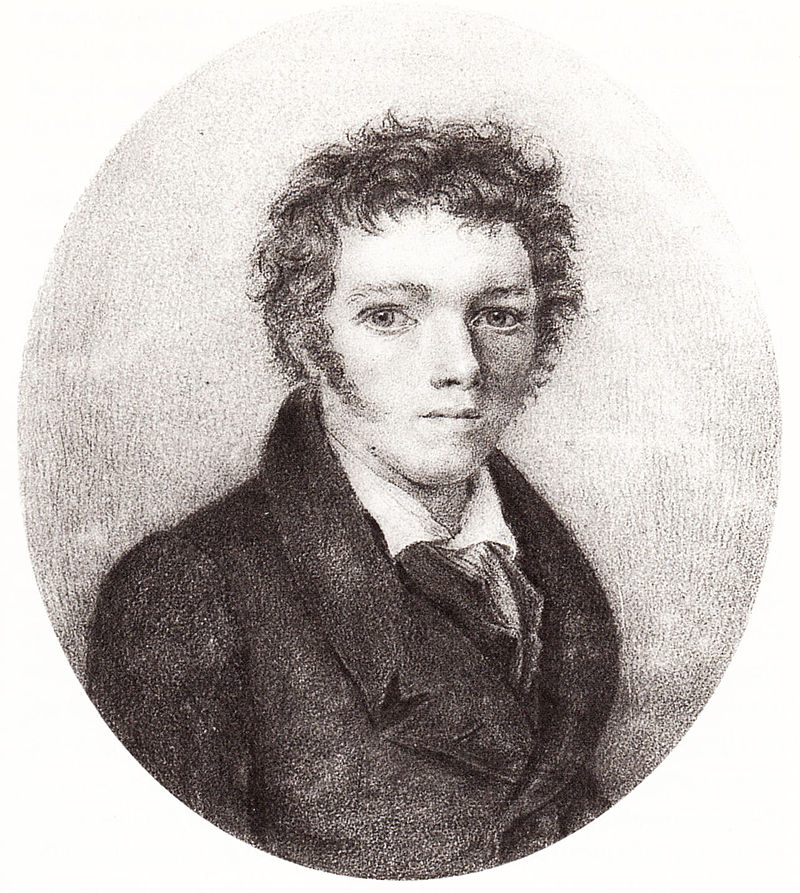
File:Behringer_-_Wilhelm_Hauff_1826.jpg · Wikimedia Commons · See Wikimedia Commons
Wilhelm Hauff
Sign in to saveGerman poet and novelist (1802–1827)
Wilhelm Hauff was a German writer of the early 19th century who created poetry and novels during his brief lifetime. He is remembered as an important figure in German literature, though he died young at just 25 years old.
AI-generated from the Wikipedia summary — may contain errors.
Wikidata facts
- Instance of
- human
- Given name
- Wilhelm
- Family name
- Hauff
- Gender
- male
- Citizenship
- Kingdom of Württemberg
- Place of birth
- Stuttgart
- Place of death
- Stuttgart
- Occupation
- fairy tales writer
- Educated at
- Tübinger Stift
- Languages spoken
- German
- Notable work
- The Story of Caliph Stork
- Field of work
- fairy tale
- Image
- Masterpieces of German literature - Wilhelm Hauff.png
Show 14 more facts
- Commons category
- Wilhelm Hauff
- date of birth
- 1802-01-01
- date of death
- 1827-01-01
- topic's main category
- Category:Wilhelm Hauff
- Commons gallery
- Wilhelm Hauff
- name in native language
- Wilhelm Hauff
- ethnic group
- Germans
- cause of death
- typhus
- writing language
- German
- start of work period
- 1823-00-00
- archives at
- German Literature Archive Marbach
- Commons Creator page
- Wilhelm Hauff
- has works in the collection
- Anne Frank House
- manner of death
- natural causes
via Wikidata · CC0
~8 min read
Encyclopedic overview
Wilhelm Hauff (29 November 1802 – 18 November 1827) was a German poet and novelist known for his stories and novels. Raised in Stuttgart and educated in Tübingen, he wrote fairy tales such as Der kleine Muck (Little Muck) and Das kalte Herz (Heart of Stone), the historical romance Lichtenstein, and the parody Der Mann im Mond (The Man in the Moon). He died of typhoid fever at age 24. Blending exotic and fantastic motifs with German settings, his tales remain popular in German-speaking countries.
Early life
Excerpted from Wikipedia’s “Wilhelm Hauff” article, available under the CC BY-SA 4.0 licence.