Category
page 1Amphibian families
Bufonidae
family of amphibians in the frog order (Anura)

Hylidae
Hylidae is a wide-ranging family of frogs commonly referred to as "tree frogs and their allies". However, the hylids include a diversity of frog species, many of which do not live in trees, but are terrestrial or semiaquatic.
.jpg)
Salamandridae
Salamandridae is a family of salamanders consisting of true salamanders and newts. Salamandrids are distinguished from other salamanders by the lack of rib or costal grooves along the sides of their bodies and by their rough skin. Their skin is very granular because of the number of poison glands. They also lack nasolabial grooves. Most species of Salamandridae have moveable eyelids but lack lacrimal glands.
.png)
Microhylidae
The Microhylidae, commonly known as narrow-mouthed frogs, are a geographically widespread family of frogs. The 683 species are in 57 genera and 11 subfamilies.
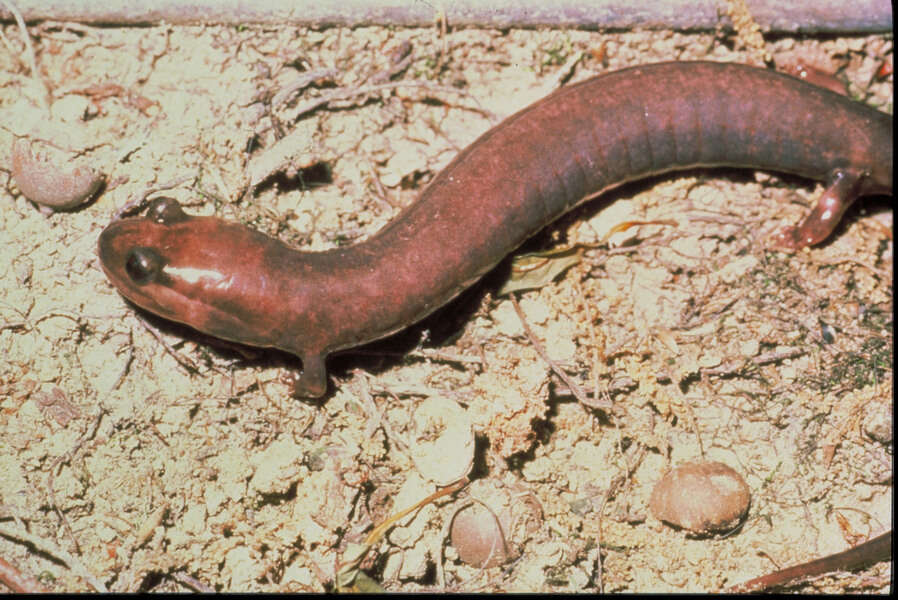
Plethodontidae
Plethodontidae, or lungless salamanders, are a family of salamanders. With over 500 species, lungless salamanders are by far the largest family of salamanders in terms of their diversity. Most species are native to the Western Hemisphere, from British Columbia to Brazil. Only two extant genera occur in the Eastern Hemisphere: Speleomantes (native to Sardinia and mainland Europe south of the Alps) and Karsenia (native to South Korea).
Pipidae
The Pipidae are a family of basal, tongueless frogs. There are 41 species in the family, found in tropical South America (genus Pipa) and sub-Saharan Africa (the three other genera).

Rhacophoridae
The Rhacophoridae are a family of frogs in tropical sub-Saharan Africa, South India and Sri Lanka, Japan, northeastern India to eastern China and Taiwan, south through the Philippines and Greater Sundas, and Sulawesi, with the two basal (taxonomy) genera living in East Asia. They are commonly known as shrub frogs, or more ambiguously as "moss frogs" or "bush frogs". Some Rhacophoridae are called "tree frogs". Among the most spectacular members of this family are numerous "flying frogs".
Sirenidae
Sirenidae, the sirens, are a family of neotenic aquatic salamanders. Family members have very small fore limbs, and lack hind limbs altogether. In one species, the skeleton in their fore limbs is made of only cartilage. In contrast to most other salamanders, they have external gills bunched together on the neck in both larval and adult states. Sirens are found only in the Southeastern United States and northern Mexico.
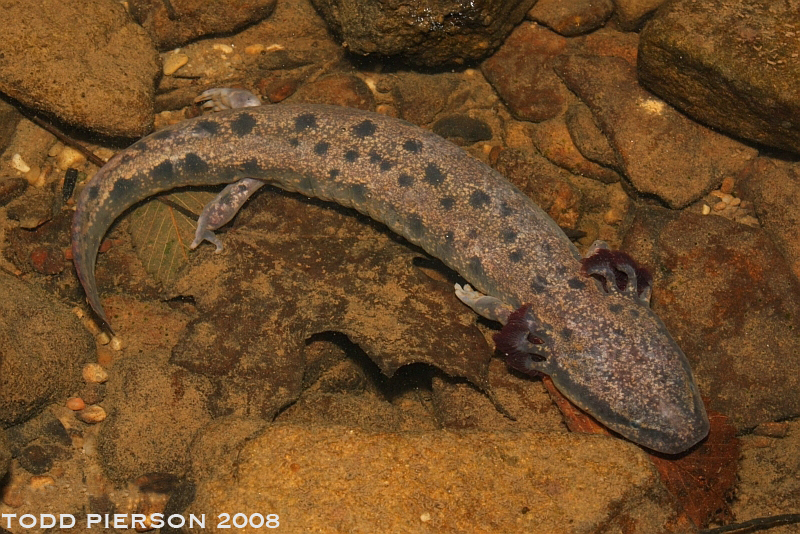
mudpuppy
The family Proteidae is a group of aquatic salamanders found today in the Balkan Peninsula and North America. The range of the genus Necturus (commonly known as waterdogs or mudpuppies) runs from southern central Canada, through the midwestern United States, east to North Carolina and south to Georgia and Mississippi. The range of the olm, the only extant member of the genus Proteus, is limited to the Western Balkans. The fossil record of the family extends back to the Late Cretaceous, with Paranecturus being known from the Maastrichtian of North America, and Bishara from the Santonian-Campani

Bombinatoridae
Bombinatoridae is a family of toads found in Eurasia. Species of the family have flattened bodies and some are highly toxic.
Myobatrachidae
Myobatrachidae, commonly known as Australian ground frogs or Australian water frogs, is a family of frogs found in Australia and New Guinea. Members of this family vary greatly in size, from species less than long, to the second-largest frog in Australia, the giant barred frog (Mixophyes iteratus), at in length. The entire family is either terrestrial or aquatic frogs, with no arboreal species.
Mantellidae
The Mantellidae are an amphibian family of the order Anura (frogs and toads), and are endemic to the Indian Ocean islands of Madagascar and Mayotte. At first glance, the diminutive, brightly-coloured mantellas appear visually similar to (and indeed fill similar ecological niches as) the Latin American poison dart frogs, such as Dendrobates, Oophaga and Phyllobates, among others.

Hyperoliidae
The Hyperoliidae, or sedge frogs and bush frogs, are a large family of small to medium-sized, brightly colored frogs which contain more than 250 species in 19 genera. Seventeen genera are native to sub-Saharan Africa. In addition, the monotypic genus Tachycnemis occurs on the Seychelles Islands, and the genus Heterixalus (currently 10 species) is endemic to Madagascar.

Leptodactylidae
The southern frogs form the Leptodactylidae, a name that comes from Greek meaning a bird or other animal having slender toes. They are a diverse family of frogs that most likely diverged from other hyloids during the Cretaceous. The family has undergone major taxonomic revisions in recent years, including the reclassification of the former subfamily Eleutherodactylinae into its own family the Eleutherodactylidae; the Leptodactylidae now number 206 species in 13 genera distributed throughout Mexico, the Caribbean, and Central and South America. The family includes terrestrial, burrowing, aquati
Megophryidae
Megophryidae, commonly known as goose frogs, is a large family of frogs native to the warm southeast of Asia, from the Himalayan foothills eastwards, south to Indonesia and the Greater Sunda Islands in Maritime Southeast Asia, and extending to the Philippines. Fossil remains are also known from North America. it encompasses 246 species of frogs divided between five genera. For lack of a better vernacular name, they are commonly called megophryids.
Ambystomatidae
Ambystomatidae is a family of salamanders belonging to the Suborder Salamandroidea in the class Amphibia. It contains two genera, Ambystoma (the mole salamanders) and Dicamptodon (the Pacific giant salamanders). Ambystoma contains 32 species and are distributed widely across North America, while Dicamptodon contains four species restricted to the Pacific Northwest. These salamanders are mostly terrestrial and eat invertebrates, although some species are known to eat smaller salamanders. They can be found throughout the US and some areas of Canada in damp forests or plains. This family contains
Brevicipitidae
The Brevicipitidae or rain frogs are a small family of frogs found in eastern and southern Africa. As of 2025, it contains 38 species in 5 genera. Formerly included as subfamily in Microhylidae (narrow-mouth frogs), phylogenetic research has indicated the brevicipitine frogs should be considered as a family, with Hemisotidae (shovelnose frogs) as the most closely related sister taxon.
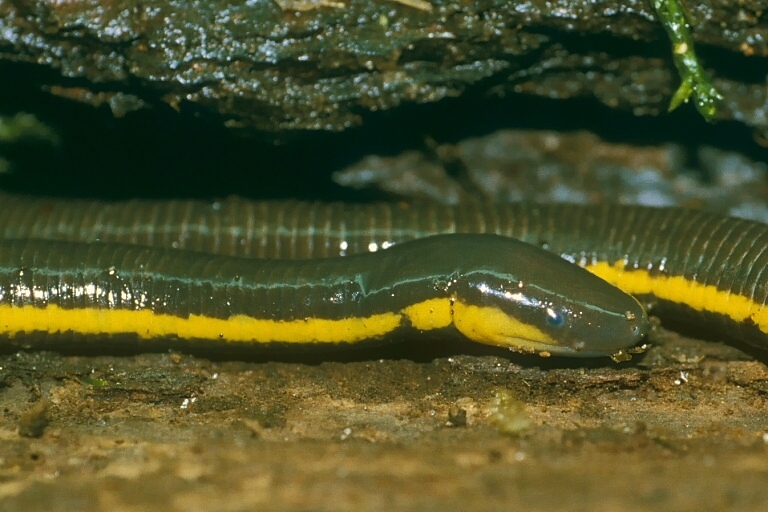
Ichthyophiidae
The vent is an important taxonomic feature for Ichthyophis identification|thumb
Arthroleptidae
The Arthroleptidae are a family of frogs found in sub-Saharan Africa. This group includes African treefrogs in the genus Leptopelis along with the terrestrial breeding squeakers Arthroleptis, and several genera restricted to the Guinean forests of central and west Africa, such as the hairy frog (Trichobatrachus).
Caeciliidae
Caeciliidae is the family of common caecilians. They are found in Central and South America. Like other caecilians, they superficially resemble worms or snakes.

Hemiphractidae
The Hemiphractidae are a family of frogs from South and Central America. Previously, this group had been classified as a subfamily (Hemiphractinae) under family Hylidae. More recent research classifies these genera into their own family, or sometimes into three separate families: Amphignathodontidae (Flectonotus and Gastrotheca), Cryptobatrachidae (Cryptobatrachus and Stefania), and Hemiphractidae (Hemiphractus and Fritziana). An active question still exists as to which of these groupings is more accurate.

painted frogs
The Alytidae are a family of primitive frogs. Their common name is painted frogs or midwife toads. Most are endemic to Europe, but three species occur in northwest Africa, and a species formerly thought to be extinct is found in Israel.
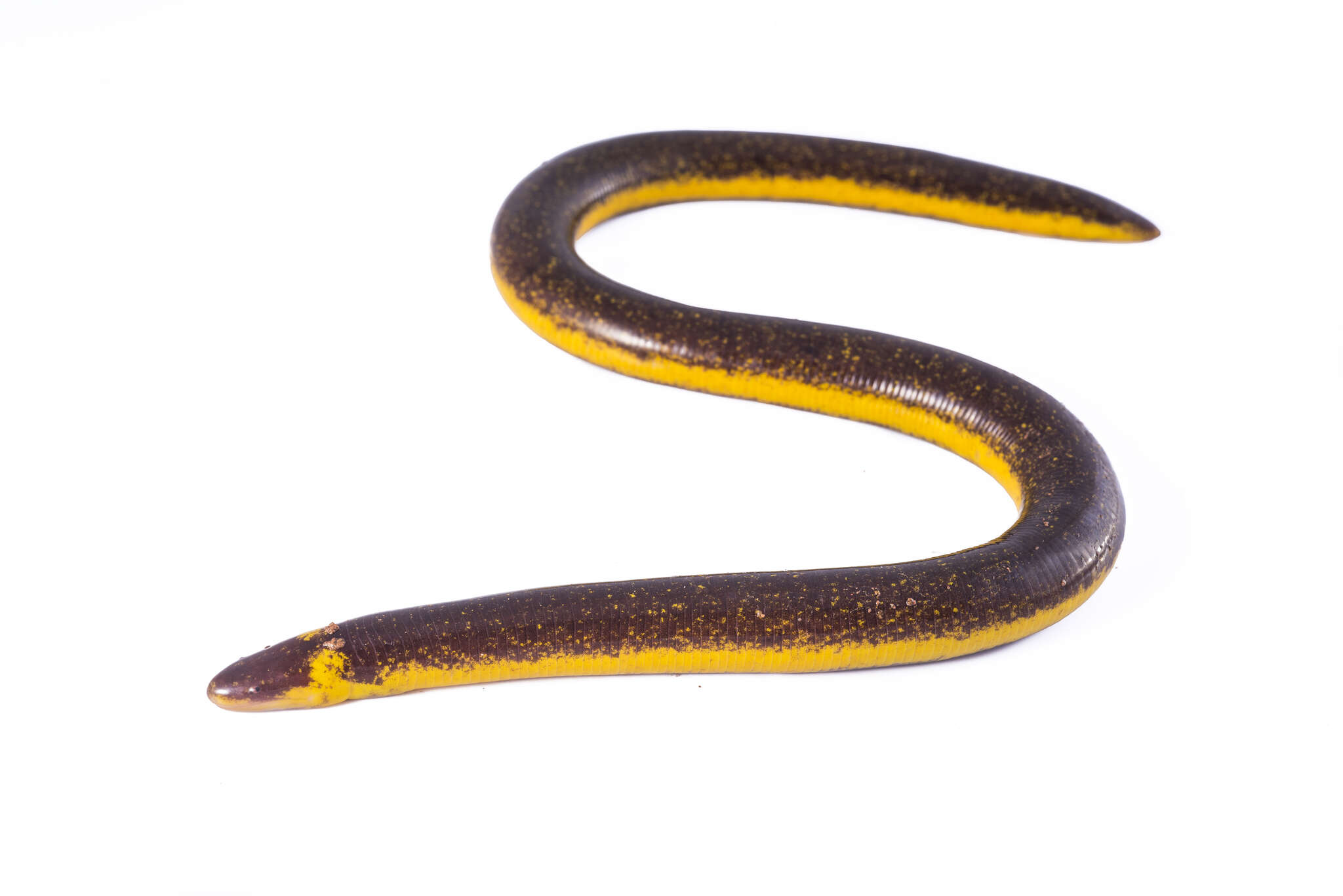
Rhinatrematidae
Rhinatrematidae is a family of caecilians, also known as the Neotropical tailed caecilians, American tailed caecilians. or beaked caecilians. They are found in the equatorial countries of South America.
Sooglossidae
Sooglossidae, the Seychelles frogs or Seychelles Island frogs, are a family of frogs found on the Seychelles Islands. Until recently, this family was believed to include the genera Sechellophryne, Nesomantis and Sooglossus, but following a major revision of amphibians in 2006, the genus Nesomantis was named a junior synonym of Sooglossus. Their closest relatives are the purple frogs (Nasikabatrachidae) of India.

Eleutherodactylidae
The Eleutherodactylidae are a family of direct-developing frogs native to northern South America, the Caribbean, and southernmost North America. They are sometimes known under the common name rain frogs. Formerly the subfamily Eleutherodactylinae of the family Leptodactylidae, it was raised to the family status following a major revision of New World direct-developing frogs in 2008. As currently defined, the family has more than 200 species (as of 2014, 206 or 207 species).
Aromobatidae
The Aromobatidae are a family of frogs native to Central and South America. They are sometimes referred to as cryptic forest frogs or cryptic poison frogs. They are the sister taxon of the Dendrobatidae, the poison dart frogs, but are not as toxic as most dendrobatids are.
Nyctibatrachidae
Nyctibatrachidae is a small family of frogs found in the Western Ghats of India and in Sri Lanka. Their common name is robust frogs. Recognition of Nyctibatrachidae as a family is fairly recent. These frogs were previously placed in the broadly defined family Ranidae, which was more recently divided into three subfamilies: Lankanectinae, Nyctibatrachinae, and Astrobatrachinae.
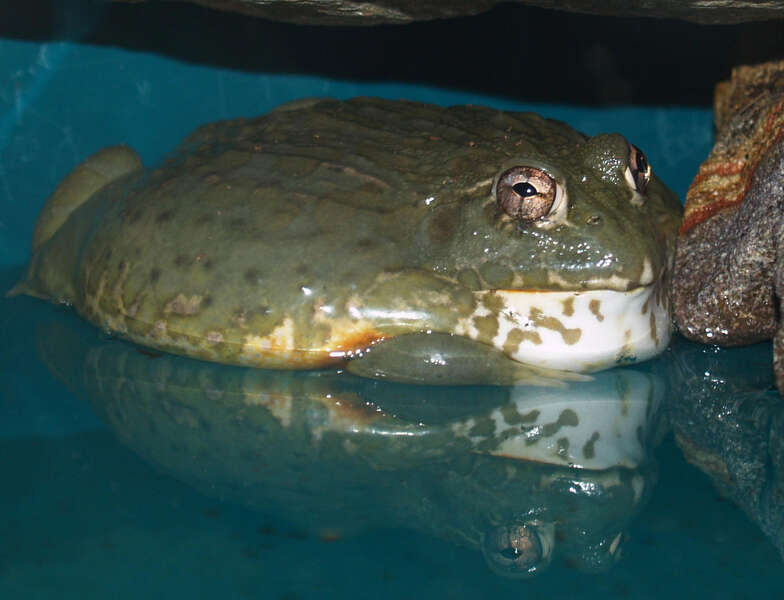
Pyxicephalidae
The Pyxicephalidae are a family of frogs currently found in sub-Saharan Africa. However, in the Eocene, the taxon Thaumastosaurus lived in Europe.
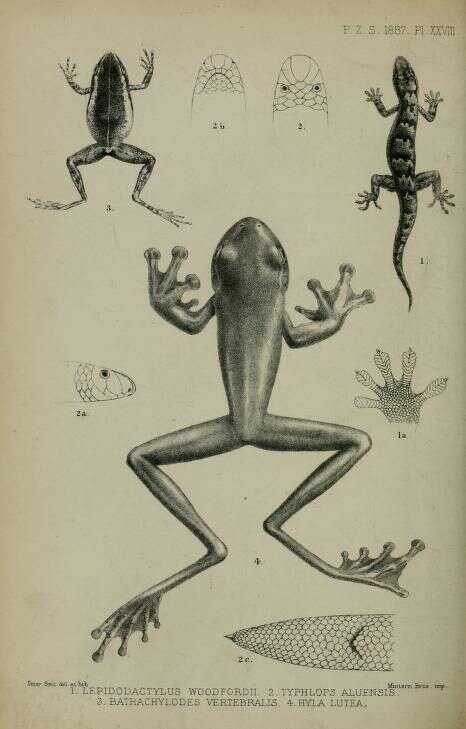
Ceratobatrachidae
The Ceratobatrachidae are a family of frogs found in the Malay Peninsula, Borneo, the Philippines, Palau, Fiji, New Guinea, and the Admiralty, Bismarck, and Solomon Islands.
Craugastoridae
Craugastoridae, commonly known as fleshbelly frogs, is a family of New World direct-developing frogs. As delineated here, following the Amphibian Species of the World, it contains 129 species. They are found from the southern United States southwards to Central and South America.
Brachycephalidae
The Brachycephalidae () are a family of frogs confined to eastern and southern Brazil and northern Argentina. The family is composed of two externally quite different genera: the tiny, often (but not always) colourful and plump saddleback toads (Brachycephalus) from Brazil, and the larger, slimmer and more drab genus Ischnocnema from both Brazil and Argentina. The family is mainly defined by molecular characteristics, and are linked by few anatomical features. It was erected from two genera of the previously large family Eleutherodactylidae, which is now split into four families.
Ptychadenidae
Ptychadenidae is a family of frogs commonly known as the grassland frogs. These frogs occur in Sub-Saharan Africa.
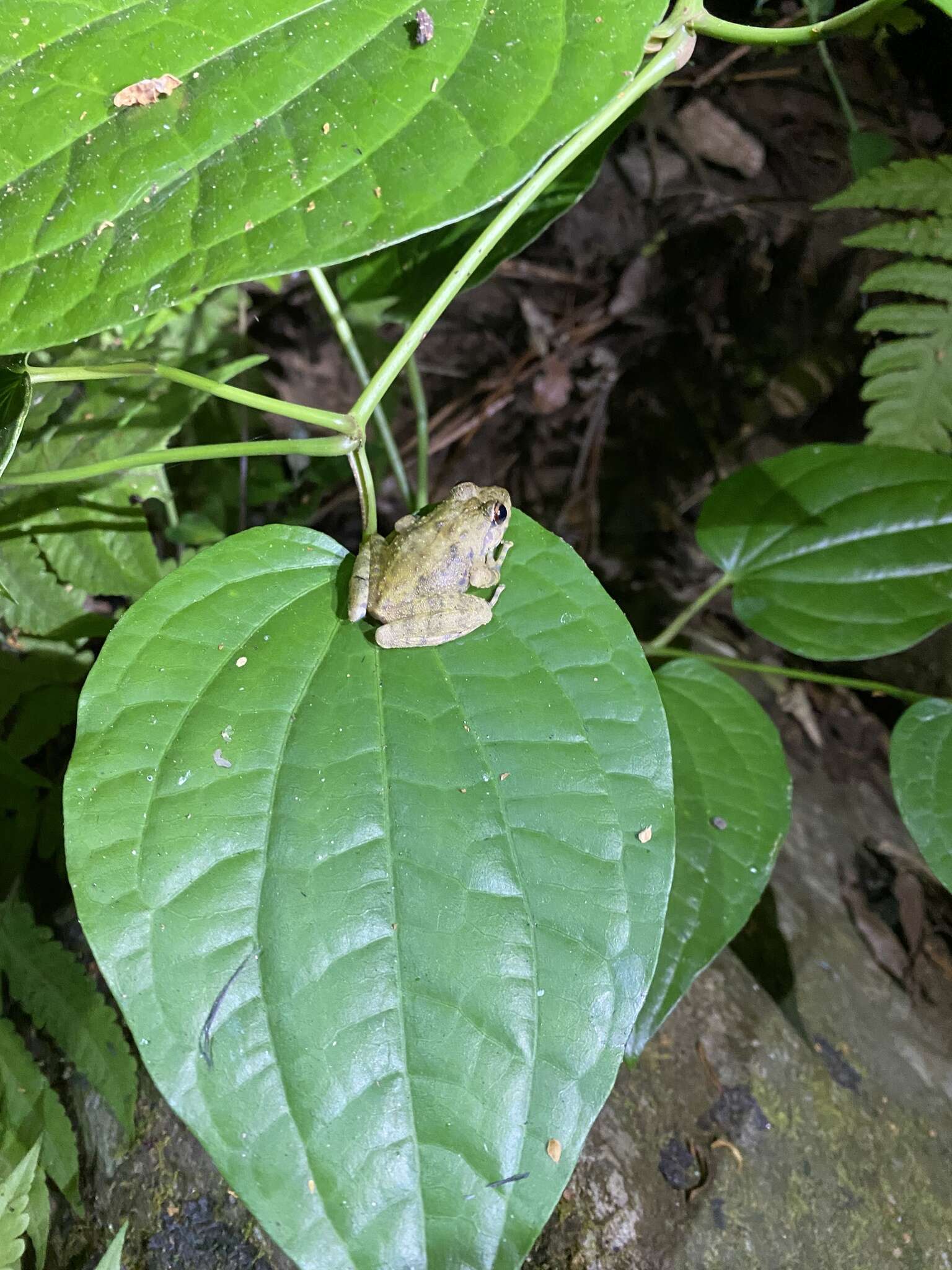
Petropedetidae
The Petropedetidae are a family of frogs containing two genera and 11 species. They are found in sub-Saharan tropical Africa and are sometimes known under common name African torrent frogs.
Rhinodermatidae
Rhinodermatidae, also known as '''Darwin's frogs, mouth-breeding frogs or mouth-brooding frogs''', is a small family of frogs found in temperate forests of southern Chile and adjacent Argentina.
Ceratophryidae
The Ceratophryidae, also known as common horned frogs, are a family of frogs found in South America. It is a relatively small family with three extant genera and 12 species. Despite the common name, not all species in the family have the horn-like projections at the eyes. They have a relatively large head with big mouth, and they are ambush predators able to consume large prey, including lizards, other frogs, and small mammals. They inhabit arid areas and are seasonal breeders, depositing many small eggs in aquatic habitats. Tadpoles are free-living and carnivorous (Ceratophrys and Lepidobatra
Calyptocephalellidae
The Calyptocephalellidae are a family of toads (although not true members of the Bufonidae) found in Chile containing two living genera, Calyptocephalella and Telmatobufo.
Dermophiidae
The Dermophiidae are a family of neotropical caecilians. They are found in Central and South America, and Africa. Like other caecilians, they superficially resemble worms or snakes.
Hylodidae
Hylodidae, commonly known as giant Neotropical torrent frogs, is a family of frogs native to Brazil and northern Argentina. Phylogenetic evidence suggests the Hylodidae being the sister group to the Alsodidae.
Herpelidae
Herpelidae are a family of caecilians, sometimes known as the African caecilians. They are found in Sub-Saharan Africa. Like other caecilians, they superficially resemble worms or snakes. They are the sister group to the newly discovered Chikilidae.
Siphonopidae
The Siphonopidae are the family of common caecilians. They are found in Central and South America. Like other caecilians, they superficially resemble worms or snakes.
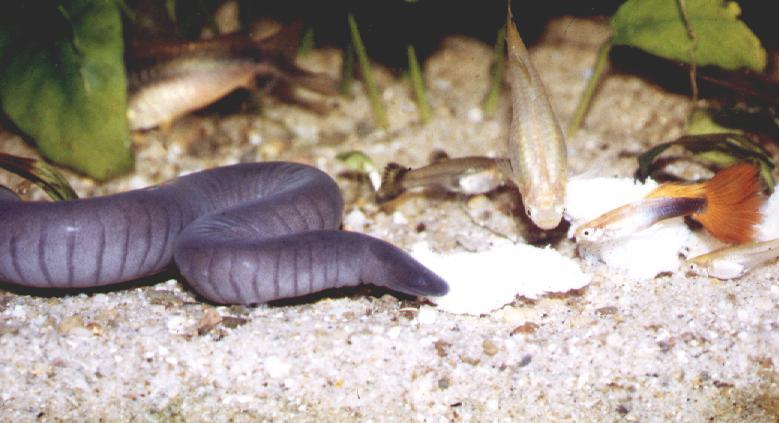
Typhlonectidae
Typhlonectidae, also known as aquatic caecilians or rubber eels, are a family of caecilians found east of the Andes in South America.
Strabomantidae
The Strabomantidae, sometimes called cloud forest landfrogs, are a family of frogs native to South America. These frogs lack a free-living larval stage and hatch directly into miniature "froglets". This family includes Pristimantis, the most speciose genus of any vertebrate. Based on molecular dating, the Holoadeninae in particular appears to have originated in the Eocene. The Oligocene-Miocene transition was also found to be important to their biogeographical history. However, the lack of Holoadeninae fossils and limited nucleotide data ambiguates the results, by the authors' admission.
Limnodynastidae
Limnodynastidae, commonly known as the Australian ground frogs, is a family of frogs found in Australia, New Guinea, and the Aru Islands. They were formerly considered a subfamily of the Myobatrachidae, the other large radiation of terrestrial frogs in Australia, but are now considered a distinct family. Both Limnodynastidae and Myobatrachidae are thought to be the only members of the superfamily Myobatrachoidea.
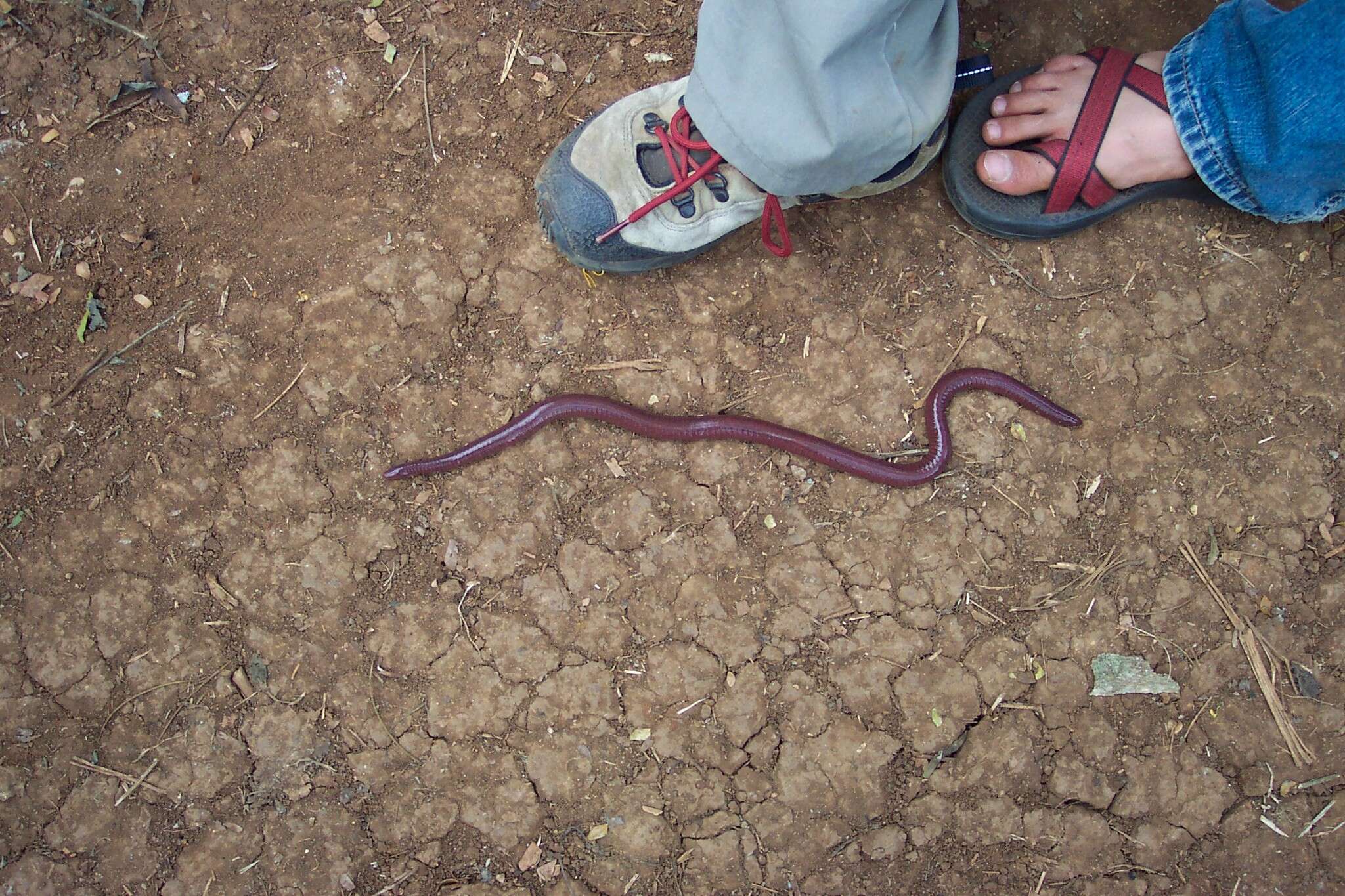
Scolecomorphidae
The Scolecomorphidae (from , 'wormlike' and , 'form') are a family of caecilians also known as tropical caecilians, buried-eyed caecilians, or African caecilians. They are found in Cameroon in West Africa, and Malawi and Tanzania in East Africa. Caecilians are legless amphibians which superficially resemble worms or snakes.

Alsodidae
The Alsodidae are a small family of frogs from South America between Patagonia and southern Brazil. It contains 30 species in three genera. This family, along with several other families, used to be included in the family Leptodactylidae. It was then a subfamily in the family Cycloramphidae, before being recognized as a family first in 2011.

Rhinophrynidae
thumb|Burrowing Toad (Rhinophrynus dorsalis), Municipality of Reynosa, Tamaulipas, Mexico (8 October 2007).
The Rhinophrynidae are a family of frogs containing one extant genus, the monotypic Rhinophrynus, and a number of fossil genera. The family is sometimes known as the Mexican burrowing toads or simply burrowing toads.
Cycloramphidae
The Cycloramphidae are a family of frogs endemic to southeastern Brazil. This family has seen large changes in its composition. Genera that have at some point been included in the Cycloramphidae are at present placed in the Alsodidae, Hylodidae, Leptodactylidae, and Rhinodermatidae. Of these, the Alsodidae and/or Hylodidae have also been considered as subfamilies of Cycloramphidae (as, respectively, Alsodinae and Hylodinae); the Cycloramphidae, as recognized at present, would be similar to subfamily Cycloramphinae under such system.
Pelodytidae
Pelodytidae, also known as the parsley frogs, or rarely, mud divers, is a family of frogs. It contains a single extant genus, Pelodytes, and three genera only known from fossils. The extant species are found in southwestern Europe and the Caucasus.
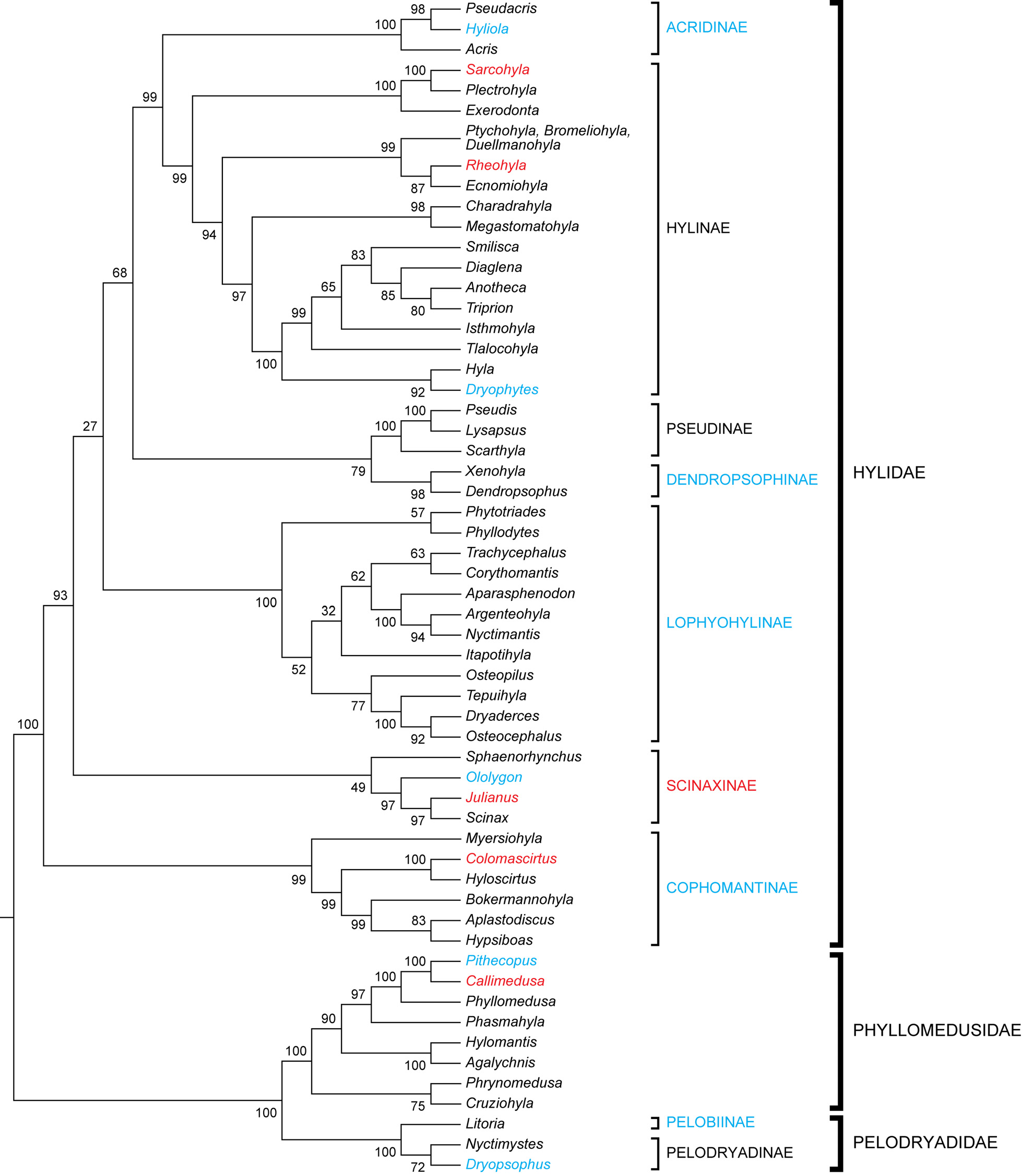
Pelodryadidae
Pelodryadinae, also known as Australian treefrogs (although not all members are arboreal), is a subfamily of frogs found in the region of Australia and New Guinea, and have also been introduced to New Caledonia, Guam, New Zealand, and Vanuatu.
Amphignathodontidae
The marsupial frogs are a disputed family (Amphignathodontidae) in the order Anura. When treated as a separate family, it consists of two genera, Gastrotheca and Flectonotus. The frogs are native to Neotropical America (Central and South America). Under the dominant view, they are treated as part of the family of Hemiphractidae.
Grandisoniidae
The Grandisoniidae are a family of common caecilians found in Africa, Seychelles and India. Like other caecilians, they superficially resemble worms or snakes. The family was formerly known as Indotyphlidae.