Category
page 1Apocrita families

Vespidae
thumb|right|Palaeovespa florissantia, late [[Eocene]]

Ichneumonidae
The Ichneumonidae, also known as ichneumon wasps, ichneumonid wasps, ichneumonids, or Darwin wasps, are a family of parasitoid wasps of the insect order Hymenoptera. They are one of the most diverse groups within the Hymenoptera with roughly 25,000 species described . However, this likely represents less than a quarter of their true richness as reliable estimates are lacking, along with much of the most basic knowledge about their ecology, distribution, and evolution. It is estimated that there are more species in this family than there are species of birds and mammals combined. Ichneumonid wa

Sphecidae
thumb|Podalonia sp.
thumb|Isodontia larva
.jpg)
Scoliidae
Scoliidae, the scoliid wasps, is a family of wasps comprising about 300 described species worldwide. They tend to be black, often marked with yellow or orange, and their wing tips are distinctively corrugated. Males are more slender and elongated than females, with significantly longer antennae, but the sexual dimorphism is not as apparent as in many of the Tiphiidae and Thynnidae.
Braconidae
The Braconidae are a family of parasitoid wasps. After the closely related Ichneumonidae, braconids make up the second-largest family in the order Hymenoptera, with about 17,000 recognized species and many thousands more undescribed. One analysis estimated a total between 30,000 and 50,000, and another provided a narrower estimate between 42,000 and 43,000 species.
thumb|right|A female tropical braconid ovipositing into dead wood
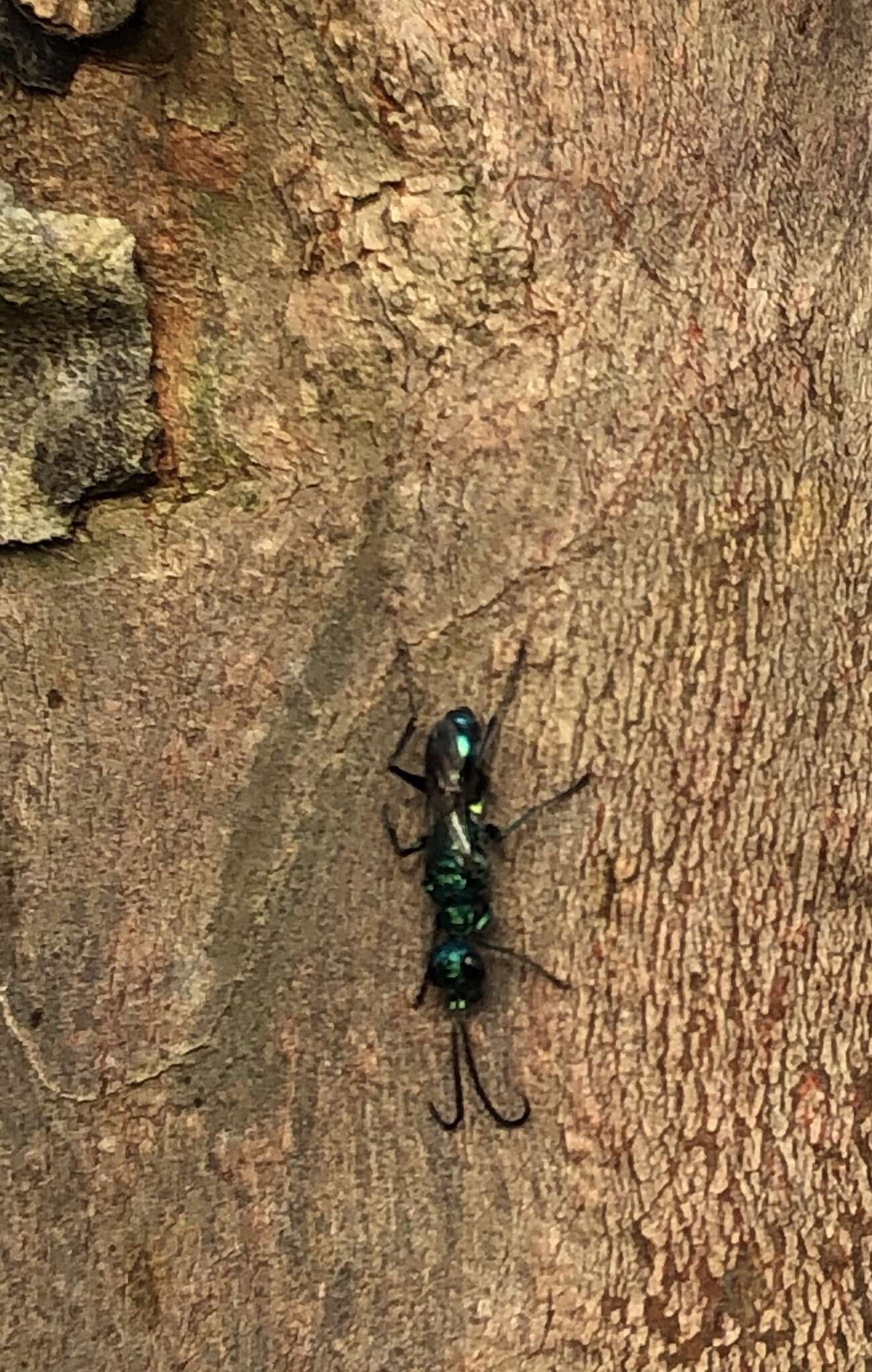
Ampulicidae
Ampulicidae, or cockroach wasps, are a small (about 170 species), primarily tropical family of sphecoid wasps, all of which use various cockroaches as prey for their larvae. They are the most primitive family of sphecoid hunting wasps. They tend to have elongated jaws, pronounced neck-like constrictions behind the head, strongly petiolate abdomens, and deep grooves on the thorax. Many are quite ant-like in appearance, though some are brilliant metallic blue, green, and hot pink.

Mutillidae
family of wasps

Crabronidae
Crabronidae is a large family of wasps within the superfamily Apoidea.

Agaonidae
right|thumb|226px|Female Elisabethiella comptoni
right|thumb|226px|Male Elisabethiella comptoni
The family Agaonidae is a group of pollinating fig wasps. They spend their larval stage inside the fruits of figs. The pollinating wasps (Agaoninae, Kradibiinae, and Tetrapusiinae) are the mutualistic partners of the fig trees. Extinct forms from the Eocene and Miocene are nearly identical to modern forms, suggesting that the niche has been stable over geologic time.
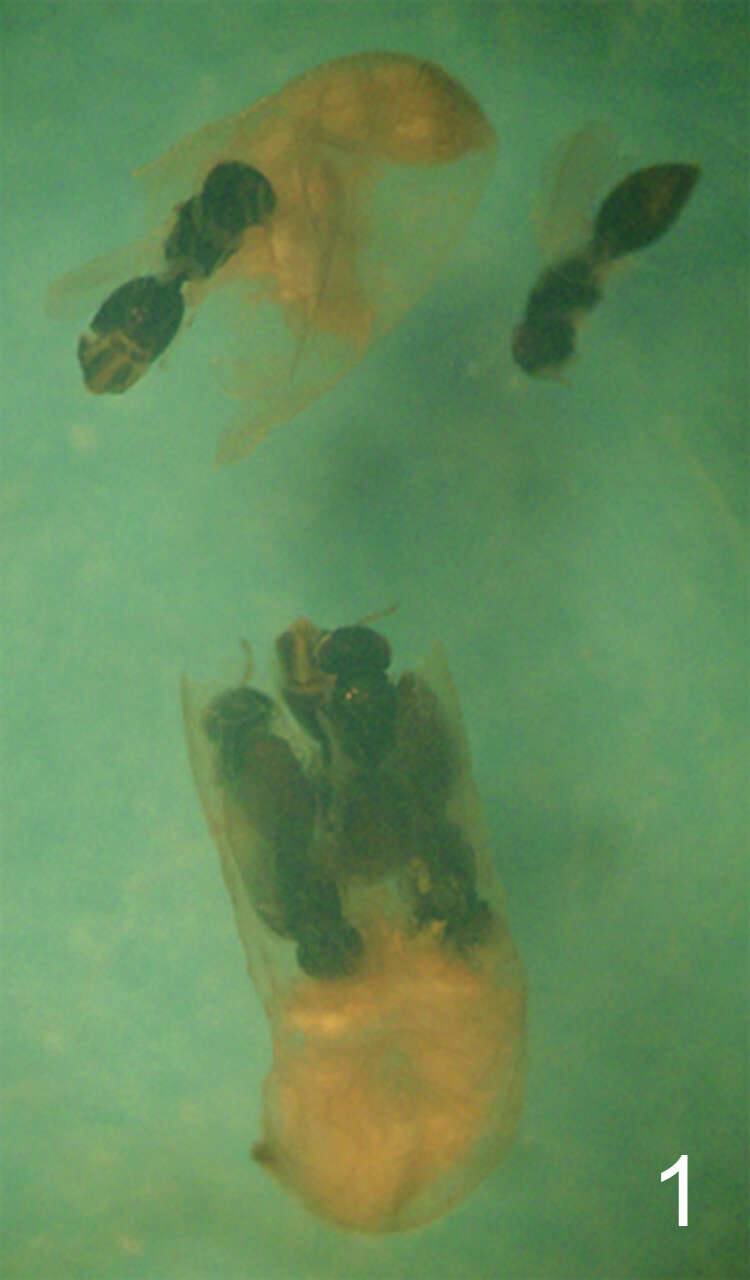
Eulophidae
The Eulophidae is a large family of hymenopteran insects, with over 4,300 described species in some 300 genera. The family includes the genus Elasmus, which used to be treated as a separate family, "Elasmidae", and is now treated as a subfamily of Eulophidae. These minute insects are challenging to study, as they deteriorate rapidly after death unless extreme care is taken (e.g., preservation in ethanol), making identification of most museum specimens difficult. The larvae of very few species feed on plants, but the majority are primary parasitoids on a huge range of arthropods at all stages o

Tiphiidae
The Tiphiidae (also known as tiphiid wasps, flower wasps, or tiphiid flower wasps) are a family of large, solitary wasps whose larvae are parasitoids of various beetle larvae, especially those in the superfamily Scarabaeoidea. Until recently, this family contained several additional subfamilies, but multiple studies have independently confirmed that these comprise a separate lineage, and are now classified in the family Thynnidae.

Bethylidae
The Bethylidae are a family of aculeate wasps in the superfamily Chrysidoidea. As a family, their biology ranges between parasitoid wasps and hunting wasps.

Pteromalidae
The Pteromalidae are a large family of wasps, the majority being parasitoids of other insects. They are found throughout the world in virtually all habitats, and many are important as biological control agents. The oldest known fossil is known from the Early Cretaceous.

Eurytomidae
The Eurytomidae are a family within the superfamily Chalcidoidea.
Dryinidae
Dryinidae is a cosmopolitan family of solitary wasps. Its name comes from the Greek drys for oak: Latreille named the type genus Dryinus because the first species was collected on an oak tree in Spain. The larvae are parasitoids of the nymphs and adults of Auchenorrhyncha. Dryinidae comprises over 1900 described species, distributed in 11 extant subfamilies and 57 genera.

Encyrtidae
Encyrtidae is a large family of parasitic wasps, with some 3710 described species in about 455 genera. The larvae of the majority are primary parasitoids on Hemiptera, though other hosts are attacked, and details of the life history can be variable (e.g., some attack eggs, some attack larvae, others are hyperparasites, and some Encyrtidae develop as parasitoids of ticks). They are found throughout the world in virtually all habitats, and are extremely important as biological control agents. They may also present as an ecological threat to the population of some species. For example, the endang

Aphelinidae
right|thumb|226px|Eretmocerus sp.

Sapygidae
The Sapygidae are a family of solitary kleptoparasitic aculeate wasps. They are generally black wasps, similar in appearance to some Tiphiidae or Thynnidae, with white or yellow markings developed to various degrees.
%20Figure%2014.jpg)
Chalcididae
thumb|226px|Epitranus clavatus

Rhopalosomatidae
thumb|A rhopalosomatid larva attached to a Hapithus cricket

Trichogrammatidae
thumb|A female Hydrophylita emporos on a female Psolodesmus mandarinus mandarinus.

Eucharitidae
thumb|Latina (genus)|Latina rugosa planidia (arrows, magnified) attached to an ant larva
thumb|Stilbula quinqueguttata from Australia

Eupelmidae
Eupelmidae is a family of parasitic wasps in the superfamily Chalcidoidea. The larvae of the majority are primary parasitoids, commonly on beetle larvae, though many other hosts are attacked, including spiders. Details of the life history varies considerably (e.g., some attack eggs and others are hyperparasites). They are found throughout the world in virtually all habitats.

Leucospidae
The Leucospidae (sometimes incorrectly spelled Leucospididae) are a specialized group of wasps within the superfamily Chalcidoidea, that are ectoparasitoids of aculeate wasps or bees. They are typically mimics of bees or stinging wasps, often black with yellow, red, or white markings, sometimes metallic, with a robust mesosoma and very strong sculpturing. The hind femora are often greatly enlarged, with a row of teeth or serrations along the lower margin as in Chalcididae. The wing has a longitudinal fold. The female ovipositor is sometimes short, but if not, it is recurved and lies along the
Platygastridae
The hymenopteran family Platygastridae (sometimes incorrectly spelled Platygasteridae) is a moderate-sized group (about 2000 described species) of exclusively parasitoid wasps, mostly very small (1–2 mm), black, and shining, with geniculate (elbowed) antennae that usually have an eight-segmented flagellum. The wings often lack visible venation, and they may have slight fringes of setae.

Signiphoridae
Signiphoridae (historically also known as Thysanidae) is a small family of parasitic wasps in the superfamily Chalcidoidea. The roughly 80 species are placed in four genera.
.jpg)
Evaniidae
Evaniidae is a family of parasitoid wasps also known as ensign wasps, nightshade wasps, hatchet wasps, or cockroach egg parasitoid wasps. They number around 20 extant genera containing over 400 described species, and are found all over the world except in the polar regions. The larvae of these solitary wasps are parasitoids that feed on cockroaches and develop inside the egg-cases, or oothecae, of their hosts.

Torymidae
Torymidae is a family of wasps in the superfamily Chalcidoidea. Most species in this family are small with attractive metallic coloration, and females generally have long ovipositors. Many are parasitoids on gall-forming insects, and some are phytophagous (plant-eating) species, sometimes using the galls formed by other insects. Over 960 species in about 70 genera are found worldwide. They are best recognized in that they are one of the few groups of Chalcidoidea in which the cerci are visible.
right|thumb|Torymus female

Perilampidae
The Perilampidae are a small family within the Chalcidoidea, composed mostly of hyperparasitoids. The family is closely related to the Eucharitidae, Chrysolampidae, and Eutrichosomatidae. As presently defined, six genera are described worldwide. They are often brilliantly metallic (especially blue or green), with robust mesosomae and a small, triangular metasomae. They are generally very strongly sculptured. The prothorax is typically very broad and disc-like, and the labrum is multidigitate, a feature shared with the Eucharitidae.

Ceraphronidae
The Ceraphronidae, commonly known as ceraphronids or ceraphronid wasps, are a small hymenopteran family with 14 genera and some 360 known species, though a great many species are still undescribed. It is a poorly known group as a whole, though most are believed to be parasitoids (especially of flies), and a few hyperparasitoids. Many are found in the soil, and of these, a number are wingless.
Ormyridae
The Ormyridae are a small family of parasitic wasps in the superfamily Chalcidoidea. They are either parasitoids or hyperparasitoids on gall-forming insects, primarily cynipid wasps and tephritid flies. There are 153 species, mostly in the genus Ormyrus); the family has a worldwide distribution, although almost entirely absent from South America.

Figitidae
thumb|Subfamily Charipinae

Diapriidae
thumb|left|undetermined Diapriidae from Costa RicaThe Diapriidae are a family of parasitoid wasps. These tiny insects have an average length of 2–4 mm and never exceed 8 mm. They typically attack larvae and pupae of a wide range of insects, especially flies. The about 2,300 described species in around 200 described genera are divided into three subfamilies, and the group has a global distribution.
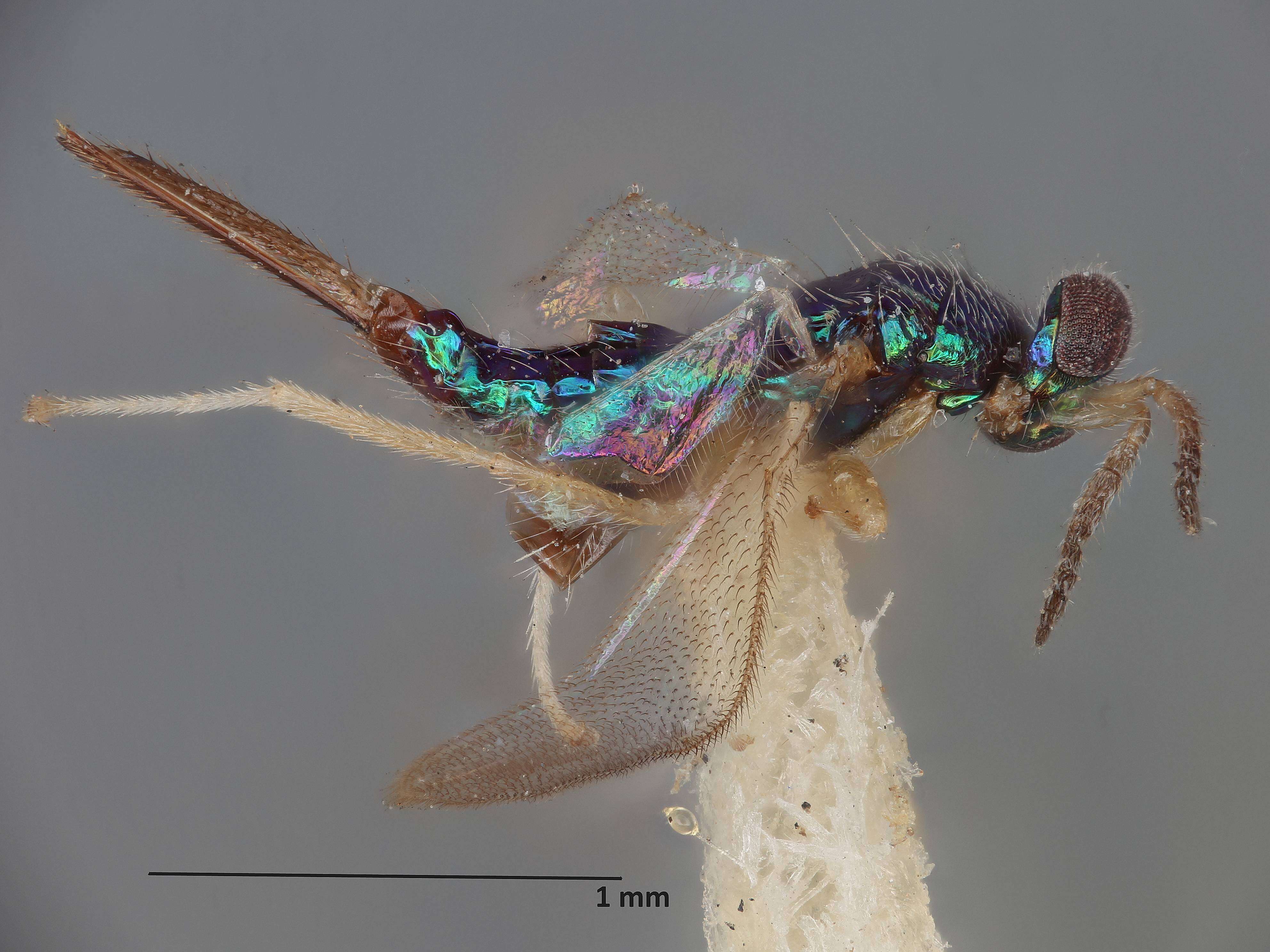
Tetracampidae
The Tetracampidae are a small family of parasitic wasps in the superfamily Chalcidoidea. They are parasitoids of phytophagous insects, primarily flies. The 44 species in 15 genera are almost entirely absent from the New World.

Proctotrupidae
Proctotrupidae is a family of parasitic wasps in the superfamily Proctotrupoidea. There are about 400 species in more than 30 genera in Proctotrupidae, found throughout most of the world.
.png)
Stephanidae
The Stephanidae, sometimes called crown wasps, are a family of parasitoid wasps. They are the only living members of the superfamily Stephanoidea. Stephanidae has about 365 living species. The family is considered cosmopolitan in distribution, with the highest species concentrations in subtropical and moderate climate zones. Stephanidae also contain four extinct genera described from both compression fossils and inclusions in amber.
Tanaostigmatidae
The Tanaostigmatidae are a small family of parasitic wasps in the superfamily Chalcidoidea. They are almost exclusively phytophagous insects, forming galls in plant stems, leaves, or seeds. The some 90 species in 9 genera are primarily tropical and subtropical.
.jpg)
Scelionidae
The hymenopteran family Scelionidae is a very large cosmopolitan group (over 3000 described species in some 176 genera) of exclusively parasitoid wasps, mostly small (0.5–10 mm), often black, often highly sculptured, with (typically) elbowed antennae that have a 9- or 10-segmented flagellum. It was once considered to be a subfamily of the Platygastridae, but has been revived in the most recent classification of Platygastroidea.
thumb
They are generally idiobionts, attacking the eggs of various insects, such as butterflies (e.g., the hackberry emperor), and spiders. Many scelionids are imp
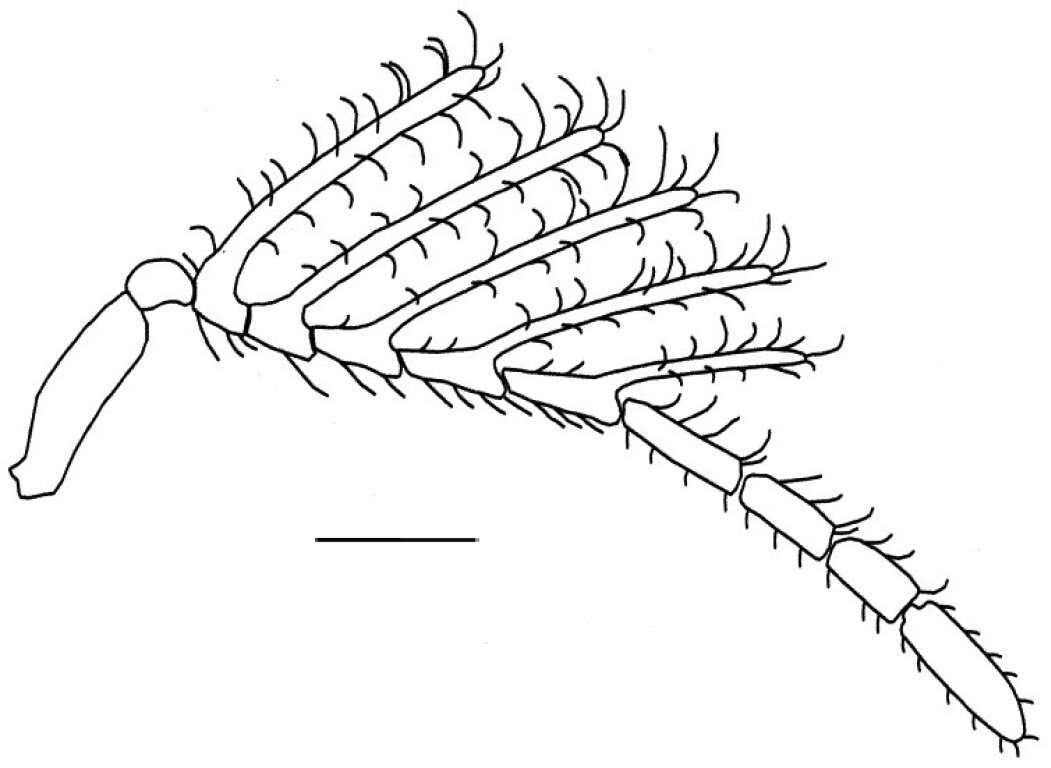
Megaspilidae
The Megaspilidae are a small hymenopteran family with 13 genera in two subfamilies, and some 450 known species, with a great many species still undescribed. It is a poorly known group as a whole, though most are believed to be parasitoids (especially of sternorrhynchan Hemiptera), and a few hyperparasitoids. Many are found in the soil, and of these, a number are wingless.

Ibaliidae
The Ibaliidae are a small family of the hymenopteran superfamily Cynipoidea. Ibaliidae differ from most of the cynipoids by the larvae being parasitoids on other wasp larvae in the group Siricidae. The Ibaliidae comprise three extant genera of fairly large wasps, with a total of 20 species, and is a sister group to the rest of the cynipoids except the small subfamily Austrocynipidae.

Aulacidae
The Aulacidae are a small, cosmopolitan family of wasps, with two extant genera containing some 200 known species. They are primarily endoparasitoids of wood wasps (Xiphydriidae) and xylophagous beetles (Cerambycidae and Buprestidae). They are closely related to the family Gasteruptiidae, sharing the feature of having the first and second metasomal tergites fused, and having the head on a long pronotal "neck", though they are not nearly as slender and elongate as gasteruptiids, nor are their hind legs club-like, and they have more sculptured thoraces. They share the evanioid trait of having th
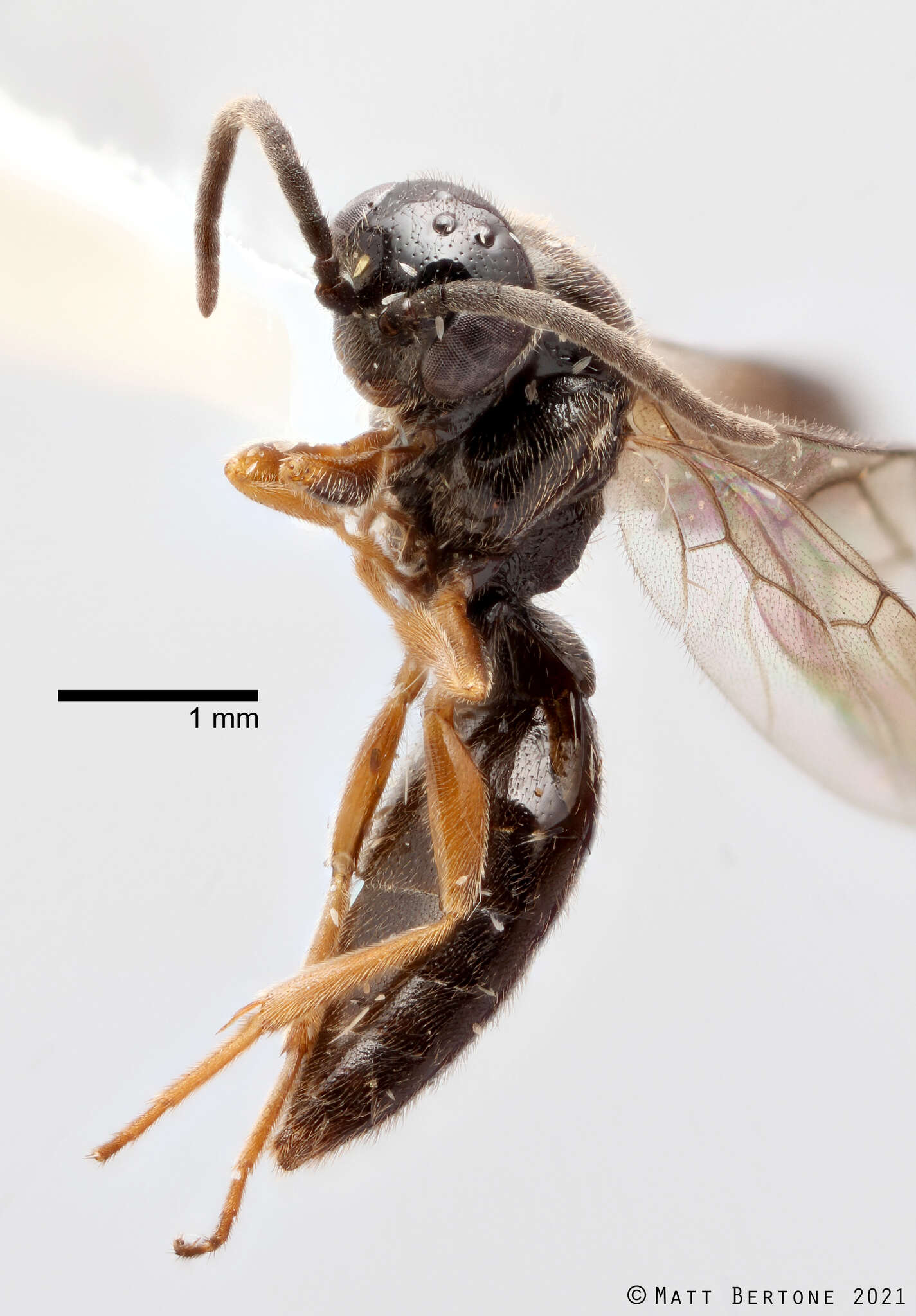
Sierolomorphidae
The Sierolomorphidae are a family of 13 extant species of wasps, in the genera Sierolomorpha and Proscleroderma, mostly found in the Northern Hemisphere. They are rare and very little is known of their biology. A fossil species Loreisomorpha nascimbenei has also been placed in the family.
Pemphredoninae
Pemphredonidae is a family of aphid wasps formerly treated as the subfamily Pemphredoninae. There are 19 genera and 556 described species in the family.
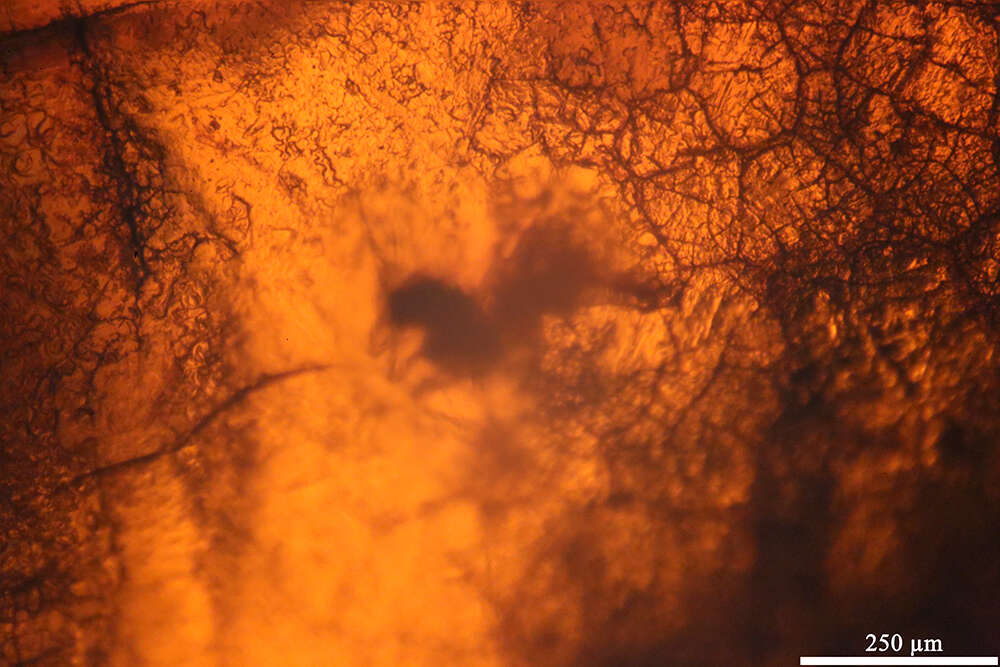
Mymarommatidae
The Mymarommatidae, sometimes referred to as false fairy wasps, are a very small family of microscopic parasitic wasps. Only about half of the known species are living taxa (the others are fossils), but they are found worldwide.

Bradynobaenidae
The Bradynobaenidae are a family of wasps similar to the Mutillidae, differing most visibly in the presence, in females, of a suture separating the pronotum from the mesonotum. These species are often found in arid regions.

Embolemidae
Embolemidae is a family of small solitary parasitoid wasps with around 70 species in 2 genera distributed around the world. The few species whose biology is known are parasites on planthopper nymphs of the families Achilidae and Cixiidae. There is debate regarding the status of the genus named Ampulicomorpha by Ashmead in 1893, generally considered now to be a junior synonym of Embolemus (e.g.,), though some authorities dispute this (e.g.,)
Trigonalidae
Trigonalidae is a family of parasitic wasps in the suborder Apocrita. They are the only living members of the superfamily Trigonaloidea. Trigonalidae are divided into 2 subfamilies; Orthogonalinae and Trigonalinae. These wasps are extremely rare, but surprisingly diverse, with over 90 species in 16 genera, and are known from all parts of the world. It is possibly the sister group to all Aculeata.
Philanthinae
Philanthidae is one of the largest families of wasp in the superfamily Apoidea, with 1167 species in 8 genera. Most of the species (more than 870) are in the genus Cerceris.
Megalyridae
Megalyroidea is a small hymenopteran superfamily of wasps that includes a single family, Megalyridae, with eight extant genera (plus around a dozen extinct ones) and 49 described species. Modern megalyrids are found primarily in the southern hemisphere, though fossils have only been found in the northern hemisphere. The most abundant and species-rich megalyrid fauna is in Australia. Another peak of diversity appears to be in the relict forests of Madagascar, but most of these species are still undescribed.
Sclerogibbidae
The Sclerogibbidae are a small family of aculeate wasps in the superfamily Chrysidoidea.
Pelecinidae
Pelecinidae is a family of parasitic wasps in the superfamily Proctotrupoidea. It contains only one living genus, Pelecinus, with three species known from the Americas. The earliest fossil species are known from the Jurassic, and the group was highly diverse during the Cretaceous. Members of Pelecinus are parasitic on larval beetles, flies, green lacewings, and sawflies.
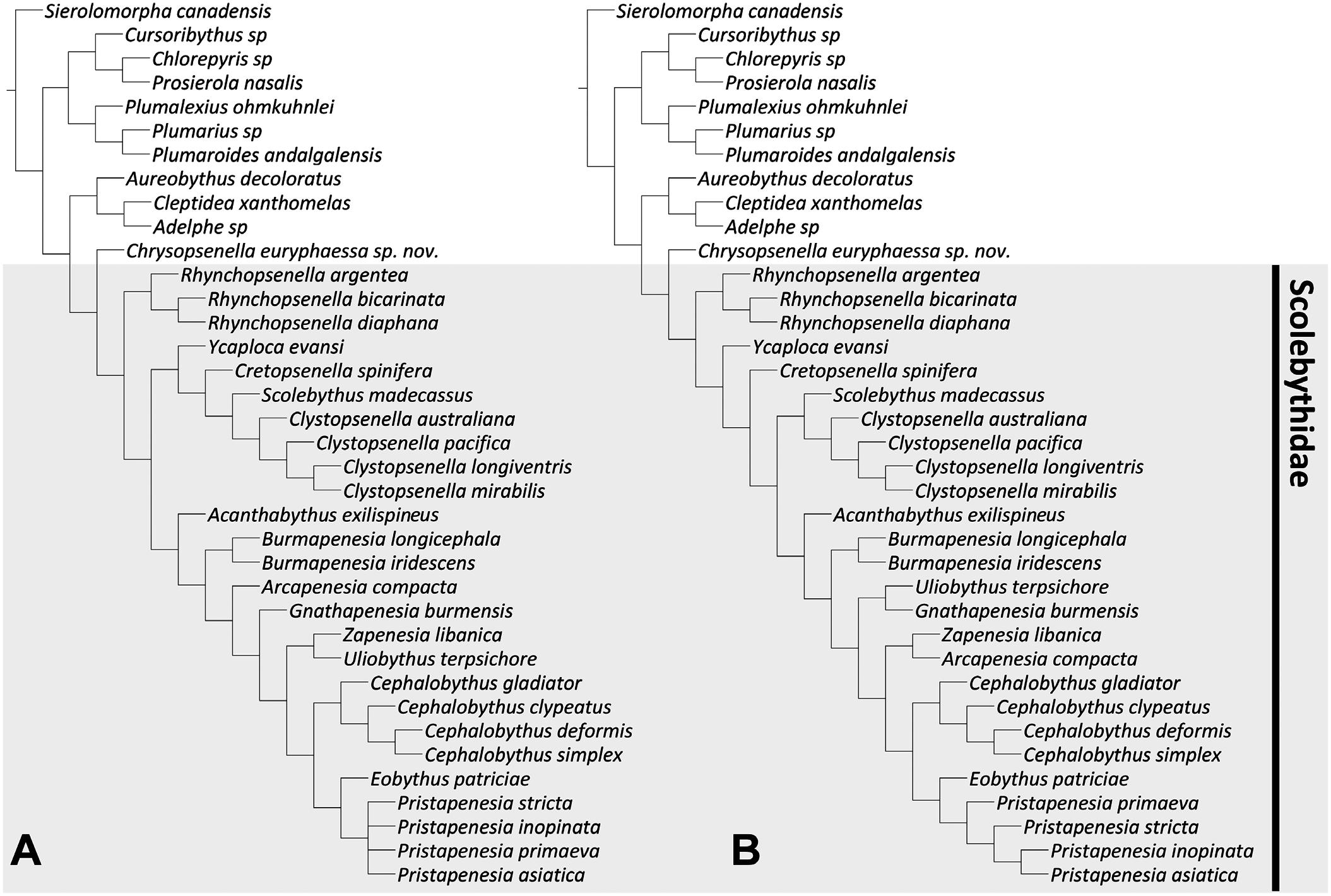
Scolebythidae
The Scolebythidae are a small family of aculeate wasps in the superfamily Chrysidoidea. These chrysidoid wasps are found in Africa, Australia, the Neotropics, north China, Thailand and Fiji. They are parasites on larvae of Cerambycidae and Ptinidae.
Astatinae
Astatidae is a cosmopolitan family of solitary wasps, peculiar for their males having very large compound eyes that broadly meet at the top of the head. The largest genus in this family is Astata, with about half of more than 160 species in the family.
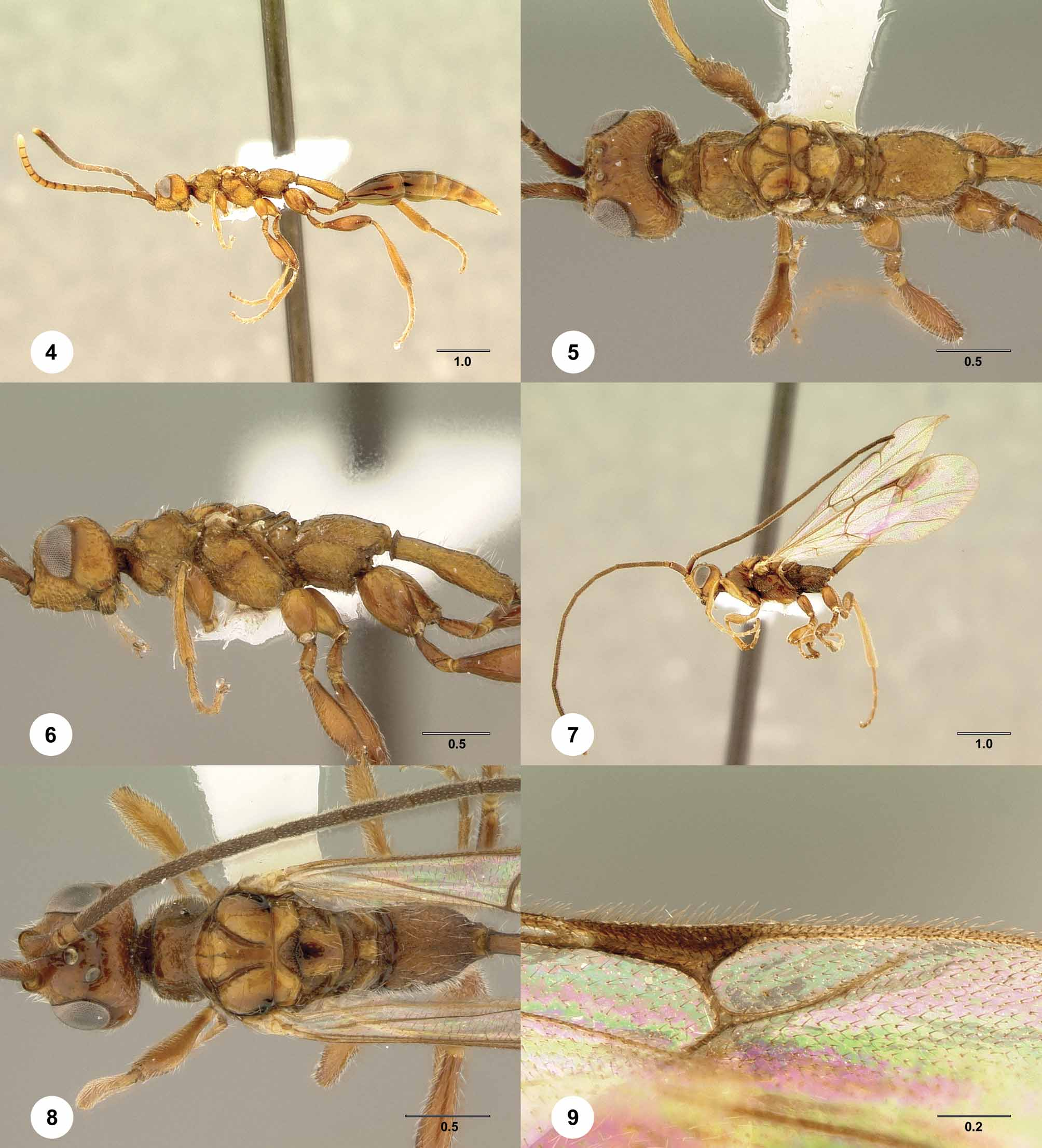
Monomachidae
Monomachidae is a family of parasitoid wasps in the order Hymenoptera comprising two genera. The species of the family are found in the Southern Hemisphere, primarily in the tropics of the New World with a few from Australia and New Guinea.

Liopteridae
Liopteridae is a family of wood-boring parasitoid wasps. They occur worldwide with concentrations in the African Tropics.
These insects have a petiolate abdomen. There are 10 genera and more than 140 species known.
Thynnidae
The Thynnidae (also known as thynnid wasps, flower wasps, or thynnid flower wasps) are a family of large, solitary wasps whose larvae are almost universally parasitoids of various beetle larvae, especially those in the superfamily Scarabaeoidea. Until recently, the constituents of this family were classified in the family Tiphiidae, but multiple studies have independently confirmed that thynnids are a separate lineage.
Serphitidae
Serphitidae is a family of microscopic parasitic wasps known from the Cretaceous period.
Vanhorniidae
REDIRECT Vanhornia
Myrmosidae
The Myrmosidae are a small family of wasps very similar to the Mutillidae, and in the same superfamily, but sister taxon to Sapygidae. As in mutillids, females are flightless, and are kleptoparasites in the nests of fossorial bees and wasps.
Psenini
Psenidae is a family of aphid wasps in the superfamily Apoidea formerly treated as the tribe Psenini. There are 12 genera and at least 485 described species of Psenidae.
thumb|Psen erythropoda