Category
page 1Bacteria orders
Spirochaetales
The Spirochaetales are an order of spirochete bacteria. Some species within this order are known to causes syphilis, Lyme disease, relapsing fever, and other illnesses.
Actinomycetales
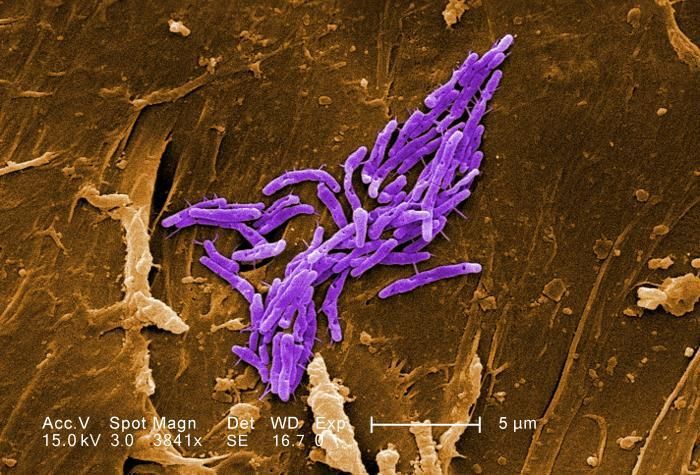
The Actinomycetales is an order of Actinomycetota. A member of the order is often called an actinomycete. Actinomycetales are generally gram-positive and anaerobic and have mycelia in a filamentous and branching growth pattern. Some actinomycetes can form rod- or coccoid-shaped forms, while others can form spores on aerial hyphae. Actinomycetales bacteria can be infected by bacteriophages, which are called actinophages. Actinomycetales can range from harmless bacteria to pathogens with resistance to antibiotics.

Lactobacillales
REDIRECT Lactic acid bacteria
Nostocales
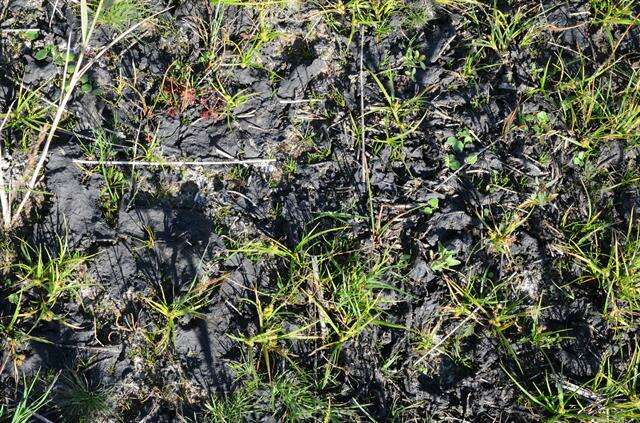
The Nostocales are an order of cyanobacteria containing most of its species. It includes filamentous forms, both simple or branched, and both those occurring as single strands or multiple strands within a sheath. Some members show a decrease in width from the base, and some have heterocysts.

Rhodospirillales
thumb|
Chlamydiales
The bacterial order Chlamydiales includes only obligately intracellular bacteria that have a chlamydia-like developmental cycle of replication and at least 80% 16S rRNA or 23S rRNA gene sequence identity with other members of Chlamydiales. Chlamydiales live in animals, insects, and protozoa.
Legionellales
The Legionellales are an order of Pseudomonadota ("Proteobacteria"). Like all Pseudomonadota, they are Gram-negative. They comprise two families, typified by Legionella and Coxiella, both of which include notable pathogens. For example, Q fever is caused by Coxiella burnetii and Legionella pneumophila causes Legionnaires' disease and Pontiac fever.

Chroococcales
The Chroococcales () are an order of cyanobacteria in some classifications which includes the harmful algal bloom Microcystis aeruginosa. Molecular data indicate that Chroococcales may be polyphyletic, meaning its members may not all belong to the same clade or have the same common ancestor.

Oscillatoriales
The Oscillatoriales are an order of cyanobacteria.
Oceanospirillales
The Oceanospirillales are an order of Pseudomonadota with ten families.
Thiotrichales
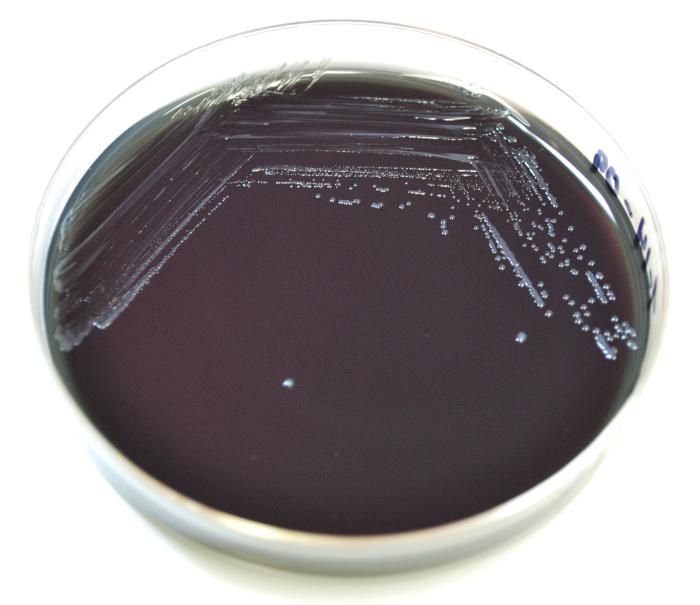
Thiotrichales is an order of sulfur-oxidizing bacteria within the class Gammaproteobacteria known for their large size and ability to live in sulfur rich environments.
Bacteroidales
Bacteroidales is an order of bacteria. Notably it includes the genera Prevotella and Bacteroides , which are commonly found in the human gut microbiota.
Aeromonadales
The Aeromonadales are an order of Pseudomonadota, with 10 genera in two families. The species are anaerobic. The cells are rod-shaped. Some species of this order are motile by a single polar flagellum; others are not motile.
Desulfovibrionales
Desulfovibrionales are a taxonomic order of bacteria belonging to the phylum Thermodesulfobacteriota, with four families. They are Gram-negative. The majority are sulfate-reducing, with the exception of Lawsonia and Bilophila. All members of this order are obligately anaerobic. Most species are mesophilic, but some are moderate thermophiles.
Bdellovibrionales
Bdellovibrionales is an order of Pseudomonadota.
Halanaerobiales
The Halanaerobiales are an order of bacteria placed within the class Clostridia, and encompassing two families, the Halanaerobiaceae and the Halobacteroidaceae. Originally placed within the highly polyphyletic class Clostridia, according to the NCBI and LPSN, it is now thought to lie outside the Bacillota. Halanaerobiales are halophilic obligate anaerobes with a fermentative or homoacetogenic metabolism.
Mycoplasmatales
Mycoplasmatales is an order of bacteria in the class Mollicutes. The order consists of the families Spiroplasmataceae and Mycoplasmataceae.
Thermoanaerobacterales
The Thermoanaerobacterales is a polyphyletic order of bacteria placed within the polyphyletic class Clostridia, and encompassing four families: the Thermoanaerobacteraceae, the Thermodesulfobiaceae, the Thermoanaerobacterales Family III. Incertae Sedis, and the Thermoanaerobacterales Family IV. Incertae Sedis, and various unplaced genera.
Thermotogales
REDIRECT Thermotogae
Deinococcales
REDIRECT Deinococcota
Eubacteriales
The Eubacteriales are an order of bacteria placed within the class Clostridia.
Synechococcales
The Synechococcales are a proposed order of cyanobacteria, with over 70 genera. It includes both filamentous and single-celled types.
Micrococcales
The Micrococcales are an order of bacteria in the phylum Actinomycetota.
Syntrophobacterales
The Syntrophobacterales are an order of the bacterial phylum Desulfobacterota. It is the only member of the class Syntrophobacteria. All genera are strictly anaerobic. Many members of the family Syntrophobacteraceae are sulfate-reducing. Some species are motile by using one polar flagellum.
Desulfobacterales
Desulfobacterales are an order of sulfate-reducing bacteria within the phylum Thermodesulfobacteria. The bacteria in this order are strict anaerobic respirators, using sulfate or nitrate as the terminal electron acceptor instead of oxygen. Desulfobacterales can degrade ethanol, molecular hydrogen, organic acids, and small hydrocarbons. They have a wide ecological range and play important environmental roles in symbiotic relationships and nutrient cycling.
Cytophagales
Cytophagales is an order of non-spore forming, rod-shaped, Gram-negative bacteria that move through a gliding or flexing motion. These chemoorganotrophs are important remineralizers of organic materials into micronutrients. They are widely dispersed in the environment, found in ecosystems including soil, freshwater, seawater and sea ice. Cytophagales is included in the Bacteroidota phylum.
Sphingobacteriales
thumb | right | alt=Sphingobacterium mizutii colony characteristics on Chocolate agar | Sphingobacterium mizutii colony characteristics on Chocolate agar
The Sphingobacteriales is an order of environmental bacteria.
Rhodothermales
The Rhodothermales are an order of bacteria.
Mycobacteriales
The Mycobacteriales are an order of bacteria. The current description is genome-based, per Gupta 2019 emendation. Most members produce mycolic acids.
Sphingomonadales
The Sphingomonadales are an order of the Alphaproteobacteria.
Thermodesulfobacteriales
The Thermodesulfobacteriales are an order of sulfate-reducing bacteria.
Caulobacterales
Caulobacterales is an order of gram-negative Pseudomonadota within the alpha subgroup.
Geodermatophilales
The Geodermatophilales are an order of bacteria. Members of the order are Gram-positive, aerobic, and can be motile. They mainly inhabit arid and degraded habitats but also marine and plant-associated environments. Members have pigmented colonies.
Holosporales
Holosporales is an order of bacteria.
Cellvibrionales
The Cellvibrionales are an order of Gammaproteobacteria.
Coriobacteriales
The Coriobacteriales are an order of Actinomycetota.
Hyphomicrobiales
The Hyphomicrobiales (synonym Rhizobiales) are an order of Gram-negative Alphaproteobacteria.
Pleurocapsales
The Pleurocapsales are an order of coccooid cyanobacteria. Pleurocapsales are characterized by having boocytes, specialized cells where multiple fission takes place.
Streptosporangiales
The Streptosporangiales are an order of bacteria.