Category
page 1Bacterium-related cutaneous conditions
%20on%20the%20surface%20of%20a%20tongue-CDC.jpg)
syphilis
Syphilis () is a sexually transmitted infection caused by the bacterium Treponema pallidum subspecies pallidum. The signs and symptoms depend on the stage it presents: primary, secondary, latent or tertiary. The primary stage classically presents with a single chancre (a firm, painless, non-itchy skin ulceration usually between 1 cm and 2 cm in diameter), though there may be multiple sores. In secondary syphilis, a diffuse rash occurs, which frequently involves the palms of the hands and soles of the feet. There may also be sores in the mouth or vagina. Latent syphilis has no symptom

plague
specific contagious and frequently fatal human disease caused by Yersinia pestis

gonorrhea
Gonorrhea or gonorrhoea, colloquially known as the clap,

anthrax
Anthrax is an infection caused by the bacterium Bacillus anthracis or Bacillus cereus biovar anthracis. Infection typically occurs by contact with the skin, inhalation, or intestinal absorption. Symptom onset occurs between one day and two months after the infection is contracted. The skin form presents with a small blister with surrounding swelling that often turns into a painless ulcer with a black center. The inhalation form presents with fever, chest pain, and shortness of breath. The intestinal form presents with diarrhea (which may contain blood), abdominal pains, nausea, and vomiting.

scarlet fever
human disease

Lyme disease
infectious disease caused by Borrelia bacteria, spread through the bite of blacklegged ticks

leptospirosis

brucellosis
Brucellosis is a zoonosis (zoonotic disease) spread primarily via ingestion of unpasteurized milk from infected animals. It is also known as undulant fever, Malta fever, and Mediterranean fever.
.jpg)
boil
A boil, also called a furuncle, is a deep folliculitis, which is an infection of the hair follicle. It is most commonly caused by infection by the bacterium Staphylococcus aureus, resulting in a painful swollen area on the skin caused by an accumulation of pus and dead tissue. Boils are therefore basically pus-filled nodules. Individual boils clustered together are called carbuncles.
Most human infections are caused by coagulase-positive S. aureus strains, notable for the bacteria's ability to produce coagulase, an enzyme that can clot blood. Almost any organ system can be infected by S. aureu

erysipelas
Erysipelas () is a relatively common bacterial infection of the superficial layer of the skin (upper dermis), extending to the superficial lymphatic vessels within the skin, characterized by a raised, well-defined, tender, bright-red rash, typically on the face or legs, but which can occur anywhere on the skin. It is a form of cellulitis and is potentially serious.

tularemia
.jpeg)
cellulitis

impetigo

yaws
Yaws is a tropical infection of the skin, bones, and joints caused by the spirochete bacterium Treponema pallidum pertenue. The disease begins with a round, hard swelling of the skin, in diameter. The center may break open and form an ulcer. This initial skin lesion typically heals after 3–6 months. After weeks to years, joints and bones may become painful, fatigue may develop, and new skin lesions may appear. The skin of the palms of the hands and the soles of the feet may become thick and break open. The bones (especially those of the nose) may become misshapen. After 5 years or more, large
Q fever
disease caused by infection with Coxiella burnetii
necrotizing fasciitis
infection that results in the death of the body's soft tissue
toxic shock syndrome
condition caused by bacterial toxins
methicillin-resistant Staphylococcus aureus
bacterium responsible for difficult-to-treat infections in humans

chancroid
Chancroid ( ) is a bacterial sexually transmitted infection characterized by painful sores on the genitalia. Chancroid is a bacterial infection caused by the fastidious Gram-negative streptobacillus Haemophilus ducreyi. Chancroid is known to spread from one individual to another solely through sexual contact. However, there have been reports of accidental infection through the hand.
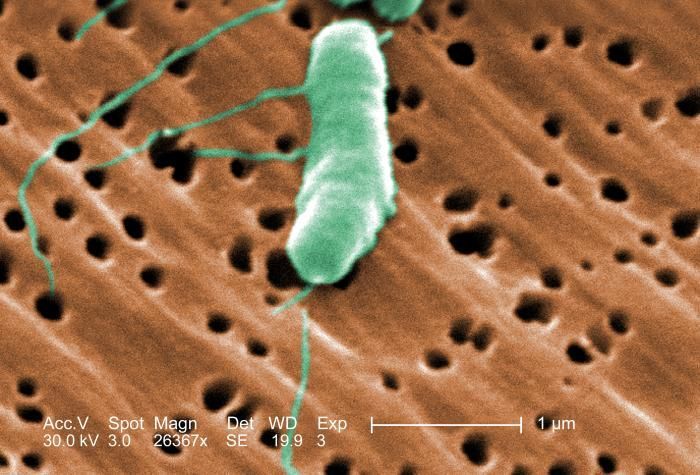
Vibrio vulnificus
species of bacterium

folliculitis
Folliculitis is the infection and inflammation of one or more hair follicles. The condition may occur anywhere on hair-covered skin. The rash may appear as pimples that come to white tips on the face, chest, back, arms, legs, buttocks, or head.
cat-scratch disease
human disease
otitis externa
inflammation of the outer ear and ear canal.
gas gangrene
human disease
shigellosis
epidemic typhus
human disease

glanders
Glanders is a contagious, zoonotic infectious disease caused by the bacterium Burkholderia mallei, which primarily occurs in horses, mules, and donkeys, but can also be contracted by dogs and cats, pigs, goats, and humans. The term glanders derives from the Middle English word ' and from the Old French word ', which both denote glands. Other terms for the glanders disease are the , the , the , and the .

melioidosis
Melioidosis is an infectious disease caused by a gram-negative bacterium called Burkholderia pseudomallei. Most people exposed to B. pseudomallei experience no symptoms, but complications can range from fever and skin changes to pneumonia, abscesses, and septic shock, which can be fatal. Approximately 10% of people with melioidosis develop symptoms that last longer than two months, termed "chronic melioidosis".
lymphogranuloma venereum
sexually transmitted disease caused by the invasive serovars L1, L2, L2a or L3 of Chlamydia trachomatis.
Fournier gangrene
type of necrotizing fasciitis or gangrene affecting the external genitalia and/or perineum
trench fever
human disease
meningococcal disease
human disease
scrub typhus
form of typhus caused by the intracellular parasite Orientia tsutsugamushi
Rocky Mountain spotted fever
human disease
granuloma inguinale
sexually transmitted bacterial disease
pasteurellosis
erythrasma
Erythrasma is a superficial skin infection that causes brown, scaly skin patches. It is caused by Corynebacterium minutissimum bacteria, a normal part of skin flora (the microorganisms that are normally present on the skin).

chancre
thumb|Chancres on the face and hand. Up-left: upper lip, Up-right: lower lip, Bottom-right: right upper eyelid, Bottom-right: thumb.
thumb|right|Chancre on the underside of the penis
A chancre ( ) is a painless genital ulcer most commonly formed during the primary stage of syphilis. This infectious lesion forms around 21 days after the initial exposure to Treponema pallidum, the gram-negative spirochaete bacterium causing syphilis, but can range from 10 to 90 days. Without treatment it may persist for two to six weeks before healing. Chancres transmit syphilis through direct physical contact.
Ritter's disease
Human disease
pinta disease
Human disease
Ludwig's angina
human disease

ehrlichiosis
Ehrlichiosis is a tick-borne
bacterial infection, caused by bacteria of the family Anaplasmataceae, genera Ehrlichia and Anaplasma. These obligate intracellular bacteria infect and kill white blood cells.
sycosis
medical condition
nocardiosis
Nocardiosis is an infectious disease affecting either the lungs (pulmonary nocardiosis) or the whole body (systemic nocardiosis). It is due to infection by a bacterium of the genus Nocardia, most commonly Nocardia asteroides or Nocardia brasiliensis.
African tick-bite fever
spotted fever that has material basis in Rickettsia africae, which is transmitted by ticks
boutonneuse fever
Human disease
erysipelothrix rhusiopathiae infectious disease
In humans, Erysipelothrix rhusiopathiae infections most commonly present in a mild cutaneous form known as erysipeloid or fish poisoning. E. rhusiopathiae can cause an indolent cellulitis, more commonly in individuals who handle fish and raw meat. Erysipelothrix rhusiopathiae also causes Swine Erysipelas. It is common in domestic pigs and can be transmitted to humans who work with swine. It gains entry typically by abrasions in the hand. Bacteremia and endocarditis are uncommon but serious sequelae. Due to the rarity of reported human cases, E. rhusiopathiae infections are frequently misidenti
rat-bite fever
human disease
bejel
Human disease
Carrion's disease
infectious disease produced by Bartonella bacilliformis infection
Brill-Zinsser disease
epidemic typhus that is a mild form of the disease, which recurs in someone after a long period of latency due to immunosuppression, malnutrition or other illnesses
pitted keratolysis
bacterial skin infection of the foot
endemic typhus
typhus transmitted by fleas (Xenopsylla cheopis), usually on rats
ecthyma
Ecthyma () is a variation of impetigo, presenting at a deeper level of tissue.
rickettsialpox
Rickettsialpox is a mite-borne infectious illness caused by bacteria of the genus Rickettsia (Rickettsia akari). Physician Robert Huebner and self-trained entomologist Charles Pomerantz played major roles in identifying the cause of the disease after an outbreak in 1946 in a New York City apartment complex, documented in "The Alerting of Mr. Pomerantz," an article by medical writer Berton Roueché.
saddle nose
condition characterized by a loss of height of the nose, because of the collapse of the bridge
human monocytic ehrlichiosis
human disease
Bullous impetigo
bacterial skin infection
malakoplakia
Malakoplakia (from Greek Malako "soft" + Plako "plaque") is a rare inflammatory condition which makes its presence known as a papule, plaque or ulceration that usually affects the genitourinary tract. However, it may also be associated with other bodily organs. It was initially described in the early 20th century as soft yellowish plaques found on the mucosa of the urinary bladder. Microscopically it is characterized by the presence of foamy histiocytes (called von Hansemann cells) with basophilic inclusions called Michaelis–Gutmann bodies.
rhinoscleroma
Rhinoscleroma is a chronic granulomatous bacterial disease of the nose that can sometimes infect the upper respiratory tract. It most commonly affects the nasal cavity—the nose is involved in 95–100 per cent of cases—however, it can also affect the nasopharynx, larynx, trachea, and bronchi. Slightly more females than males are affected and patients are usually 10 to 30 years of age. Rhinoscleroma is considered a tropical disease and is mostly endemic to North Africa, South Asia and Central America. It is less common in the United States.